I hadn’t realised until recently just how much I like weird saloon cars. If you go back through my columns, then you’ll see that it’s a topic that comes up surprisingly often, in the form of homologation specials, Ferrari’s four-door forays, big luxo-barges, undercover muscle cars and even the golden age of saloon car racing. There’s just something about a three-box family motor that tickles my pickle. So here then is a quickfire run-down of 5 saloon cars that aren’t quite what they seem.
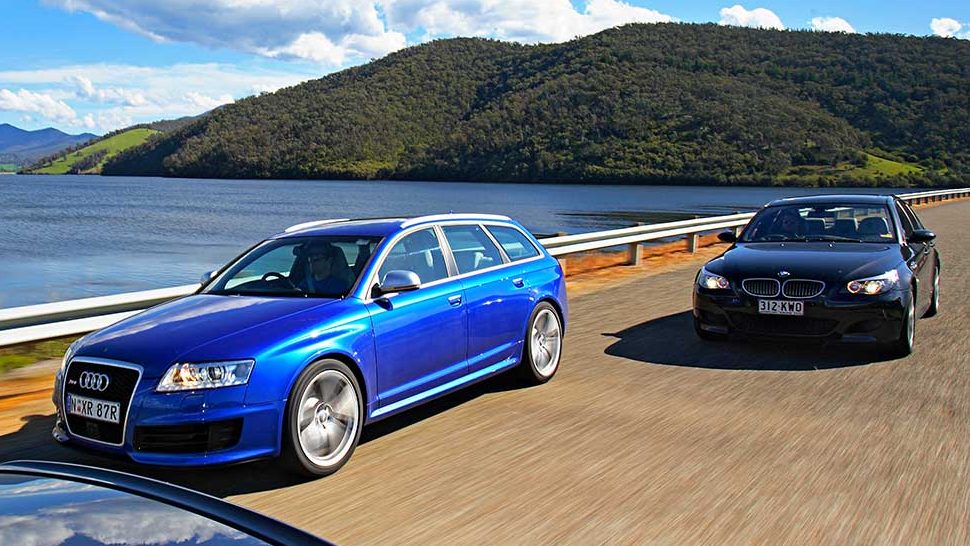
Alright, kicking off with a twofer might be cheating, but hey, my website, my rules. The BMW M5 is the undisputed king of the fast saloon market, with ballistic performance and pin-sharp handling lathered with day-to-day usability, so it seemed like a bold move in 2004 to trade some of that usability for even more aggression. On the surface, the E60 generation M5 looked like the same old story; slightly wider track, beefed up suspension and brakes and a huggier bucket seat, but when you have the entire BMW Sauber F1 team at your disposal, things don’t stay normal for long. Enter the BMW S58 V10. 500 horsepower, naturally aspirated and revving to 8000rpm, the S58 was a full-on racetrack reject with telepathic throttle response and the noise and performance to embarrass supercars like the Lamborghini Gallardo… Speaking of… Audi owns Lamborghini. Audi makes a big fast saloon called the RS6. I think you can see where I’m going with this. Crowbarring a 5.0 Lamborghini V10 into the front of an Audi rep-mobile might seem insane on its own, until you find out that Audi thought that the V10 didn’t make quite enough torque, and thus decided to augment the V10 even further with the addition of twin-turbochargers. The result was a 580-horsepower saloon (or estate if you fancy extra practicality) with a top speed limited to 170mph. To put that into context, the Pagani Zonda S had to make do with just 550 horsepower. The Audi wasn’t quite the precision instrument of the BMW, but out on the autobahn, there was no contest. Hang on, wasn’t there another German manufacturer making fast saloons around that time?
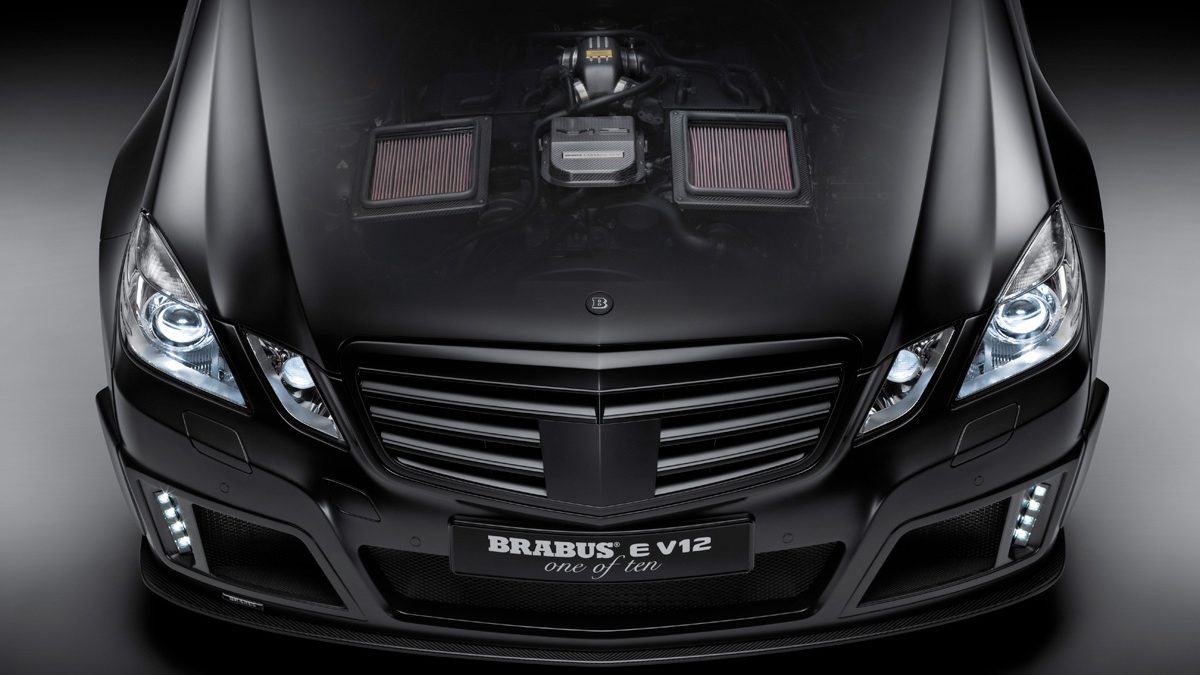
Hello Mercedes! Naturally, Affalterbach’s finest couldn’t stay away from the four-door arms race, with Mercedes’ AMG division giving us the fantastic E63 AMG to compete directly with the M5 and RS6, complete with 6.2 litre jackhammer V8 and Munich-airport-taxi looks, but for genuine madness, we need to take another trip down to the city of Bottrop, to pop in and see our old friends at Brabus. You see, 518 horsepower is chicken feed for Brabus, their cafeteria food blender makes more twist than that, so the first thing to be done on the W212 generation E63, was to scrap the V8 entirely. In its place went the twin-turbo V12 from the S600 limo. So, an E-Class with a smooth, sedate V12, right? Well, not exactly. The block was bored out to 6.3 litres, the turbos were swapped for much larger items, new aerodynamic wheel spats were grafted on and the gearbox was beefed up to stop it tearing itself apart under load. When it finally broke cover, the new Brabus E-V12 produced a healthy 800 horsepower and over 1400 NM of torque. Naturally, with all that grunt under the bonnet, the top speed had to be limited for safety reasons… to 217mph, with Brabus claiming that uncorked, it would do 230mph. Even with the limiter in place, the E-V12 earned a Guiness World Record as the World’s Fastest Four-door Sedan, a record it held for 15 years.
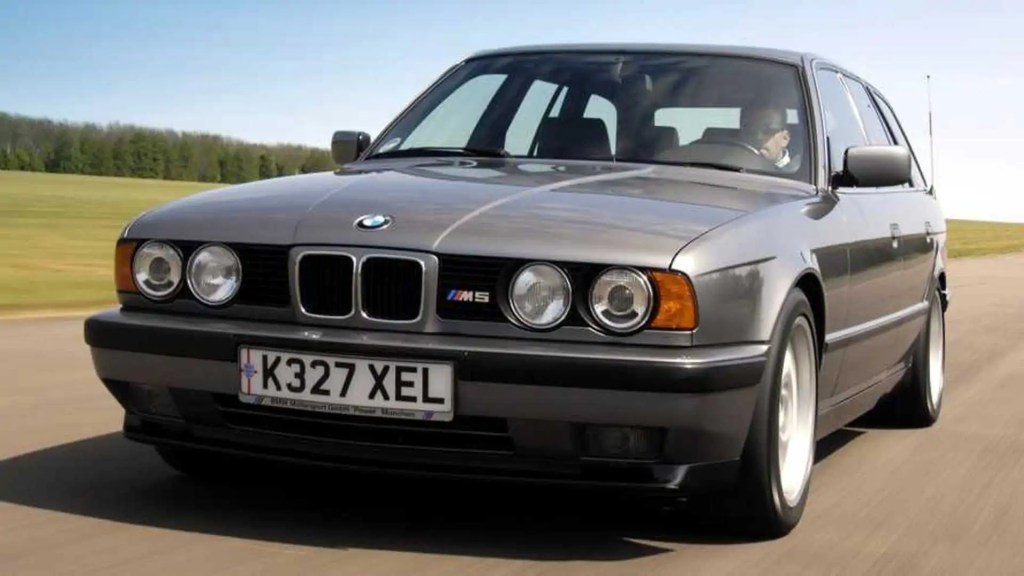
On the subject of “World’s fastest car” records, in the 1990s, the undisputed king was the McLaren F1, piloted to 240mph by Andy Wallace. When it came to developing that car however, a humble 5-Series ended up being the lynchpin for the whole operation. In the early 90s, Gordon Murray approached BMW with a request. He needed an engine for his little pet project; a V12 weighing no more than 250kg but still producing 550 horsepower. Murray had already approached McLaren’s Formula One engine partner Honda, who had politely informed him that this was simply impossible, but BMW’s legendary engine man Paul Rosche was not so easily put off. Starting with the V12 from BMW’s 850 CSi coupe, he completely stripped the engine down, boring the block out from 5.5 litres to 6.1 litres, fitted all-new aluminium heads with four valves per cylinder and VANOS variable valve timing. There was only one problem, the newly modified V12 would no longer fit in the 850, so in order to properly test the thing, Rosche would have to get creative. Borrowing an E34 generation 5-Series Estate, Rosche cut away a portion of the bulkhead and modified the front subframe, leaving just enough room to nestle the V12 under the bonnet, while keeping the car visually unchanged. With his new stealthy supercar slayer, Rosche was able to perform on-road testing to see how the new engine performed in the real world, with the 617-horsepower wagon able to pootle around in traffic in one moment, before closing in on 200mph on the Autobahn the next. The finished engine surpassed Murray’s expectations, and the rest is history.
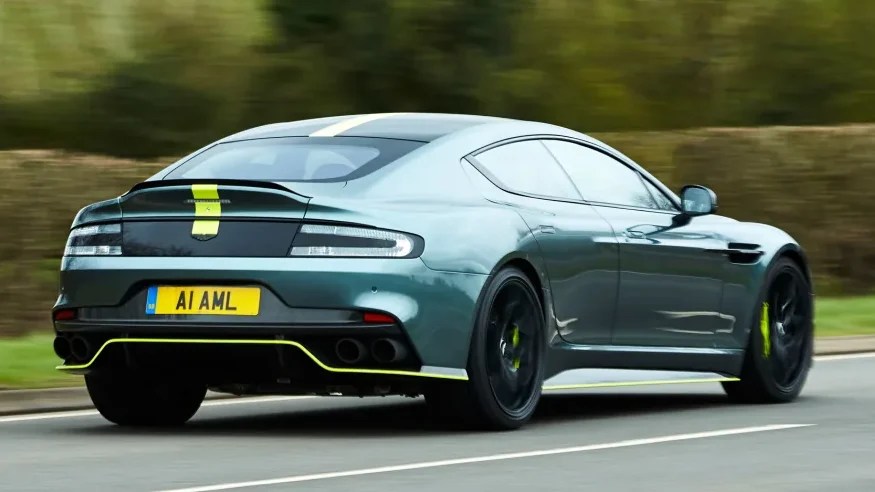
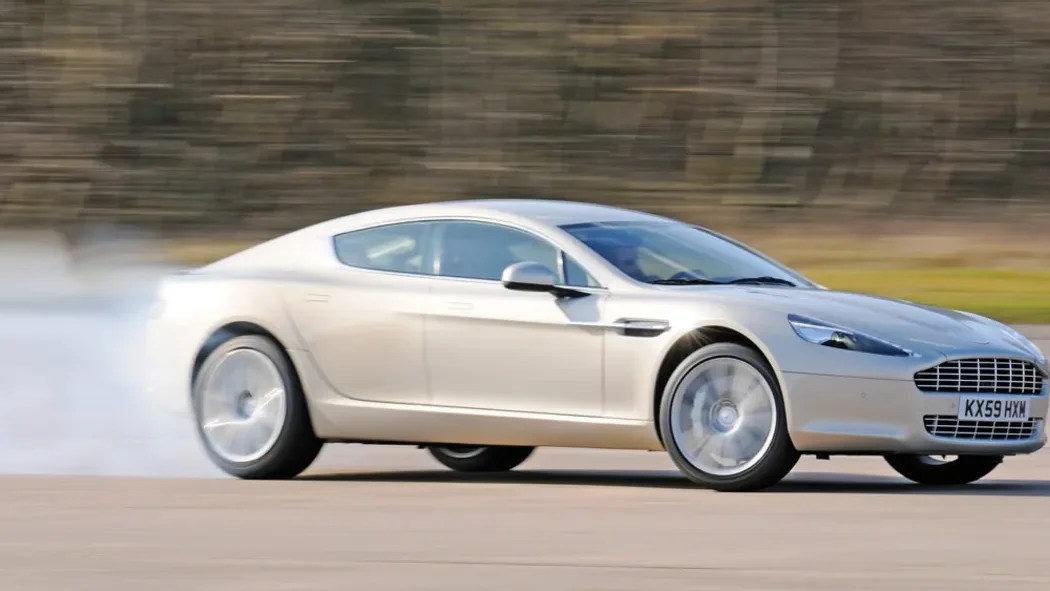
We’ve seen what happens when you shove a supercar engine into a saloon, but what happens if you go the opposite way? Well, in 2010, Aston Martin found out. Starting with the venerable DB9, the team cut it in half, welded in a bit of extra wheelbase, and fitted two rear doors, turning it into the four-door Aston Martin Rapide. On paper, this sounded like a terrible idea. Who would want a DB9 but a bit stretched and a lot heavier? As it turned out, me. I wanted that. The Rapide ended up being a bright spot in the Aston Martin range, retaining the 6.0 litre 470 horsepower V12 that gave its stablemates supercar performance, while still being as beautiful as the coupe it was based on, with Top Gear’s Richard Hammond remarking “Looks is where the Aston [Rapide] gets off to a flying start, because it doesn’t really look like a saloon at all […] In fact you have to stare at it for a while before you can see that it’s got four doors”. In their normal British fashion, even after release, Aston Martin kept tinkering with the Rapide, firstly by giving us the Rapide S that uprated the suspension for extra comfort, borrowed the 540 horsepower V12 from the DB9 GT, fitted a smoother 8-speed gearbox, and sculpted in a new ducktail spoiler for a little bit more downforce. But Aston Martin wasn’t done there. As a final goodbye celebration for their iconic 6.0 V12, one final version of the Rapide was built; the Rapide AMR. The AMR (named after Aston Martin Racing, their Le Mans winning motorsport division) featured the most powerful iteration of the V12 to-date; the 600 horsepower version from the Vantage GT12, as well as uprated suspension from the Vanquish supercar, lightweight carbon fibre body panels, extra aero from the deeper front splitter and taller spoiler and sporty bucket seats for all four passengers. The Rapide may have been somewhat of a novelty when it launched in 2010, but by 2019, it had evolved into a genuine four-door supercar, in a way that has never quite been matched.
As we move past the golden age of internal combustion, the “mad-engine saloon” market is surely first on the chopping block, but perhaps Gordon Murray fancies wedging his T.50’s Cosworth V12 in a Mondeo, or the next Passat might have a V16 from the Bugatti Tourbillon, we can but dream.


Leave a Reply