We’ve spoken before about the golden age of GT racing (that being the mid-90s-mid-00s GT1 era), but I failed to mention at the time one of the unsung heroes of the track, and a car that birthed a lineage of lunatics.
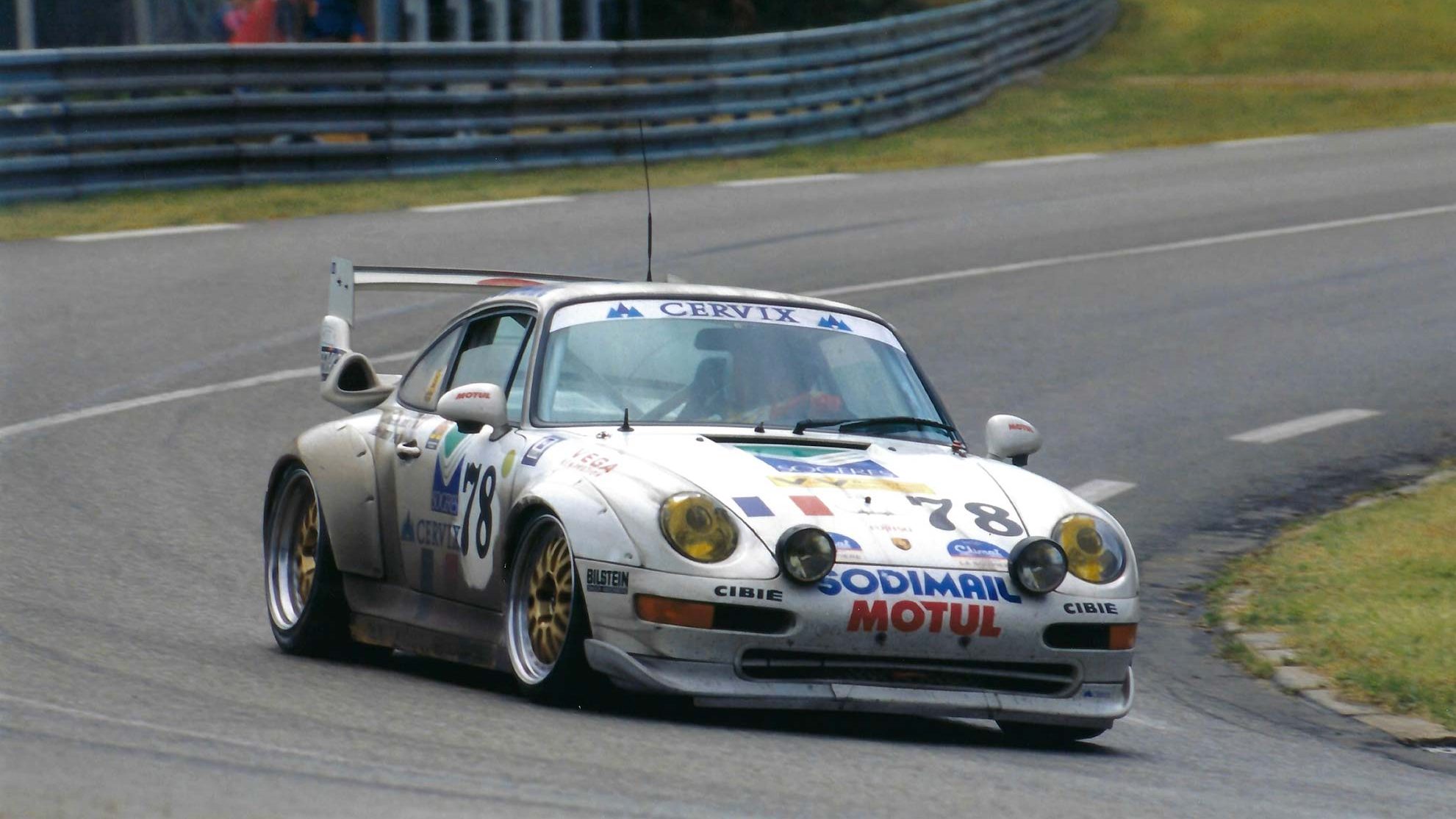
Racing classes can be a bit confusing to the layman, given it’s all a seemingly randomly selected bunch of letters and numbers, but in the mid-90s, it was refreshingly simple. GT1 is the big exotic boys like the McLaren F1 and Ferrari F40, GT2 was for the series production cars; essentially lightly modified, but otherwise normal sports cars. In 1993, Porsche decided that it’d be an excellent idea to build a car specifically to compete in GT2-class racing, something that the rules stated you couldn’t really do. To get around those pesky regulations, Porsche decided to take their fastest 911 at the time, pre-modify it for the track, and then sell it through a dealership as a “homologated” road car. Cheeky, but it just might work.
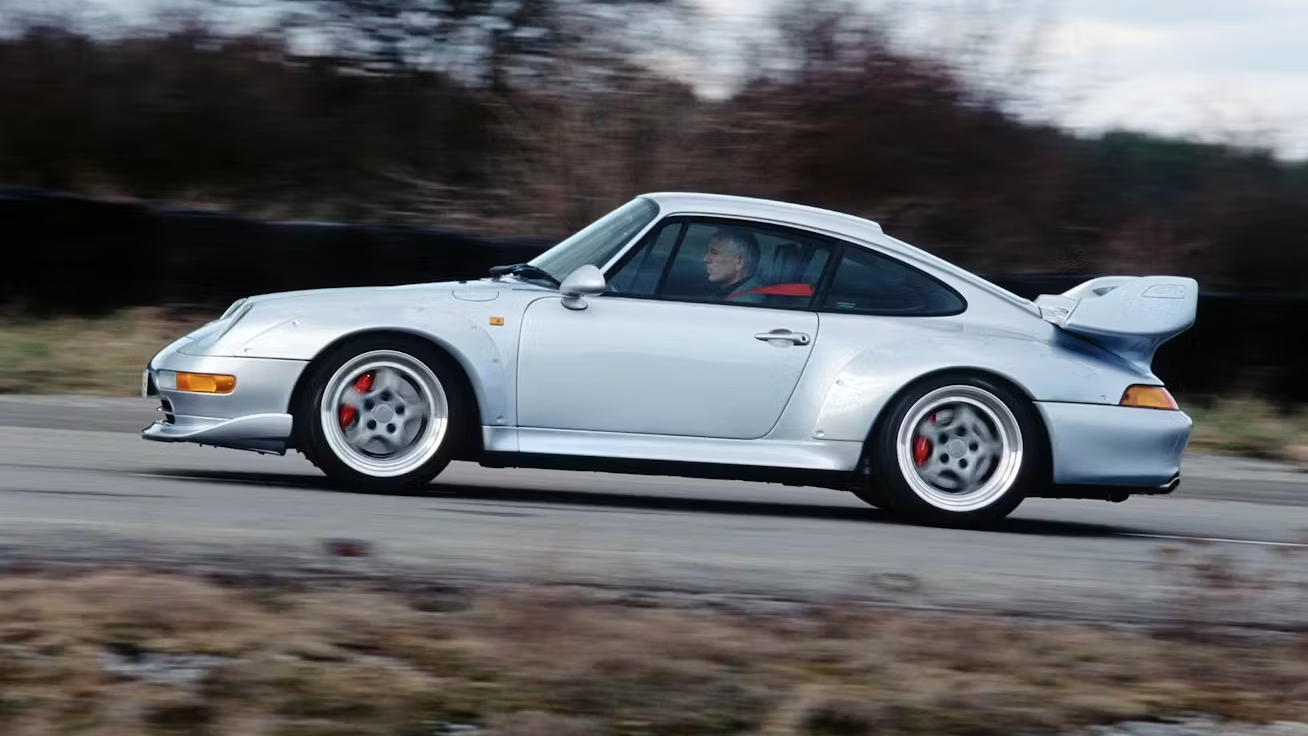
The boffins started with the 993 generation 911 Turbo; the quickest 911 you could buy, and then threw most of it away. The über-strict diet involved stripping out the back seats, losing the radio and air-con, fitting thinner glass and replacing the body panels with lighter aluminium ones. They even went as far as to remove the rear wiper, shaving a total of 200kgs from the Turbo’s already low kerb weight. Next was a bump in power from 408 to 430 horsepower, raising the top speed to 183mph. Finally, there was the handling to sort out. The new 911 GT2 received a bigger chin spoiler, an enormous rear-wing (with built-in intake snorkels for extra 90s cool-points), and wider bolted-on wheelarches (designed to be easily replaced in the event of motorsport argy-bargy) housing wider, stickier tyres. The biggest departure from the Turbo however, was the removal of the front driveshafts. You see, the 911 Turbo is sold as the ultimate all-weather performance car, deploying vast performance come rain or shine thanks to it’s neutral handling and four-wheel drive, so turning that car into a lightweight, rear-drive track car was going to have a profound effect.
Both on road and on track, the 911 GT2 was tricky. The enormous power and light weight, combined with 90s turbo-lag and Porsche’s stubborn insistence on keeping the heavy engine firmly behind the rear axle meant that oversteer was just a toe-flex away, and often arrived when you didn’t want it. That meant that the GT2 could only achieve a 3rd in class at Le Mans in 1995 (15th overall), and the 57 road cars ended up playing second-fiddle to the less aggressive, naturally aspirated 911 Carrera RS or Ferrari F355.
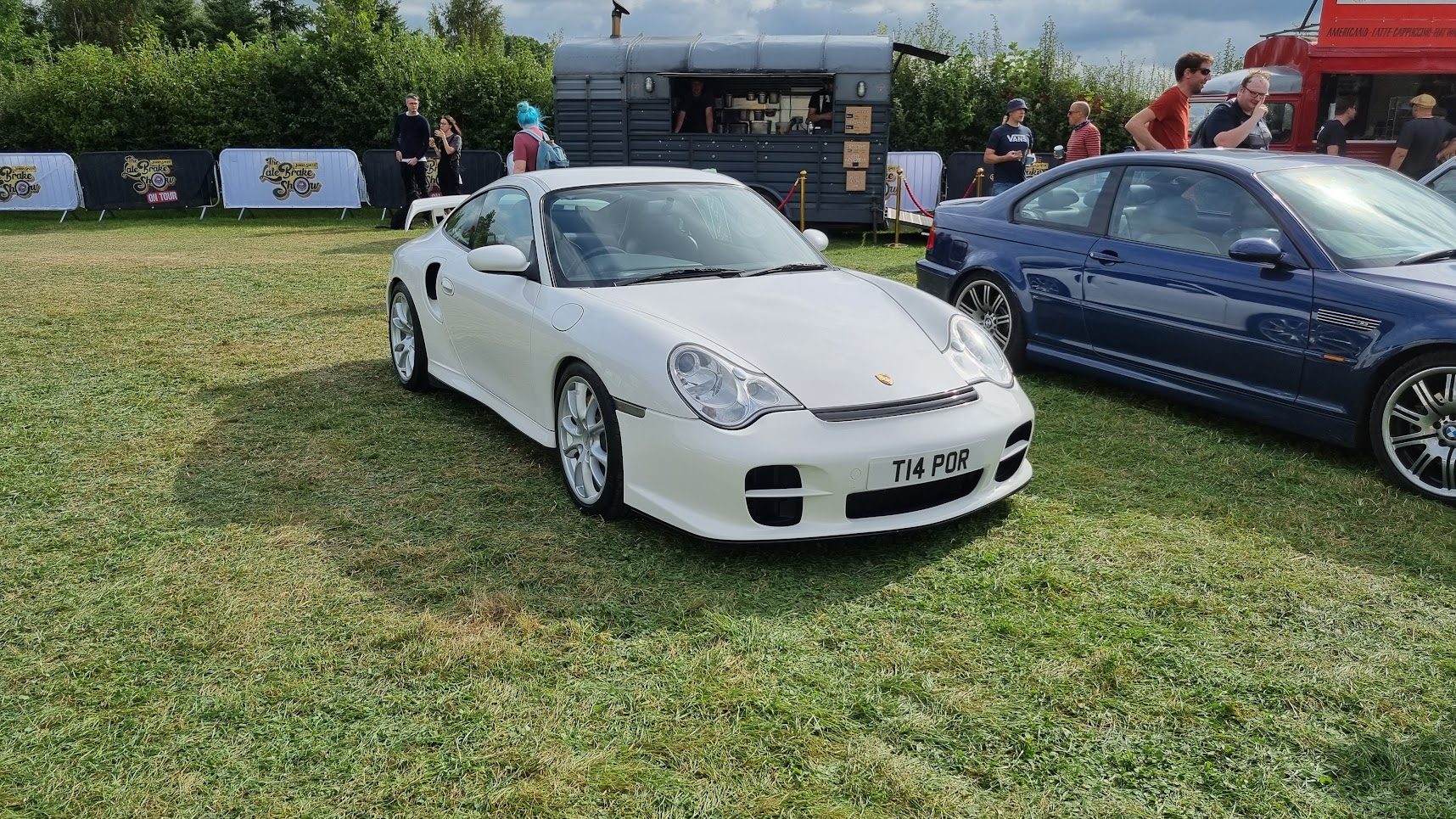
In 2003, Porsche decided to try again, but nobody is quite sure why. You see, by 2003, GT2-class had been scrapped in favour of the tighter regulations of GT3-class (regulations that still persist to this day), so whatever car Porsche built wouldn’t qualify for racing anyway. Plus, they’d just introduced the “Turbo S” model, taking the ordinary four-wheel drive Turbo and turning the wick up a bit more, so the last thing the Porsche range needed was a third fast, turbocharged 911. Nevertheless, they persisted. The 996-generation GT2 followed much the same recipe as it’s predecessor, taking the Turbo, lopping off the front driveshafts, losing as much weight as possible and boosting power to a frightening degree (480 horsepower this time). This time however, much more attention was paid to how the GT2 handled, and how best to tame it for the public roads.
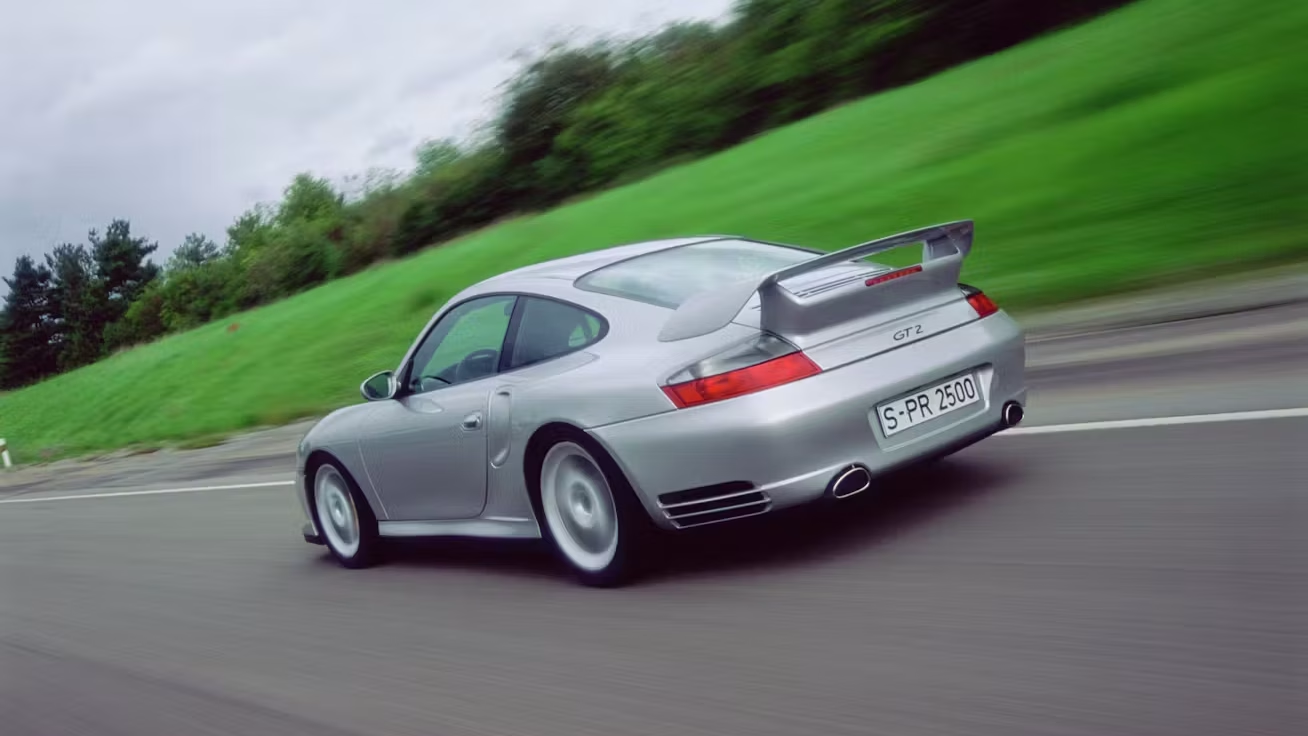
Slightly panicked by the 993 GT2’s reputation for bowel-emptying oversteer, Porsche’s engineers decided that the 996 GT2 should be altogether cuddlier, fitting carbon-ceramic brakes as standard, re-calibrating the throttle mapping to reduce turbo-lag and completely re-designing the car’s chassis geometry, so now it would safely understeer – slowing the car down mid-corner – rather than oversteer. Did it work? No, not at all. Let me talk you through cornering in a 996 GT2. First, you approach a corner, travelling at a considerable speed thanks to twin-turbo engine. Then, you apply some brakes to try and scrub the speed off, only to find that your carbon-ceramic discs have cooled down to the point where pressing the pedal doesn’t do a fat lot. Then, you turn into the corner, at which point, the front tyres start to push wide, and you find yourself going straight-on. In a panic, you lift off the throttle, at which point, the car snap-oversteers into the nearest hedge. In trying to tame the beast, Porsche had somehow built a car that was even trickier to drive, earning the 996 GT2 the nickname “The Widowmaker”.
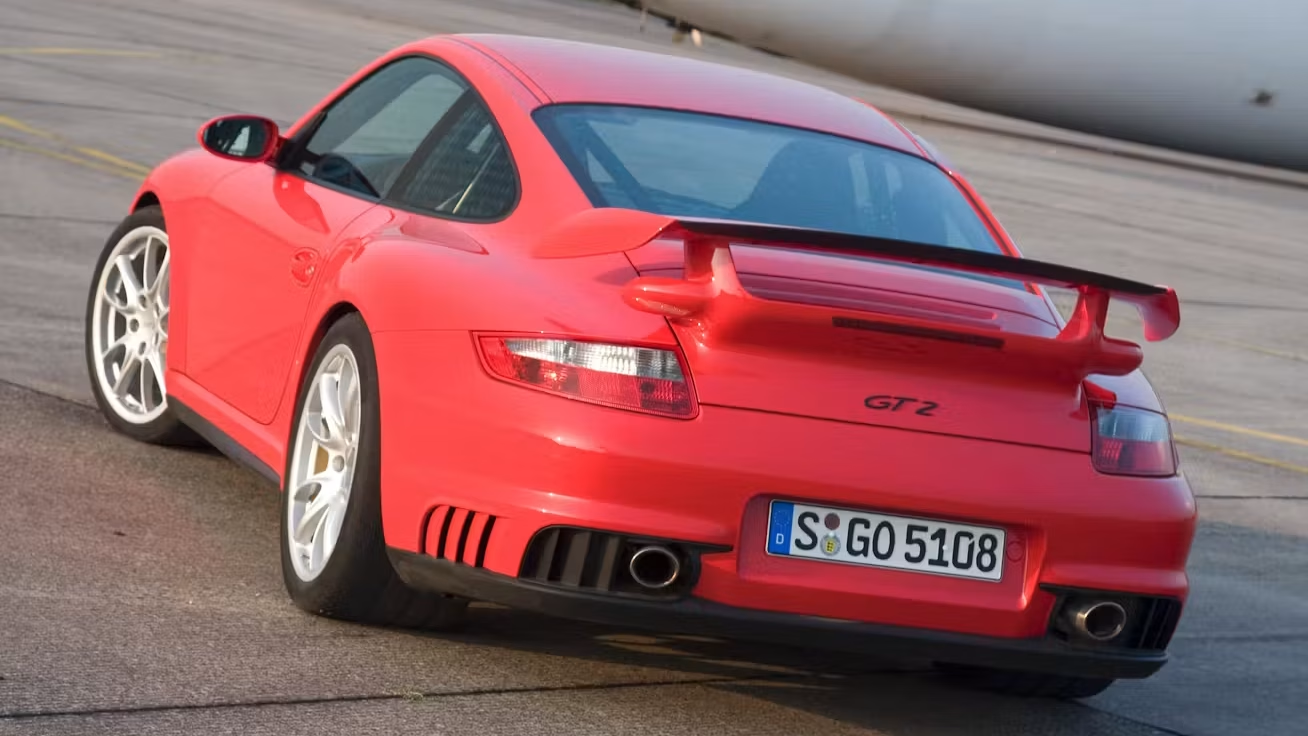
Undeterred, they decided to keep at it, taking the 997-generation Turbo and garnishing it with the normal GT2 treatment (say it with me now: Lightweight, big power, rear-drive). This time however, the engineering team took a different approach. Rather than trying to tame the car and overcorrecting, they did the opposite. Make the car purposefully twitchy, and in doing so, make it more agile. As a bit of a departure for the moment, the F-16 fighter plane was designed to be aerodynamically unstable, because that means that pilots can pull off tight, fast turns much more effectively than anyone else in the sky. To compensate for the instability, every F-16 had banks of onboard computers to keep the thing pointing in vaguely the right direction. The result? One of the most agile aircraft ever built. Porsche decided on a similar approach, by offsetting the GT2’s twitchy chassis and 530 horsepower with state-of-the-art electronic stability control, turning the Widowmaker into simply one of the fastest moving objects in whatever continent you happened to be driving on.
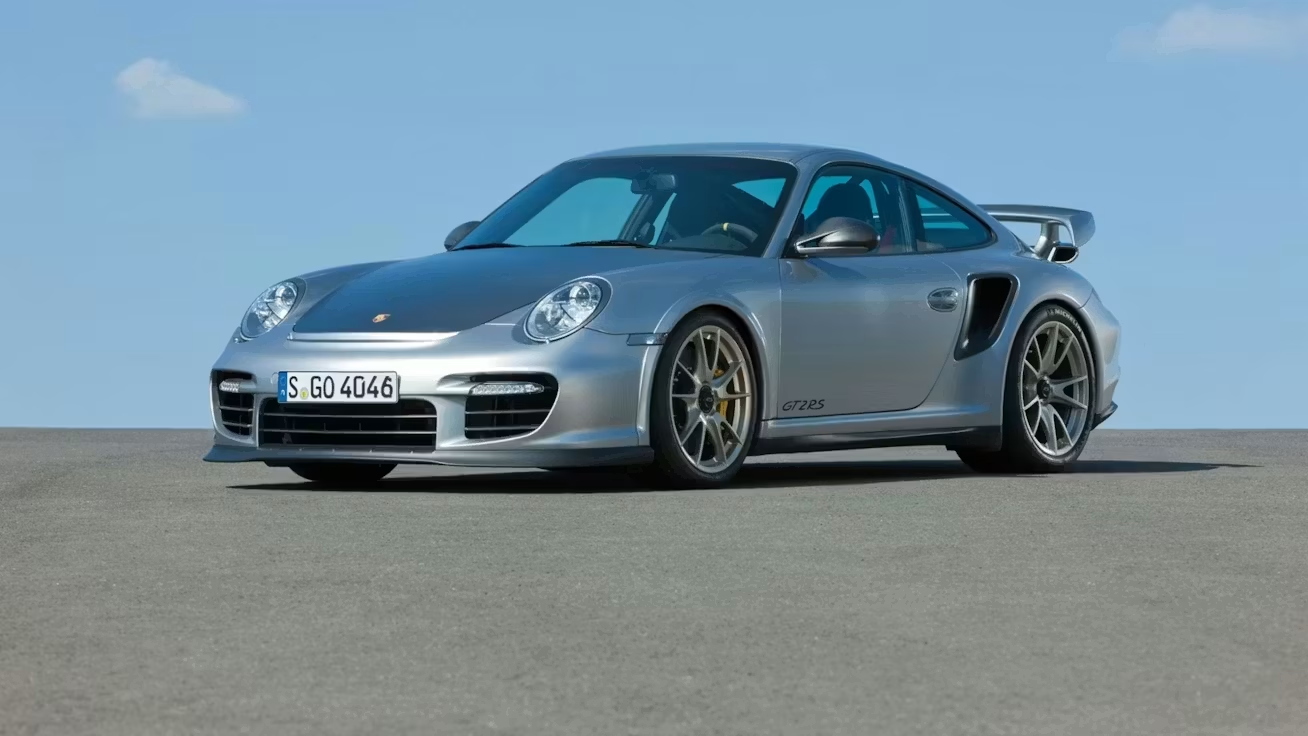
Impressed by the latest attempt at the GT2, Porsche decided to go one step further, dropping the kerb weight even more with liberal use of carbon fibre, Perspex windows, a single-mass flywheel and – you guessed it – even more power. The new 620 horsepower 911 GT2 RS became the first 911 ever to outrun Porsche’s own Carrera GT hypercar, cracking 0-60 in just 3.3 seconds, and topping out at 205mph. And it wasn’t just a straight-line weapon, with the revised chassis allowing the GT2 RS to lap the Nürburgring a full 9 seconds quicker than the mighty Nissan GT-R. As EVO’s Chris Harris noted when he took to the ‘Ring in a GT2 RS:
“The speeds are mind-blowing: it rockets from any kind of turn and arrives at braking zones 15-25mph faster than anything I’ve driven here before. […] Porsche’s recorded 7min 18sec lap is entirely believable, but at that pace the GT2 RS is an animal: one that needs respect and, most importantly, real diligence in the braking zones to keep those entry speeds in check.”
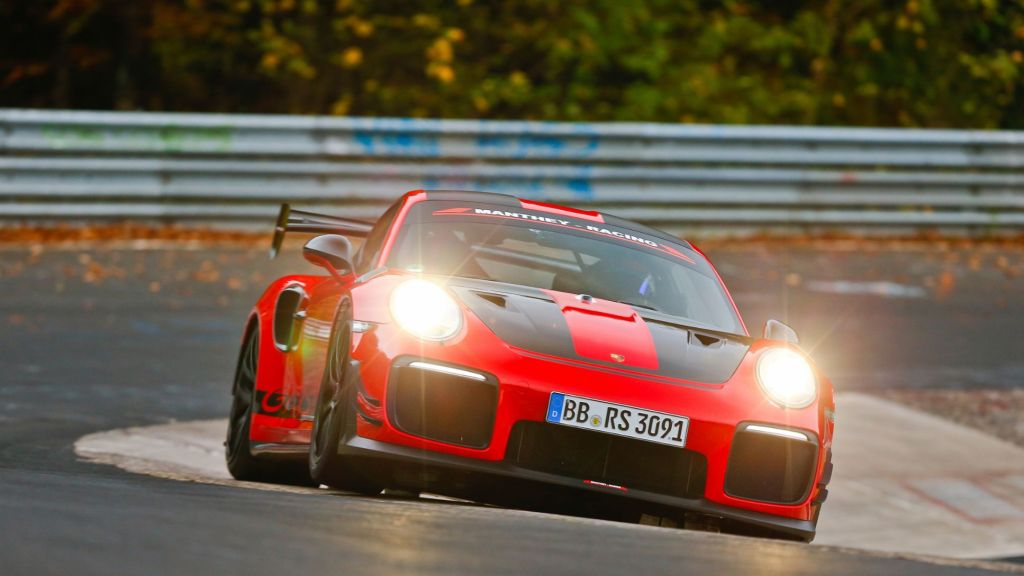
With the new benchmark set, all Porsche could do was refine the recipe even further. Arriving in 2017, the 991-generation eschewed the regular GT2 and jumped straight to the GT2 RS, with it’s all-new 700 horsepower twin-turbo engine producing so much torque that the engineers had to develop a new 7-speed double-clutch PDK gearbox. Now designed from the ground-up rather than being a modified Turbo, the 991 GT2 RS sported all sorts of exotic materials in it’s construction. A carbon fibre bonnet and a magnesium roof here, and a polycarbonate side window and titanium exhaust there. The end result could barely be classified as a road car, cracking the 60mph barrier in 2.7 seconds, and dropping the Nürburgring lap time to just 6 minutes 40 seconds with the help of a special “Manthey Racing” aerodynamics and suspension kit so extreme that Porsche couldn’t fit it as standard. If you wanted to have a go at matching the GT2 RS MR’s blistering pace, you’d have to buy a “regular” GT2 RS, purchase the MR kit directly from Manthey, and fit it yourself.
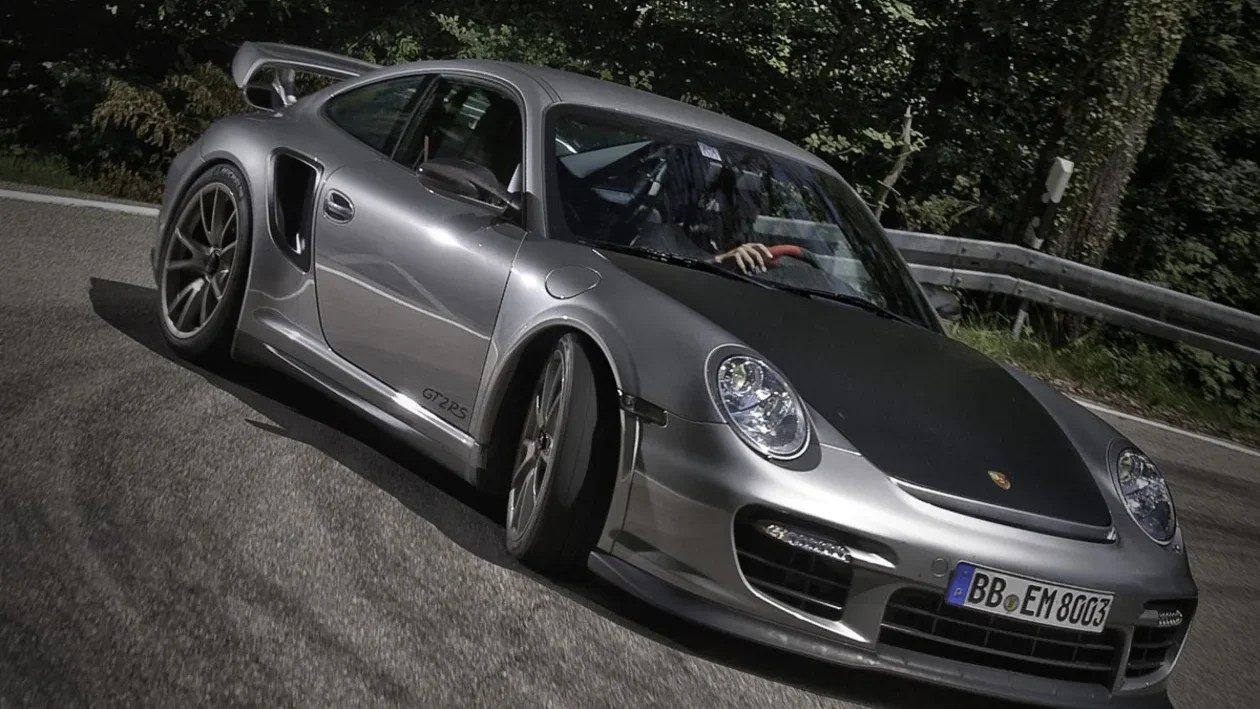
Had I the money, a 997 GT2 RS is one of my all-time dream cars. I love the idea of a car as subtle as that (certainly more subtle than the track-day-reject GT3 RS with it’s enormous wing, roll-cage and decals) that has the ability to act as a road-going personal teleport. You put your foot down, and suddenly you’re somewhere else. Unfortunately, given their rarity and reputation, it’s very unlikely that I’ll ever see one in the metal, let alone drive it, but should the day ever come, I know exactly where I’m going with it. Nürburgring, here I come!


Leave a Reply