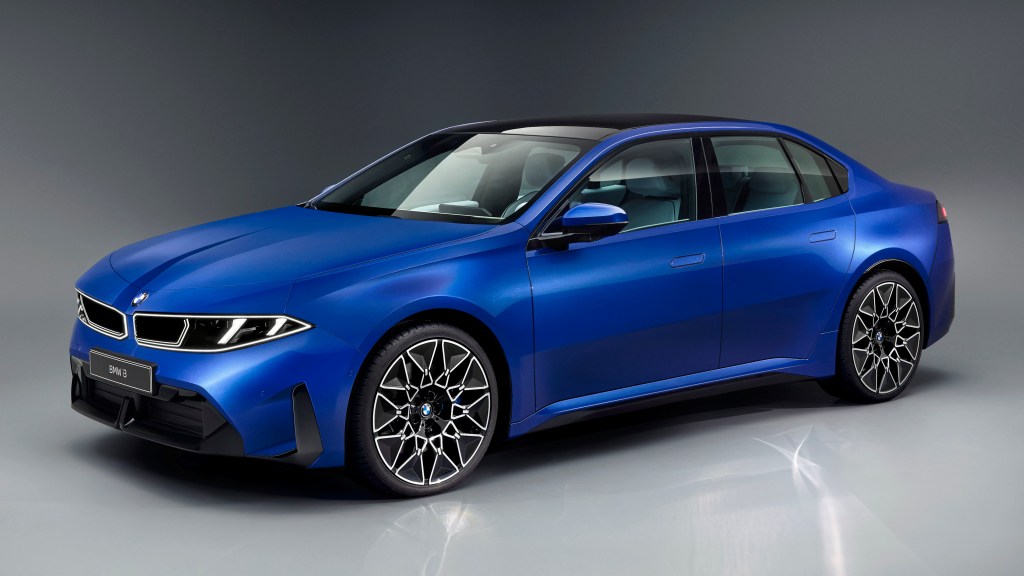
Recently, BMW pulled the covers off their new i3; the latest iteration of the venerable 3-Series and the first of the Neue Klasse (NUY-er Klass-eh) design language that will eventually be applied to their entire range. If we were good car journalists here at Project Petrolhead, we might tell you about its 562-mile EV range, or that it can charge at up to 400kW, for around 250 miles of range in just 10 minutes, but frankly, we don’t really care about that. Instead, we have one altogether more important question… What’s the M3 going to be like?
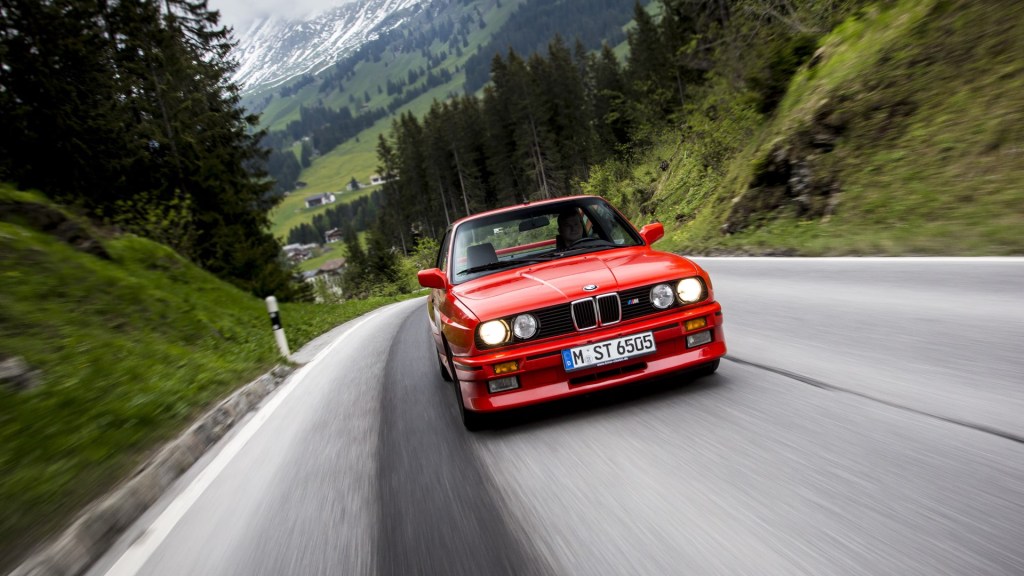
BMW’s M Division can trace its history back to the 1970s, when they were tasked with building a competitive racing car out of the E9 coupe. One tuned 3.0 litre straight-six and aero-monster body kit later, the 3.0 litre CSL won the ETCC 6 times. Needless to say, those boys knew how to build racing cars. Skipping forward to 1985 then, it’s easy to see the thought process behind adapting the E30 generation 3-Series for Group A touring regulations. Take a normal E30 saloon, widen the body to allow fitment of wider tyres, add a deep front splitter and rear spoiler for some extra downforce, raise the height of the boot lid to reduce the drag coefficient (yes, they really did take it that seriously), and then fit a 2.3 litre, 4-cylinder race engine. Then finally, and rather crucially, build 5,500 of them for people to buy. The end result – the first car to wear the name BMW M3 – was widely praised by the motorsport community for its handling and “ready-to-race” attitude and is still considered today one of the finest cars to come out of the 1980s. As a side note, it just goes to show, that all cars look better with box-arches.
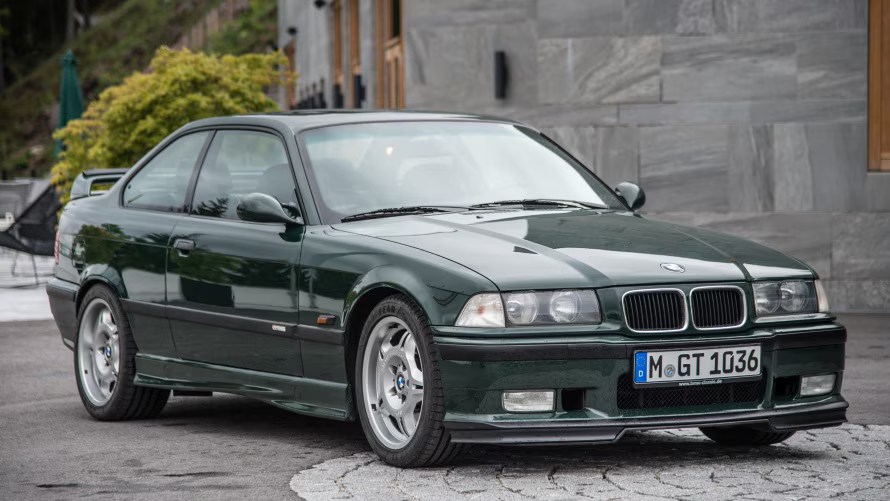
While the E30 M3 really got the world’s attention, for me it was the E36 generation that really set the template for the M3 we know today. Arriving in 1992, the transformation of E36 3-Series into M3 was altogether less radical than it’s predecessor, with subtle flaring of the wheelarches, a bluff front bumper with integrated splitter and a low-rise rear wing, the E36 really cemented the “if you know, you know” styling cues to the M3 lineage, letting the sports saloon pass through everyday traffic almost undetected until it decided to deploy it’s vast reserves of power. And vast they were. Ditching the 4-Cylinder for a bespoke 3.0 litre straight-six, the E36 M3 produced over 280 horsepower at launch – nearly 100 horsepower more than the original E30 M3 – and was the first M car to be electronically limited to 155mph (250km/h) in accordance with the “gentleman’s agreement” between Germany’s car manufacturers. Although that didn’t stop BMW releasing an “M3 GT” model that bumped the power up even further to 295 horsepower and was rumoured to be able to hit speeds of over 170mph.
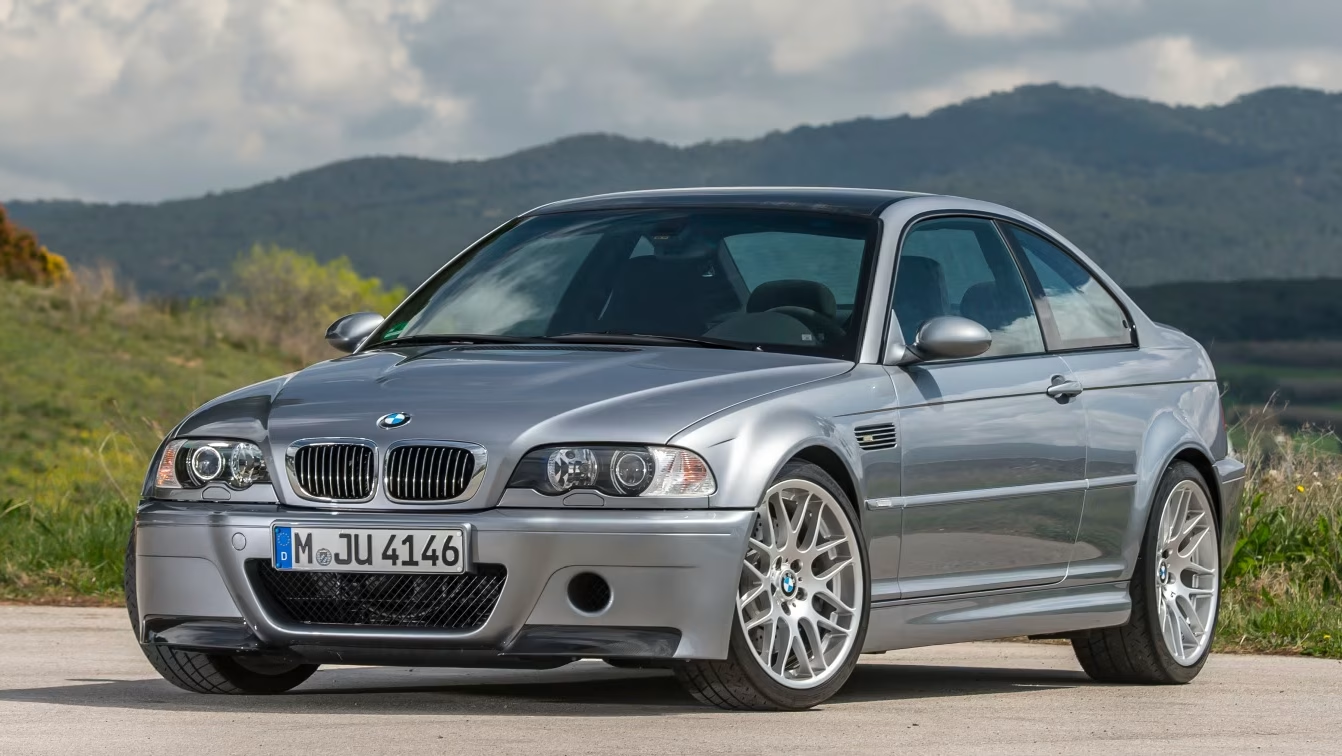
If you’ve ever been to the Nürburgring, then chances are you’ll have waded through a car park stacked to the gunwales with E46 M3s. And for good reason. Improving on the E36 recipe in almost every way, the E46 featured an even more powerful 3.2 litre straight-six – the legendary 340 horsepower S54 engine – mated to a sharper, more focussed chassis that could generate more mid-corner grip than its predecessor without the need for a rear wing (a whole 0.05 extra g don’t you know!). In 2004, as a nod back to the M3’s motorsport heritage, BMW released the E46 M3 CSL – a track focussed, lightweight development of the M3 – that used liberal application of carbon fibre and fibreglass to drop the kerb weight from 1560kg to 1385kg and a new freer-flowing airbox bumped the power up to 360 horsepower, allowing the driver to make use of the extra grip generated by the standard-fit semi-slick cup tyres. With only 1500 made worldwide – and only just over 400 making their way to the UK – it’s no mystery why CSLs command such a premium whenever they do come up for sale, regularly hitting the £100,000 mark.
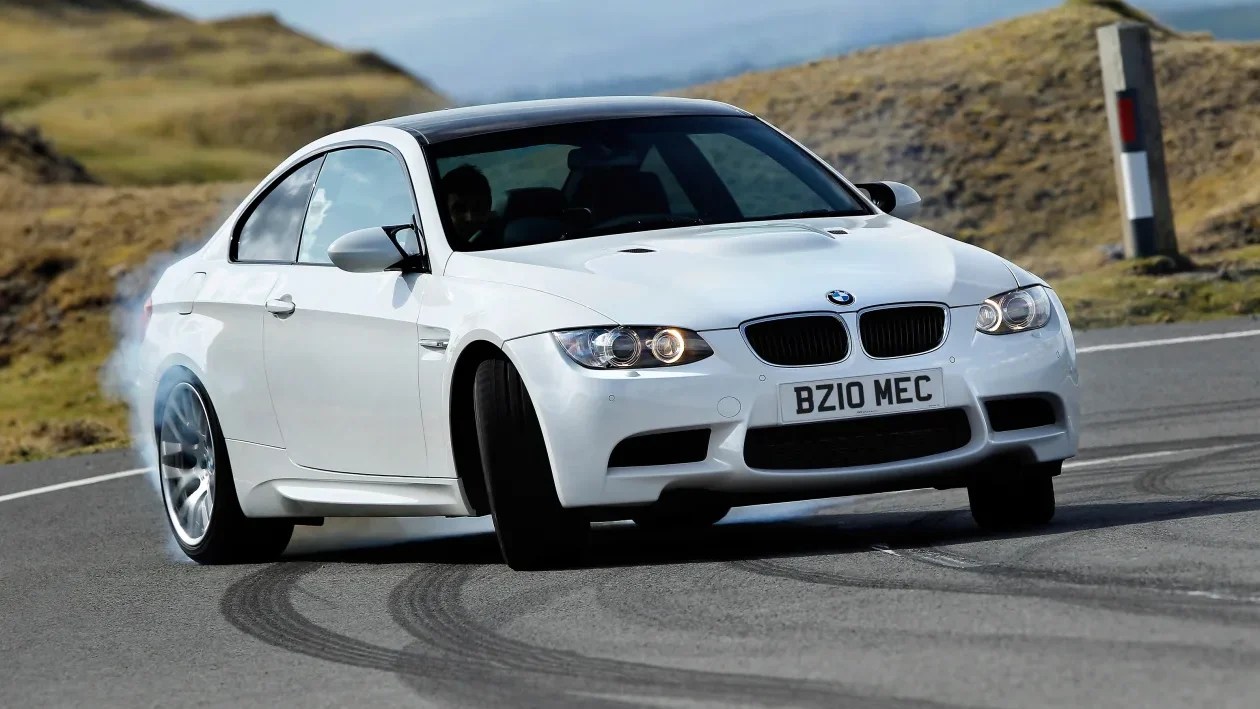
In the words of Monty Python’s John Cleese: And now for something completely different. In 2007, BMW pulled the covers off the latest M3 – the E90 generation (or E92 for the 2-door version) – and announced that, nestled under the bulging bonnet, was not the straight-six we’d all come to expect, but a 4.0 litre, 420 horsepower V8. That’s right, it seemed that BMW had taken a leaf out of the book of their neighbours at AMG and turned their mid-size saloon into a full-on muscle car, with a rip-snorting soundtrack and tyre-shredding 4.6 second 0-60mph time. While, like AMG, it could have been easy to focus on turning the M3 into a straight-line monster, BMW made sure to retain the same motorsport DNA that had permeated the M3 since it’s inception, with a perfect 50:50 weight distribution, twin-clutch DCT gearbox and electronically adjustable suspension that kept the car flat through corners. So complete was the overall M3 package, that it won over the Car and Driver staff when they ran one for 40,000 miles as a long-term test car in 2008, with Mark Gillies writing in their wrap-up review: “On a racetrack or a back road, it’s a beautifully balanced and hugely entertaining machine. […] This is the finest car on the market, period.”
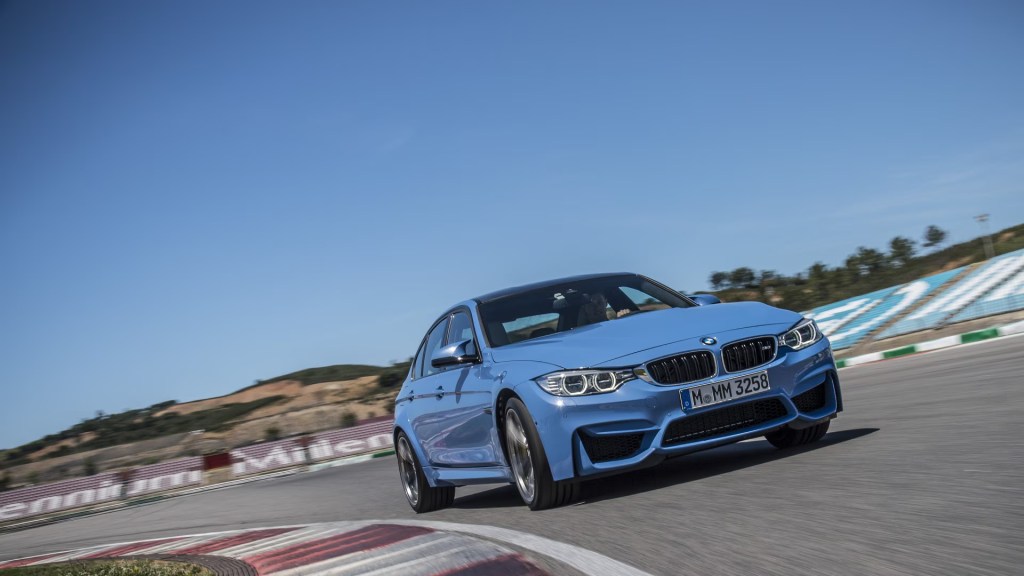
After that brief dip into hot-rod territory, 2014’s F80 generation M3 seemed almost like a return to form, with the V8 dropped in favour of the classic straight-six (albeit with the addition of twin-turbochargers for a 430-horsepower total), but in reality, the new M3 was no less of an animal. That was mainly down to the torque. While the high-revving naturally aspirated V8 had to make do with 295lb/ft, the newly turbocharged M3 had a whopping 406lb/ft. Great for long distance cruising, but in a car that had built its reputation for delivering easily controllable power slides, the heaps of extra twist made the rear-end extremely twitchy, even at low-to-medium speeds, with EVO’s Richard Porter noting after their Car of the Year test: “The news from Scotland was not good. […] The M3’s steering felt unnatural, its front end was hard to read, and the over-stuffed torque delivery led to regular bouts of unsolicited oversteer”. A lame duck then? Not quite. Undeterred by the critical panning, BMW kept developing the car throughout it’s life, culminating in 2018 with the fantastic M3 CS. Sporting a re-tuned chassis, re-calibrated Electronic Stability Control and new lightweight components, the CS made the M3’s stonking performance more accessible, and turned it into a car that could lead its class.
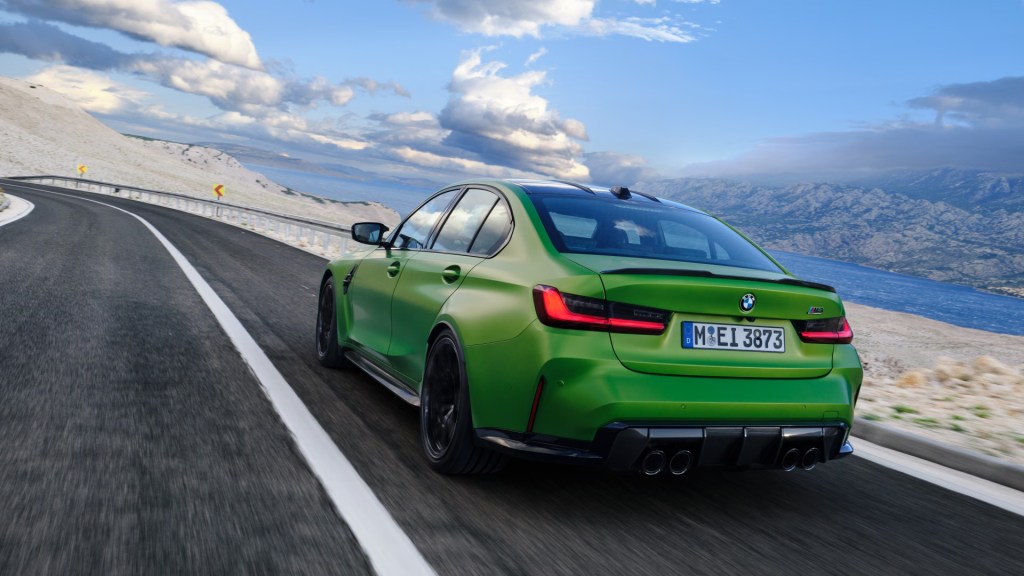
The last stop on the M3 history tour – at least for now – is the beaver-toothed face of the G80 generation M3. Alright, I promise not to mention how it looks, but rest assured, it’s bloody awful. Anyway, there’s more to mention about the G80 than its challenging aesthetics, namely that BMW had learned from its mistakes and launched the new 503 horsepower M3 with xDrive (all-wheel drive to you and me) to help tame some of the waywardness. For the oversteer purist, this was an optional extra, with a rear-wheel drive version also available, and even the xDrive cars allowing you to decouple the front drive shafts at the touch of a button, but the extra grip from the front axle lent the M3 a new character, almost turning it into a replacement for the (at the time) recently departed Nissan GT-R. Forget all that though, because there was a much more important addition for the G80 generation. For the first time in it’s 36-year history, BMW offered the M3 as both a saloon and an estate, so now the family labrador could be involved in the “ultimate super saloon” action as well!
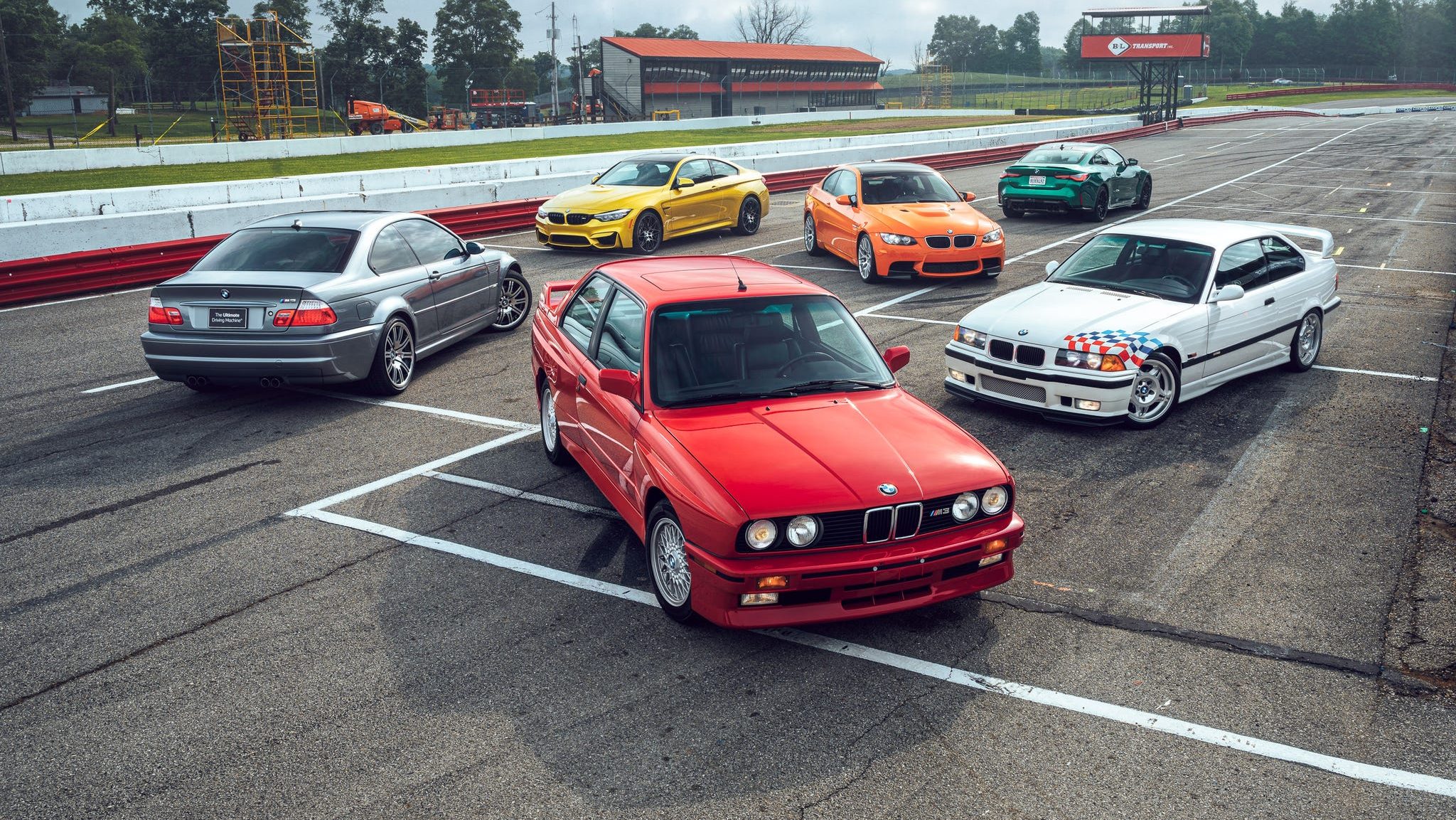
The M3 lineage is made up of “firsts”. From the First M3, to the first with a straight-six, the first one made with carbon fibre, the first with a V8, the first turbocharged M3 and the first all-wheel-drive M3, it’s plainly obvious that BMW always uses the M3 platform as a springboard for new technology. Maybe with the new i3, we’ll see the first hybrid M3, or maybe even the first full-electric M3? Only time will tell…
Hopefully it doesn’t have a bum-face still…


Leave a Reply