If you’re a fan of late-70s disco or early-80s synth-pop (and who isn’t) then you probably recognise the name Giorgio Moroder, and if you don’t then take a few minutes out of your day to look up his discography, and then realise that you do in fact recognise most of the stuff he’s worked on over the years. An incredibly talented composer then, but why is he getting a mention on this ostensibly car-focused column? Well, that’s down to a little side project he worked on during the early 90s, that just so happened to become one of the maddest supercars of all time.
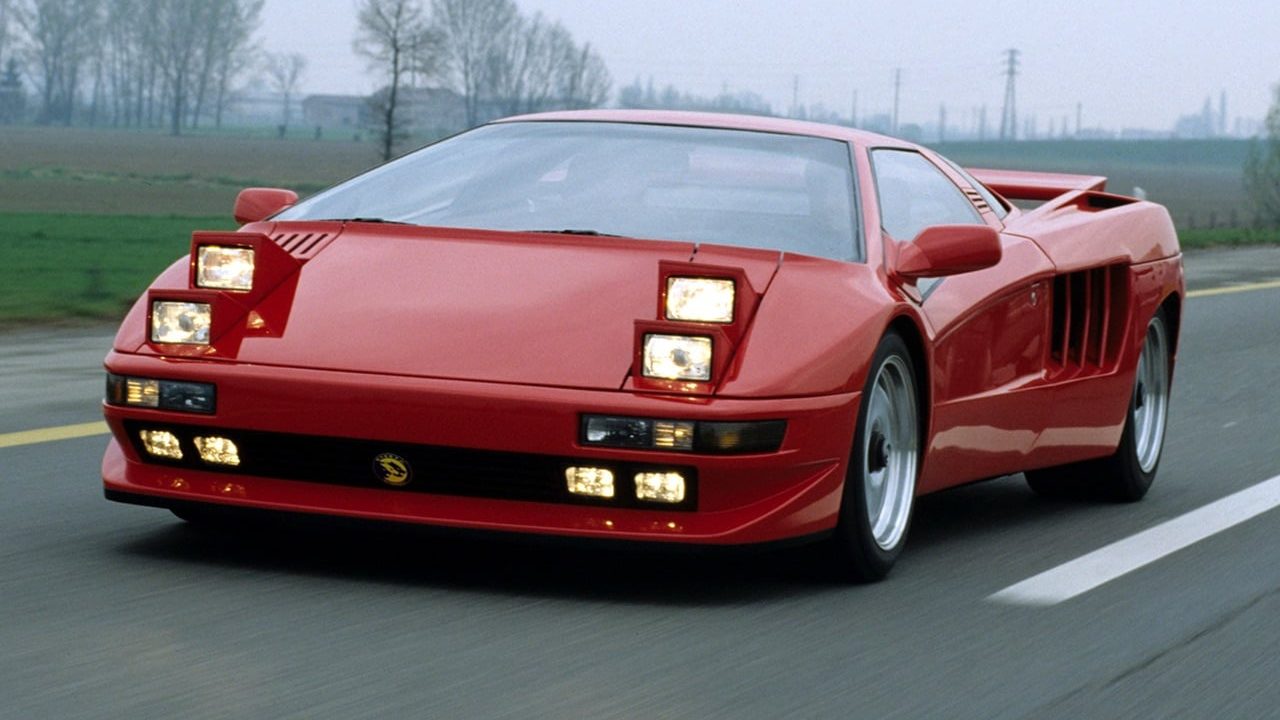
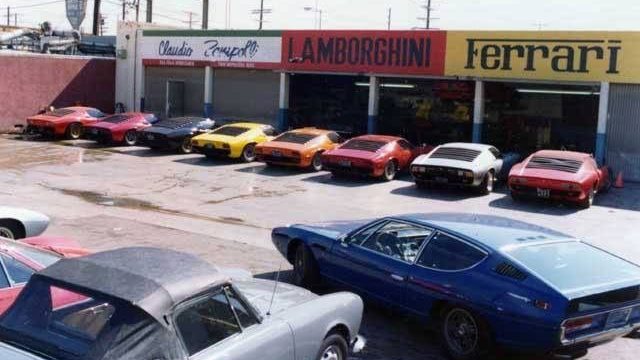
Our story starts, not with the father of disco, but with a chap named Claudio Zampolli. Growing up in Modena, the heart of Italy’s motor industry, it was almost inevitable that Zampolli would go on to automotive greatness. An engineer by trade, he was part of the team the developed the Lamborghini Miura, Countach and Urraco, before he was seconded to the US by Lamborghini to look after their aftersales department in Los Angeles. When Lamborghini pulled out of the US market, Zampolli stayed behind and opened up his own workshop specialising in Italian exotica, which made him the go-to mechanic for LA’s supercar-owning celebrity populace. It was during his time spent under the bonnet of various prancing horses and raging bulls, that Zampolli came to a realisation; None of them were particularly well-built, and his US clientele were less accepting of the foibles that European enthusiasts would classify as ‘character’. That meant there was a gap in the market, so Claudio Zampolli set to work, founding a company under his own initials (C.Z. – Chi-Zeta in Italian = Cizeta) and securing a large investment from his friend and frequent customer (you guessed it) Giorgio Moroder.
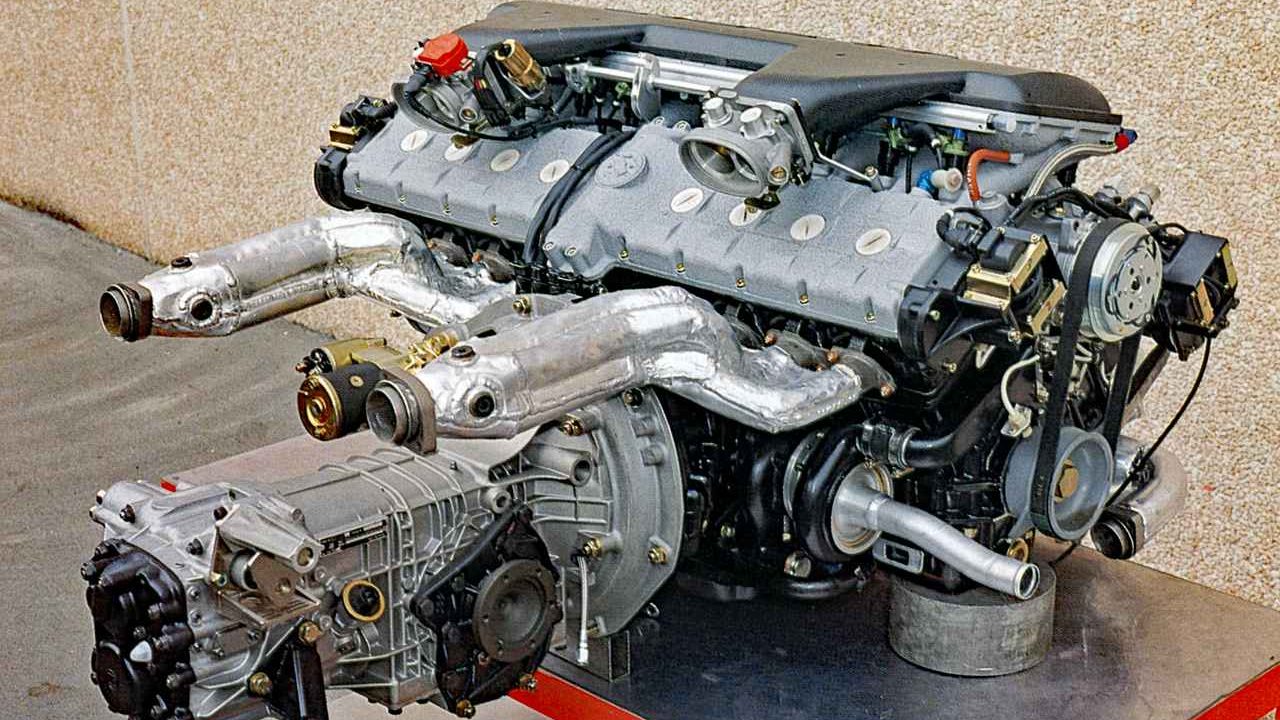
Zampolli started by purchasing a second-hand Ferrari 308 and then cutting it into pieces. Quarters, specifically. Widening the chassis and increasing the wheelbase. Then he contacted Oliviero Pedrazzi – the chap who helped develop Lamborghini’s V8 – to design him a bespoke engine. You see, in America, a V8 isn’t exotic, it’s something that you’d expect to find in a farmer’s pickup truck. How about a V12 then? Well, that’s better, but still a bit… common. So what Pedrazzi came up with was something completely new. By taking two Ferrari 308 V8s heads, the crankshafts from the Lamborghini Urraco, and then mounting them arse-to-arse in a single cast engine block, he created the first 16-cylinder road car engine since 1933; a 6.0 litre, 550 horsepower, 64-valve, 8-overhead-cam (effectively two sets of quad-cams, one for each half of the engine), 8000rpm behemoth.
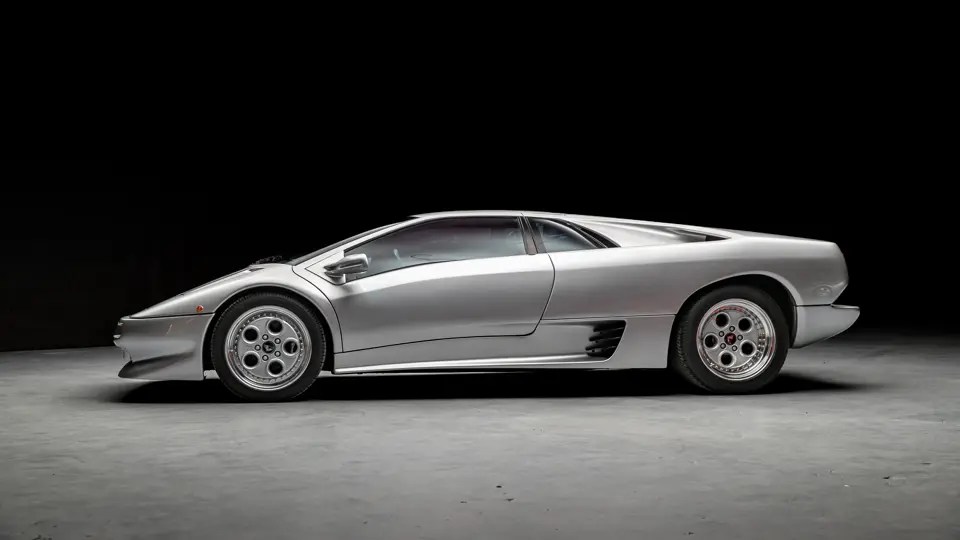
Ridiculous exotic engine sorted, all Zampolli needed was a ridiculous exotic body to put it in. Luckily, his old mate Marciello Gandini phoned. Now, Gandini has one hell of a reputation for designing some properly sexy cars (Lancia Stratos, Lamborghini Miura and Countach, Maserati Khamsin, Renault 5, Fiat 2400 Dino, DeTomaso Pantera, Alfa Romeo Montreal, Ferrari 308 and Bugatti EB110 to name just a few), and he was, up until that point, penning the new Lamborghini Diablo, that was until Lamborghini got bought out by Chrysler, who asked Gandini to perhaps maybe tone it down a bit. Spurned by the invading yanks, Gandini passed the designs to Zampolli to use for his wedge-shaped middle-finger salute, and the Cizeta-Moroder V16T became a reality, coincidentally debuting a full year before Lamborghini’s redesigned Diablo. How strange.
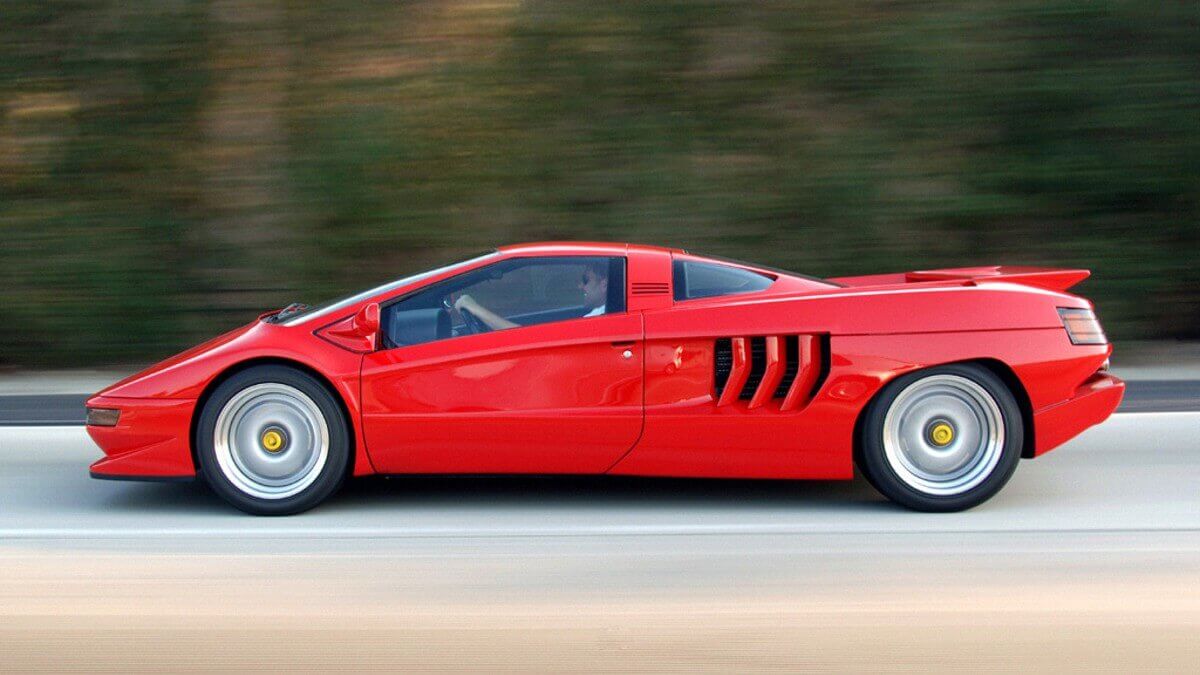
“But Tom, you gorgeous hunk of man-meat.” You shout. “If this car was so good, why have I never heard of it before?” Well, there’s a good reason for that. At the car’s debut in 1989, the estimated retail price was an eye-watering $250,000 (or about $670,000 in 2026 money), but better yet, it wasn’t even close to being production-ready. Not a problem for Zampolli, who was insistent that everything should be absolutely perfect before the first car left the factory, slightly more of a problem for Moroder, who was bankrolling the whole project with his own personal – yet currently fast-dwindling – wealth. In a slight panic, Moroder approached Gemballa (makers of those INCREDIBLY 80s tuned Porsches) to see if they could bring the project to heel, but even they couldn’t make the thing work, offering instead to rip out the V16 and replace it with an off-the-shelf V12 from BMW. Zampolli refused, and Moroder pulled the plug. To that point, only one working prototype had been built (owned by Moroder himself until 2021), and even that car ran on only 14 of its 16 cylinders.
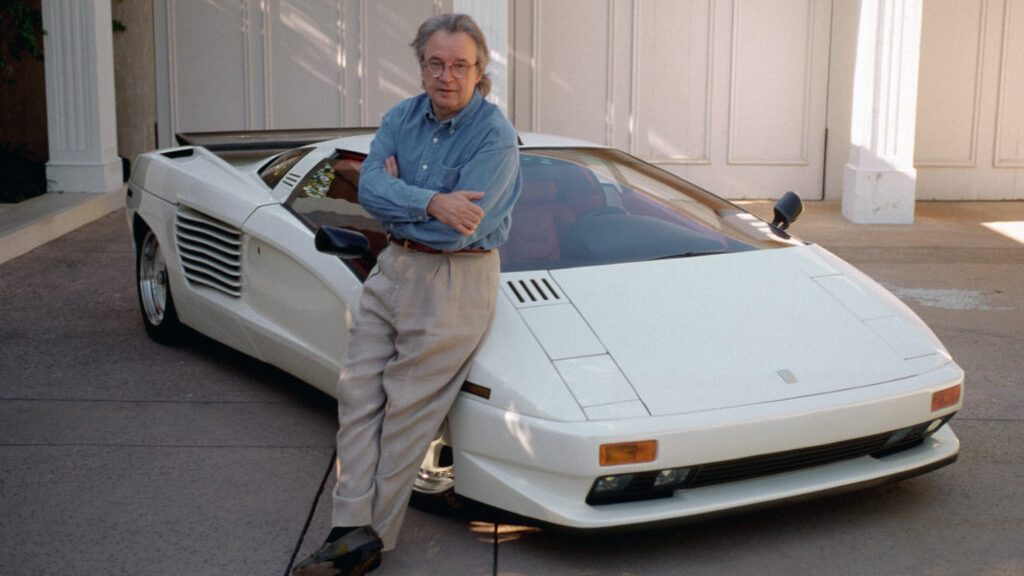
Zampolli however, was not defeated. He retained the tooling for the Cizeta V16T (now sans-Moroder for obvious reasons), and even managed to shift a handful of units, retooling the engine for better reliability (at the expense of about 40 horsepower), and beefing up the chassis and suspension, but by that point, the cost of the car had ballooned to over $600,000 ($1.6 Million in 2026, and over $200,000 more than Ferrari’s landmark F40), going back on sale in 1991, just as the world’s banks crashed. And just to top it all off, the US government decided that the Cizeta didn’t meet their homologation rules, meaning that the V16T could no longer be legally sold in America, the market it was designed for in the first place. Cizeta filed for bankruptcy in 1994, but Zampolli didn’t stop there. Desperate to raise some capital to keep the V16T project alive, Zampolli tried to sell off some assets, including a Lamborghini Miura to TV personality and utter car nut Jay Leno. There was only one small issue. He didn’t OWN that Miura, a fact that Leno reminded him of in a heated argument at an LA car show, during which he publicly branded Zampolli a “crook”. In a truly baffling move, Zampolli sued Leno for defamation, only for the court to decide that it wasn’t illegal to call somebody a crook, if in fact, they were one. In a petty act of revenge for losing the case, Zampolli’s repair shop just happened to lose something else; a rare Maserati Mistral, that coincidentally used to belong to Zampolli’s own lawyer. What a charming chap he was.
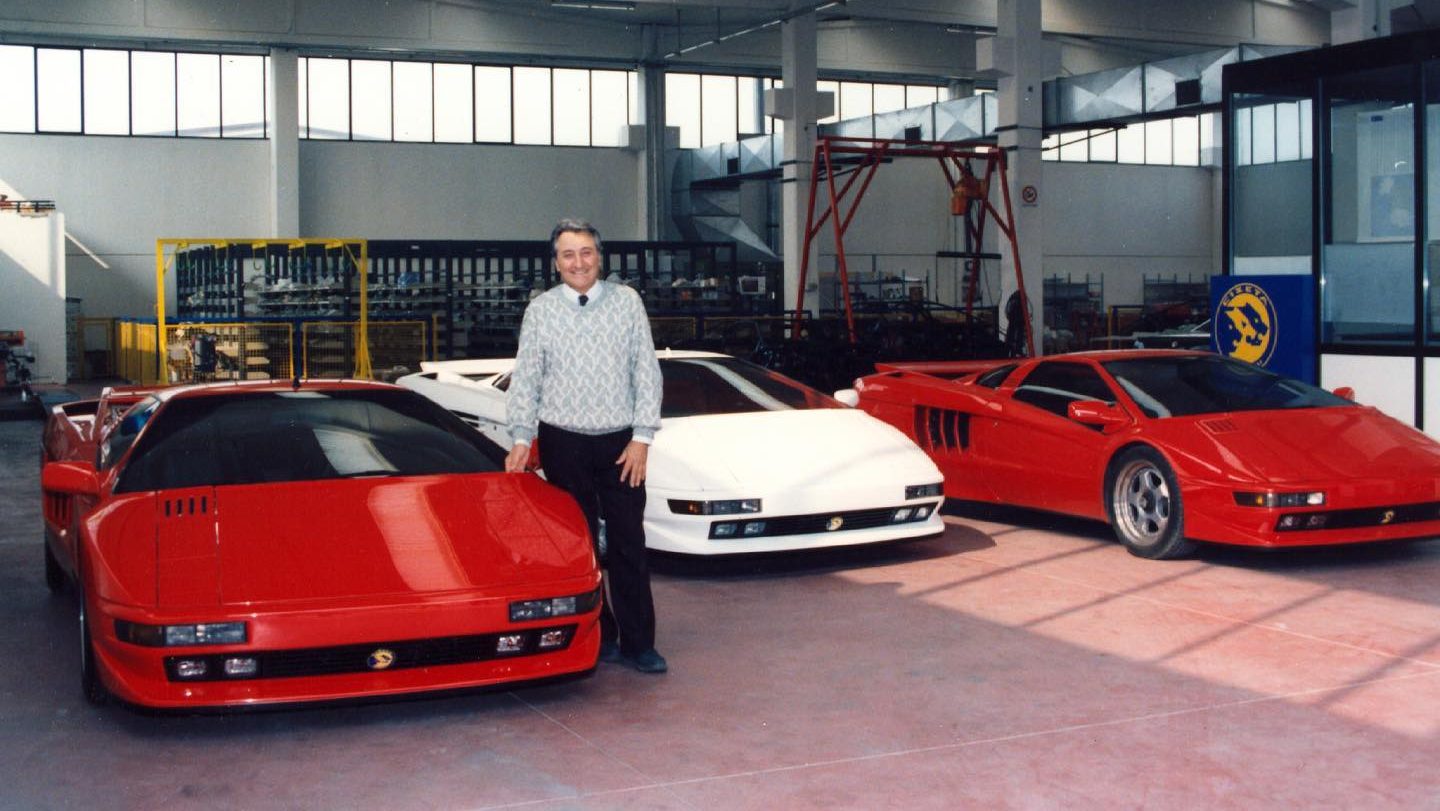
So that’s the full story of the Cizeta-Moroder V16T, and what a story it was. Often we champion the underdog here at Project Petrolhead, because we’re firm believers that competition is paramount to keep the car industry interesting, but as happy as I would be to tell you that the V16T was a huge, unmitigated success, it seems that – through the revenge, petty squabbles, actual crime, and unwavering perfectionism – in this particular instance, I think it’s fair to say that Claudio Zampolli may have orchestrated his own downfall. Perhaps he should have called it the Icarus instead.


Leave a Reply