If you’re familiar around these parts, then you probably recognise the name Enzo Ferrari. Known for building some of the most exotic, desirable cars in the world. Funny to think then, that the car Enzo decreed as “the most beautiful car in the world” wasn’t a Ferrari at all. It wasn’t even Italian. It was, in fact, an old Jag.
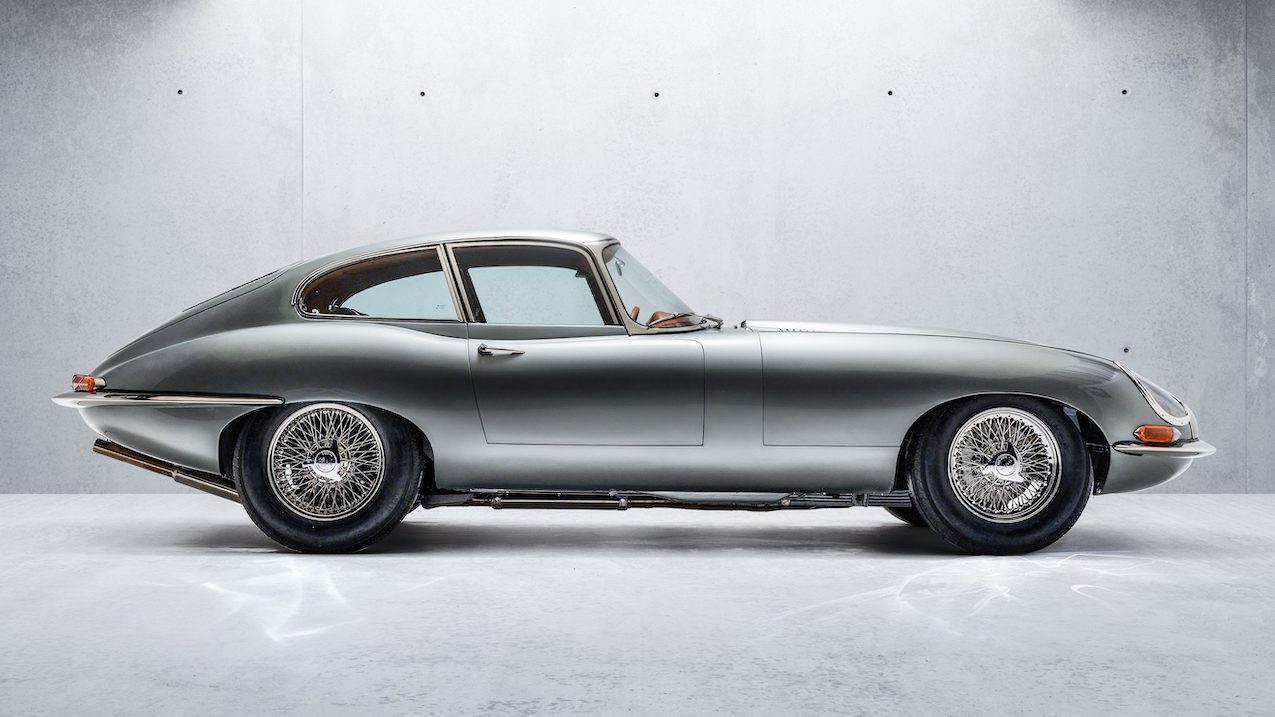
The year is 1960, and Jaguar’s top designer – a chap named Malcolm Sayer – is busy drawing up plans for a replacement to the venerable XK150. Bigger, heavier and more cumbersome than the XK120 from which it evolved, Sayer decided to scrap the XK150 entirely, and design this new car from the ground-up. Diving into his own back catalogue of designs, Sayer took the chassis and engine from the Le Mans winning D-Type, carrying over that car’s unitary body, inboard-mounted disc brakes, and independent suspension. The development team then fitted cutting-edge (for the 60s) rack-and-pinion steering and bored the 3.4 litre D-Type engine out to 3.8 litres for extra torque. With the oily bits sorted, Sayer set to work on the body. An aerodynamicist by trade, he’d proved instrumental in Jaguar’s successful motorsport campaigns through the 1950s, being responsible for converting the XK120 into the C-Type, and furnishing the D-Type with it’s signature vertical fin. With aero in mind, Sayer designed a low-slung, sleek sports coupe, with faired-in headlights (rare for the 60s), a narrow track-width – where the wheels are tucked deep into the wheelarches so as to not disturb the airflow – and a swooping, teardrop-shaped rear to reduce drag at high speeds.
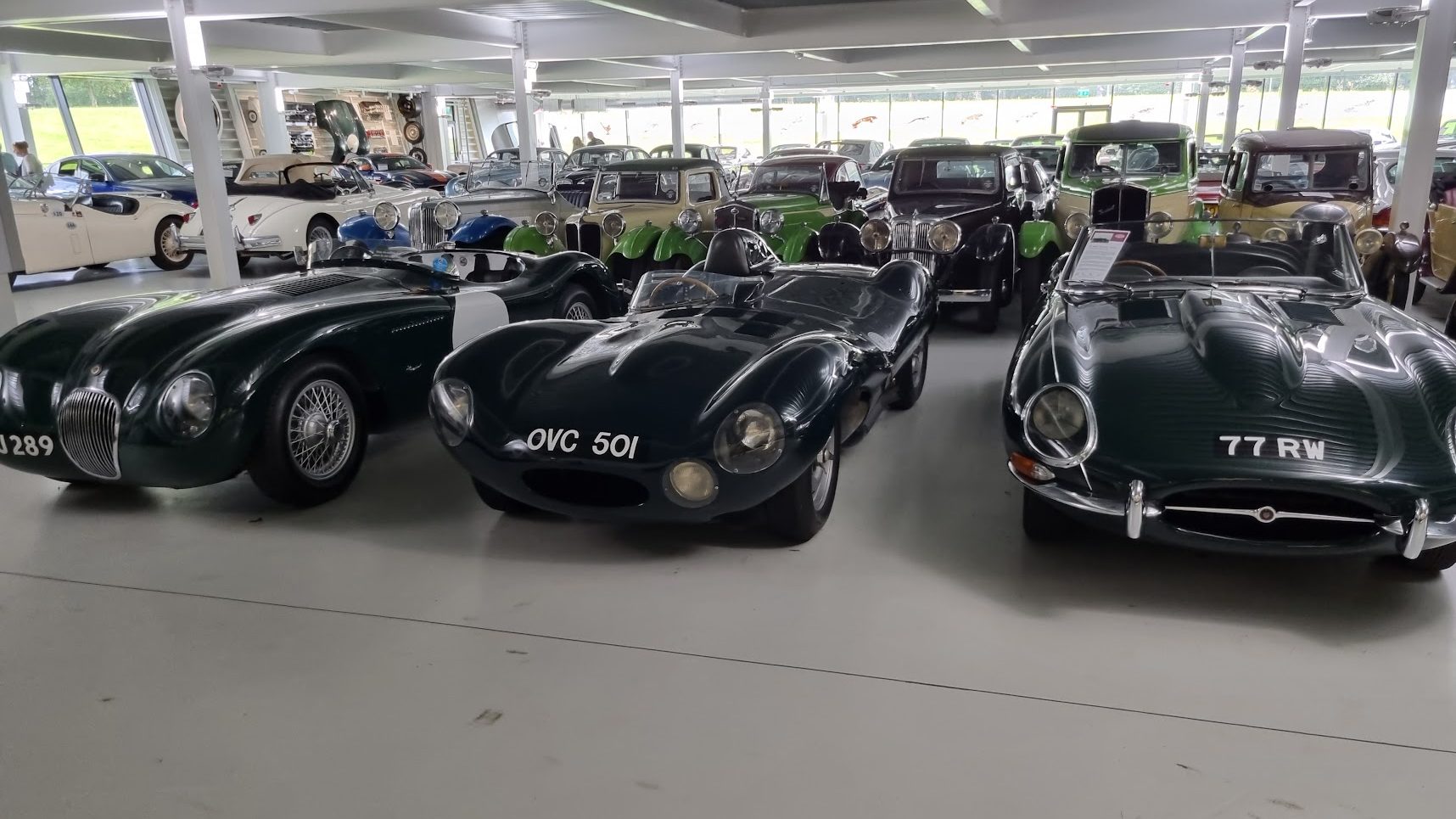
With the prototypes now firmly in development, the matter of testing the thing became the priority. Jaguar did have access to an early wind tunnel, but it was so inefficient and costly to run, that they had to wait until nightfall to fire it up in case they burned out the National Grid. For top speed testing, Jaguar needed more space than any racetrack or airstrip could provide, so their test drivers waited until the small hours, jumped on the M1 and pushed the car to a staggering 150mph. To stop the canvas roof on the roadster prototypes from getting ripped apart at those speeds, a load of lead shot was sown into the fabric of the roof to weigh it down. With testing complete, the project was passed to legendary Jaguar boss William Lyons for final approval. He didn’t like it. He thought the rear looked wrong and that the rounded belly was unnecessary. Realising that it was too late in the day to scrap the project – and with some mild convincing from Sayer – Lyons approved the new car for launch, resigned to the fact that they probably wouldn’t sell any.
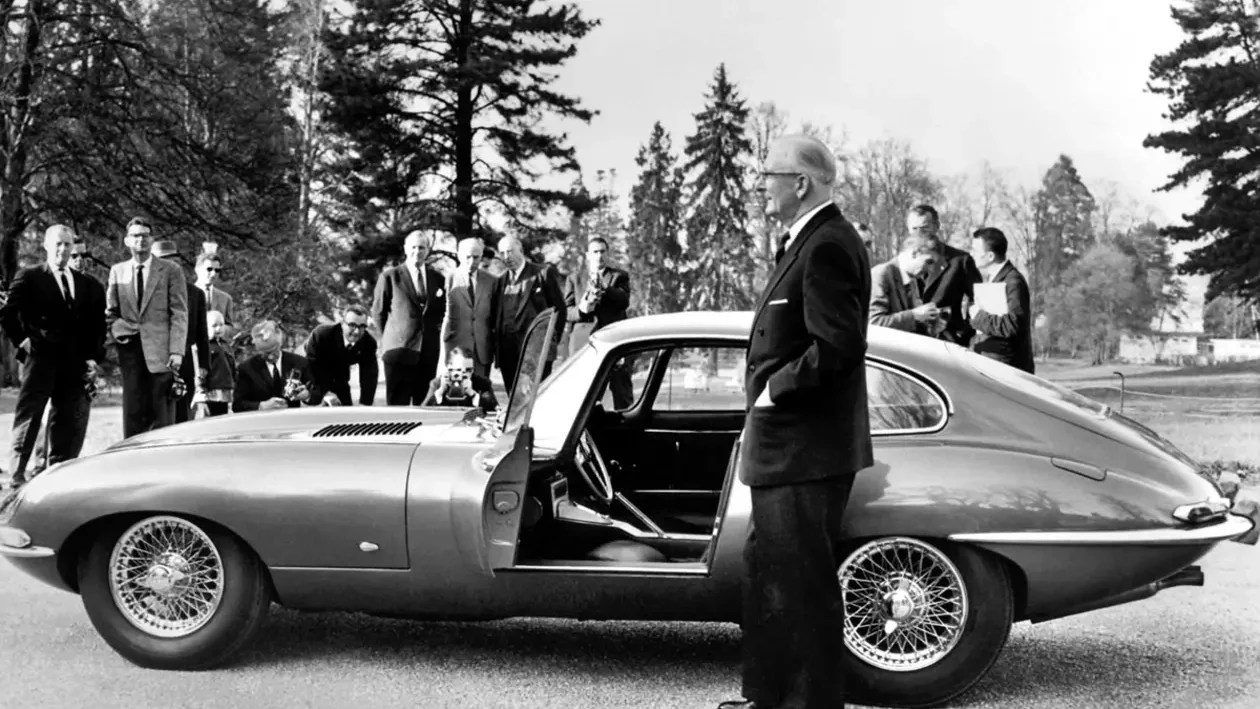
At the Geneva Motor Show in March 1961, Bob Berry pulled the covers off the prototype Jaguar E-Type Coupe for the first time, and the world was stunned. Named to carry on the legacy of it’s Le Mans forebears, the car became an immediate success with the world’s motoring press (as well as Mr Ferrari), and the Jaguar team were inundated with requests to test drive it. And so, a call was made. Berry rang the Jaguar factory in Coventry, got hold of a chap named Norman Dewis, and told him to drop everything and get the spare E-Type – the prototype roadster – to Geneva ASAP. Luckily, Dewis was exactly the right man for the job. As Jaguar’s chief test driver, he was the man responsible for hitting 172mph in a specially modified XK120, and had raced a D-Type at Le Mans in 1955, so if he knew one thing, it was how to drive at very high speed for a long period of time. Saddling-up E-Type 77RW, Dewis set off through the night, arriving in Geneva with moments to spare the very next morning, just as the show was re-opening. With both prototypes winning hearts and minds, Jaguar had one last trick up their sleeves to truly win the day. In 1961, the equivalent Ferrari or Maserati cost around £6000, but the E-Type – with its racing car chassis and powerful straight-six engine – cost less than half of that.
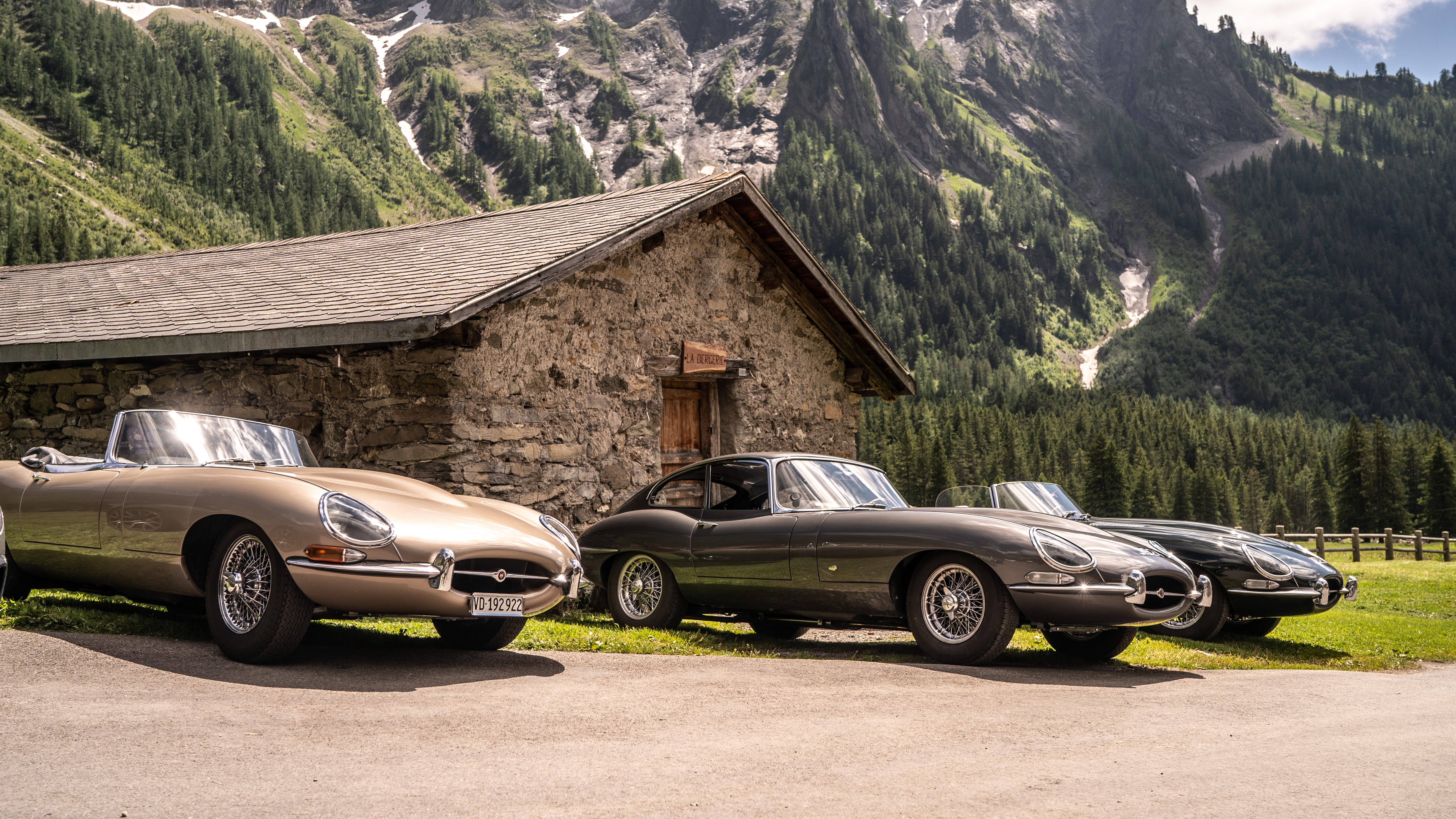
Production of the E-Type continued in one form or another for thirteen years, with coupes, roadsters, lightweight race cars, “low-drag” cars for top-speed runs, four-seaters, and even a V12 version in the later cars. From my point of view, the E-Type is easily one of the most iconic British cars of all time, perhaps even one of the most iconic CARS of all time, and it seems that the world agrees. US Magazine Sports Car International called it the “Top Sports Car of the 60s”, the Daily Telegraph ranked it the “most beautiful car of all time” in an online poll, and in 2013, it even received its own commemorative stamp. And then there’s the sort of people who bought one in period. Frank Sinatra, Steve McQueen, Britt Ekland, Charlton Heston, Grace Kelly, if you were a member of the 1960s jet set and didn’t have an E-Type in the garage, you were a nobody. I don’t think there’s a single car since that’s cause quite such a stir.
The most beautiful car in the world, then? Enzo Ferrari certainly thought so. And it’s clear that beauty was far more than skin-deep.


Leave a Reply