What do you get for the chap who has everything? The sort of bloke with a fleet of supercars, walls full of Rembrandts, a helicopter in the garden and a couple of private jets at his beck and call? Well, there’s only really one car that could suffice. One of the most expensive cars ever sold.
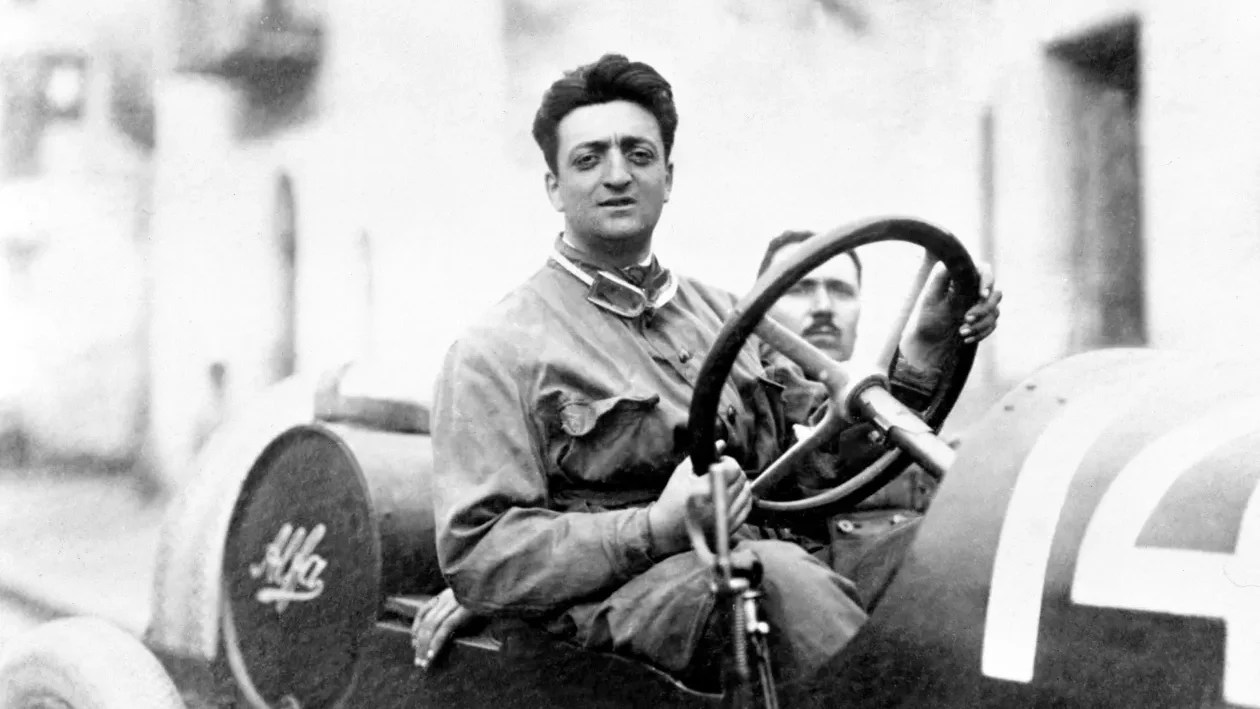
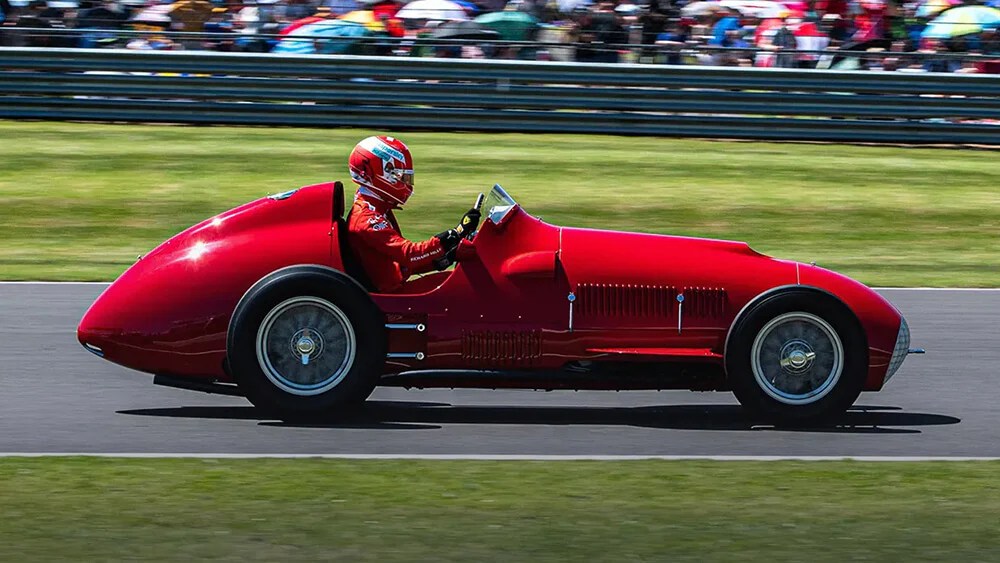
One day, Enzo Ferrari decided that he wanted to go racing. He often did that, having been a Formula One mechanic for Alfa Romeo from the 1920s through to the late 40s, but in 1948, he struck out on his own, with a team racing under the name “Scuderia Ferrari” (Scuderia meaning “Stable” … Get it? Because the logo’s a horse… never mind). With Enzo’s technical knowhow and the backing of motorsport heavyweights like Alberto Ascari and Luigi Chinetti, the team soon cemented themselves as championship contenders, winning their first Le Mans 24 hr in 1949 and their first Grand Prix in 1951, a feat only bettered by their first F1 championship win the very next year, with Ascari winning every single race bar two, and finishing a clear 12 points ahead of the next fastest driver; Giuseppe Farina who was also in a Ferrari! (In fact Ferrari would have locked out the top 5 places that season, were it not for Mike Hawthorn in his Bristol BS1.) The Genius of Enzo, however, was diversification. Most F1 teams at the time were solely dedicated to that series, but Ferrari decided that the best way to forge a legacy in motorsport was to simply do everything. Ferraris raced in F1, Le Mans, Mille Miglia, even heading to the states to race at Indianapolis for the Indy 500, with each car being built, adapted and set up for each specific event. Which brings us to perhaps his greatest achievement.
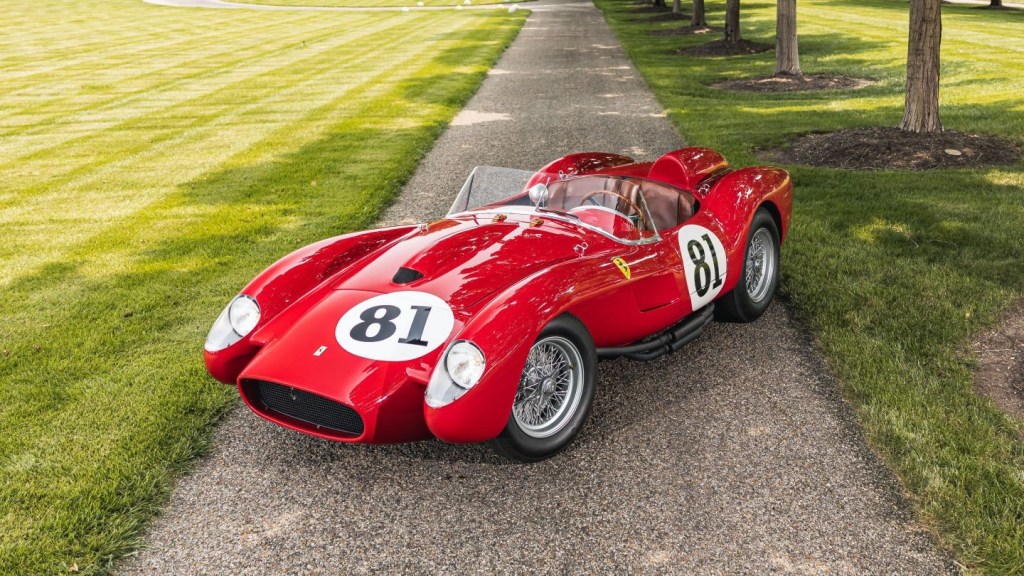
To help finance the racing, Ferrari had begun to build road cars based on their racers, but it quickly became apparent that it was much easier (and cheaper) to build a racer adapted from a road car, so Ferrari designed the 250 platform. Front-engined and rear-wheel drive, the platform took it’s name from the beautifully intricate Colombo V12 that each car sported, able to produce around 300 horsepower from just under 3.0 litres and still coming in at half the weight of Jaguar’s XK straight-six, even with double the cylinder count. The engine was so good that Ferrari deemed it worthy of a spot in just about every motorsport discipline of the time, the most successful of which was the 250 Testa Rossa, which managed to win Le Mans 3 times, despite heavy competition from the Aston Martin DBR1 and Porsche 718. And then came Group 3.
Group 3 GT Racing was the go-to global motorsport in the early 60s, with Jag E-Types, Shelby Cobras and Aston Martin DB4s all going wheel-to-wheel across the world. If you weren’t in F1, you were in Group 3. Naturally, Ferrari wanted a piece of the action, commissioning chief engineer Giotto Bizzarini to adapt the 250 for GT racing (a Gran Turismo Omologato, if you will). Bizzarini set to work, borrowing a wind tunnel from Pisa University, which led him to replace the Testa Rossa’s pontoon-style flanks with a more slippery faired-in nose, reducing the size of the front grill and adding a scooped air intake on top of the bonnet where it would serve more use. Balance that out with a duck-tail rear spoiler, and you’ve got yourself a winner. And win it did, the Ferrari 250 GTO (see?) won the Group 3 GT championship in ’62, ’63 and ’64, the Tour de France (the old car one, not the bike one) twice, winning Le Mans outright in 1962 before taking second place in 1963.
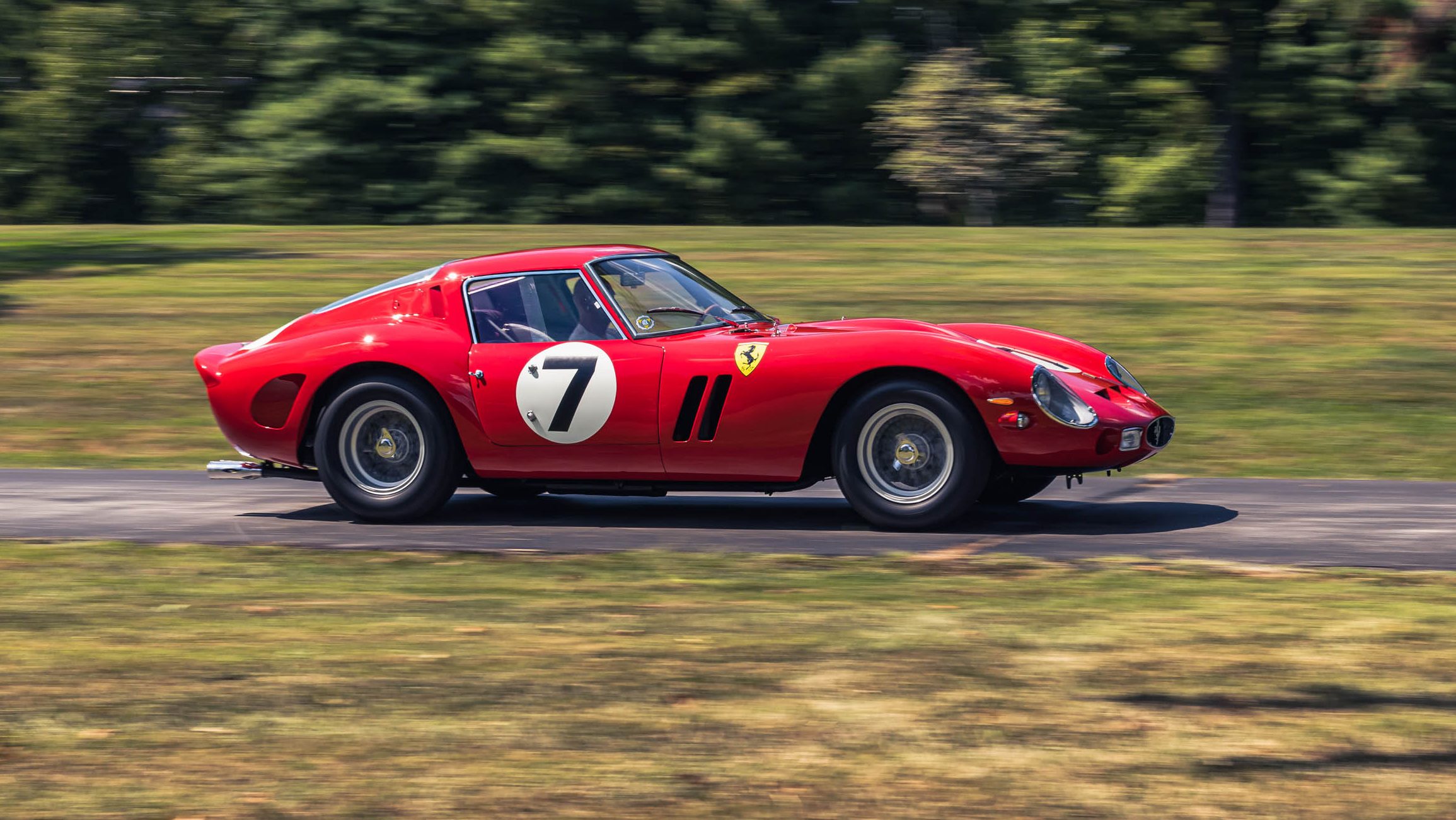
This provenance, combined with the fact that there were only ever 36 GTOs produced, should have mean that it was an incredibly sought-after car for collectors… right? Well, not initially. 250 GTOs left the factory with a price tag of around £18,000 in 1962, and by the 1970s, they were changing hands for less than half that, with the cheapest one on record being purchased for the equivalent of $4000 in 1965. Ouch. It wouldn’t stay that way, though, and in 1986, the first 250 GTO sold for over a million dollars. And then, they just sort of kept going up. 1.6 million, 4 million, 10 million dollars, all within the space of three years and with no signs of slowing down. Even Ferrari enthusiast and ginger DJ Chris Evans got his grubby mitts on one, purchasing a GTO at auction in 2010 for £17.7 million. The most expensive one ever sold? Well that came in 2023, when chassis number 3765 (the class winner of the 1962 Nürburgring 1000km) was sold at auction to a private collection for (deep breath now) $51,705,000 plus fees. When it comes to GTOs, if you have to ask how much it is, you simply cannot afford it.
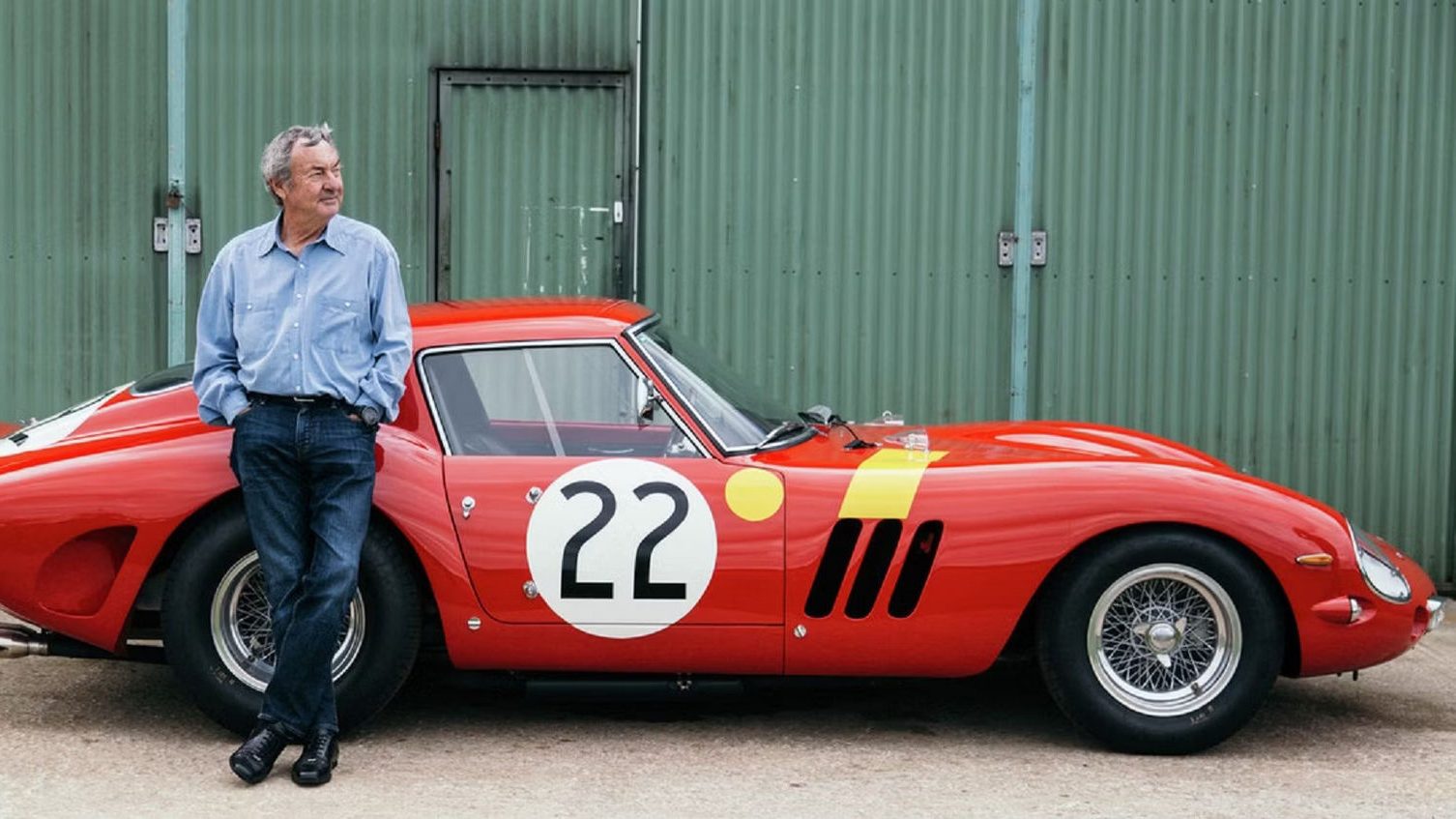
Of all the people lucky enough to have bought a GTO over the years, my favourite has got to be Nick Mason. He’s the drummer for a little indie band called Pink Floyd, and in 1977 he took his share of the proceeds from their latest album (a little record called Dark Side Of The Moon) and bought a battered old Ferrari for £35,000, taking it racing and pretty much driving it like a lunatic ever since. Apparently, he parks it next to a Jaguar D-Type, Ferrari F40 and a McLaren F1 GTR. Some people have all the luck. Does anyone know if Doc Brown’s still got his time machine? I could do with making an investment.


Leave a Reply