In the interests of superstition, I prefer to tempt fate as little as possible. Never sit at your desk at work and say to yourself “It’s quiet today.” Never ask “how hard it could possibly be” or “what’s the worst that could happen”, and CERTAINLY don’t ever open a column about advancements in crash safety technology by talking about how you’ve only crashed once. That being said, should the unthinkable ever happen, and your car ends up making unscheduled contact with a wall, it’s good to know that very clever people have spent decades ensuring that you’re as likely to survive as possible.
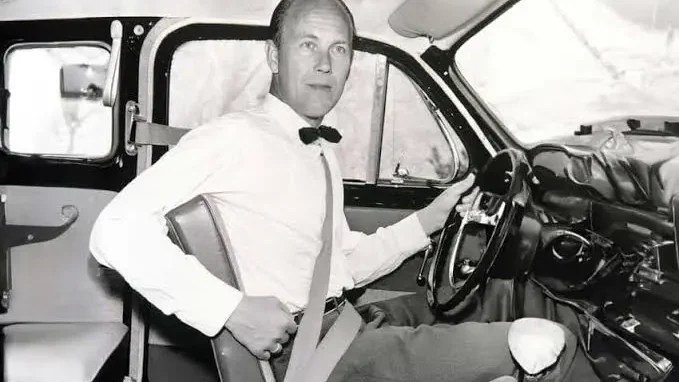
In the 1940s, safety technology amounted to a small strip of cloth that sat over your lap. Lap belts were better than nothing, preventing you from being ejected from the car in the event of a smash, but did nothing to prevent your torso flying forward so you could headbutt the steering wheel. This became a point of contention for small Swedish car maker Volvo, who had spent the last decade marketing themselves on building the world’s safest cars, with their company ethos being ingrained into their employees from the outset:
“An automobile is driven by people. The fundamental principle for all construction work is and must therefore be, safety.”
– Volvo Sales handbook, 1936
Keen to improve the lap belt, Volvo boss Assar Gabrielsson entrusted its development to engineer Nils Bohlin. Bohlin seemed like just the man for the job, given he’d spent the last few years working for SAAB’s aerospace division, in the team that developed the first explosive ejector seat, so he happily set to work refining the idea for a new safety belt. Taking inspiration for the four-point safety harness worn by pilots, Bohlin set to work adapting that for road use, but he quickly found that is simply wouldn’t be viable. For starters, a four-point harness takes approximately seven years to buckle up, and when you are eventually strapped in, your range of movement is effectively zero, with your torso, waist and shoulders being firmly held to the seat. Plus, there was the issue of passengers. I don’t know if you’ve noticed but some passengers, female ones particularly, carry extra… equipment… and a four-point harness might prove uncomfortable for those whose equipment is more… erm… ample. Taking this into consideration, Bohlin developed a new system, combining the standard lap belt with an extra over-the-shoulder safety belt that kept the torso restrained, whilst allowing for free movement of the shoulders, and could be worn comfortably be drivers of any shape or size. This new three-point seatbelt was put to work immediately, being introduced as standard-fit on all Volvos from 1959 onwards, and the results spoke for themselves. In a study of 28,000 crashes, it was found that the amount of seat belted occupants killed in an accident below 60mph was zero. Seeing the importance of his invention, Bohlin agreed with Volvo management that the patent for the new technology be made available for free to any other car manufacturer. Nils Bohlin’s safety advancement and willingness to share his invention has absolutely saved countless lives, with America’s National Highway Traffic Safety Administration finding in a 1984 study that seatbelts had reduced fatalities by 55%. Of course, for even more safety, your seatbelt is best when combined with other safety tech…
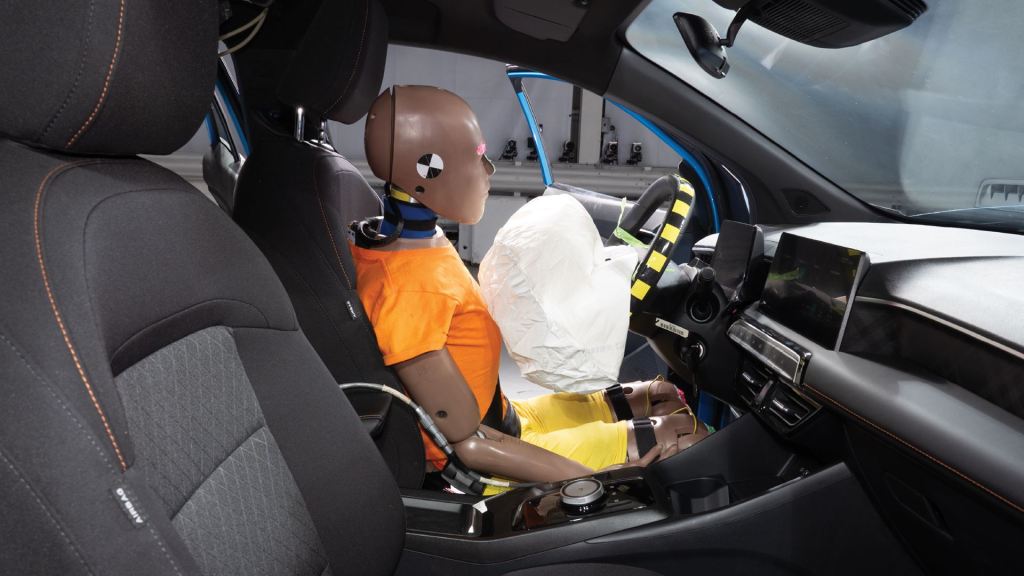
In 1919, a couple of Brummie (that’s people from Birmingham, England to the rest of you) dentists came up with an idea. In the event of a crash, hitting your face on something hard is bad, whereas hitting your face on something soft, less so. Something like… oh, I don’t know… a big balloon for example. By the 1950s, Harold Round and Arthur Parrott’s idea had become commonplace in the aerospace industry, with the fitment of an air-filled-bag (I’m sure there’s a better name for that) preventing passengers from losing all their teeth. In 1952, American engineer John W. Hetrick decided that it might be clever to adapt the airbag design for automotive use, designing a system in which a cannister of compressed air would inflate the cushion in the event of an accident. The only issue was that compressed air simply couldn’t fill the airbag fast enough, meaning that passengers would still end up hitting the dashboard. It wasn’t until 1964, when Japanese engineer Yasuzaburou Kobori developed the first airbag with explosive inflation, that the airbag as we know it took shape, with the first airbag-equipped production car – the Oldsmobile Tornado – hitting the roads in 1973. In 1980, Mercedes started offering a new system on their top-of-the-line S-Class that worked in tandem with the seatbelt, using the car’s onboard G-sensor to pre-tension your seatbelt and deploy the airbag in the milliseconds before your body reacts to the crash, so the airbag is effectively already there to catch you when you need it. This was branded the Supplemental Restraint System, and became widely available to all manufacturers, so if you’ve ever wondered why the words “SRS Airbag” are embossed onto your dashboard, now you know. Almost fifteen years later, Volvo (of course it was Volvo) pushed the development even further, by offering their new Volvo 850 with the Side-Impact Protection System (or SIPS), incorporating additional airbags into the doors and pillars, further reducing the risk of injury.
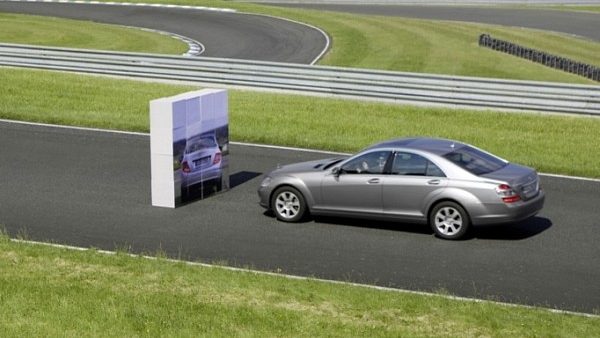
Of course, all of this is a still a bit stone-age. Cars these days can basically drive themselves, so you’d expect the safety tech to have come in in leaps and bounds, right? Well, on-board computers can do amazing things. In 1999, Mercedes showcased the new S-Class (a car that has always been an automotive breeding ground for new technology) with the Distronic radar system; a front-facing radar that would keep a safe distance from the car in front of you while the cruise control was active. In 2007, this system developed further, using the radar to detect stationary objects ahead and warning the driver before applying the brakes automatically if they don’t react in time. But what if the driver can’t react at all? In 2024, Volkswagen showcased the latest Golf with their new Emergency Assist feature, that combines the car’s myriad sensors with the autonomous driving technology. If a driver were to become unconscious while behind the wheel on a motorway, the car’s cabin sensors (touch sensors in the wheel and eye-tracking cameras in the dashboard) detect this and begin pulsing the brakes to try and wake the driver, while the autonomous driving system begins its procedure to bring the car to a stop, turning on the hazard lights and manoeuvring the car onto the hard shoulder, not only keeping the driver safe, but stopping them from crashing into anyone else on the road. If you want to see the system in action, Volkswagen ran a demonstration on a busy stretch of “autobahn” at their testing facility, and it appears to work impressively well. Does it justify filling a car to the brim with Big Brother cameras that know exactly what you’re doing and where you’re looking at every second? Well, I’ll let you be the judge of that.
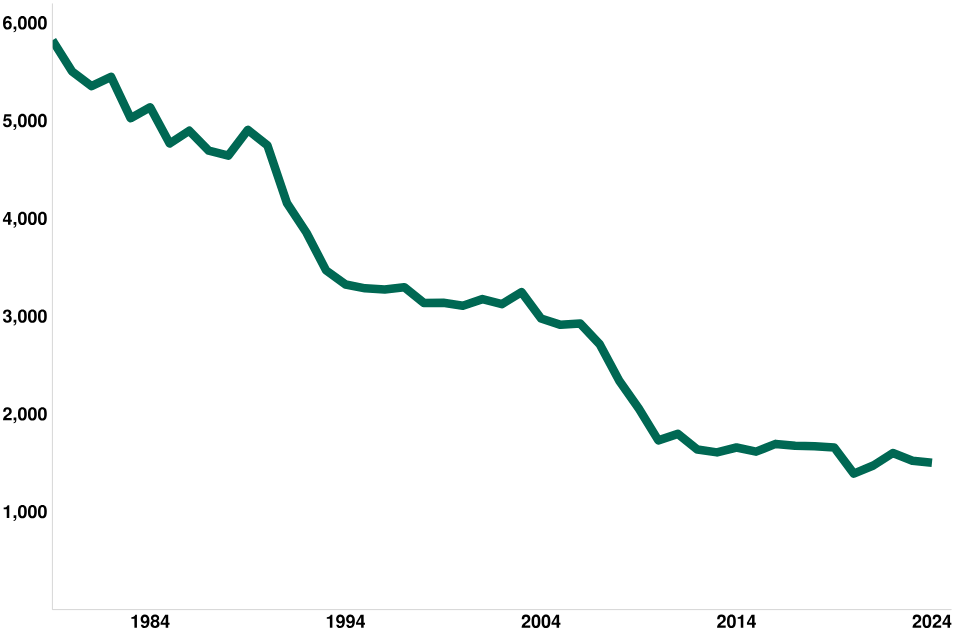
Thanks to advancements in safety technology, the number of people killed on British roads has dropped by over 78% since 1970, and current legislation means that modern cars are safer now than they have ever been. While there are still Humans behind the wheel, there will still inevitably be Human error, so it’s impossible to eliminate crashes entirely, but it’s comforting to know that, should that day ever come, then statistically at least, you’ll be absolutely fine.


Leave a Reply