Just call me the Barbadian calypso band The Merrymen because I’m feeling hot, hot, hot. There’s a heatwave currently baking the UK right now, so I’ve decided to take my mind off of the heat by researching the most gruelling, intensive and dangerous desert rally the world has ever seen.

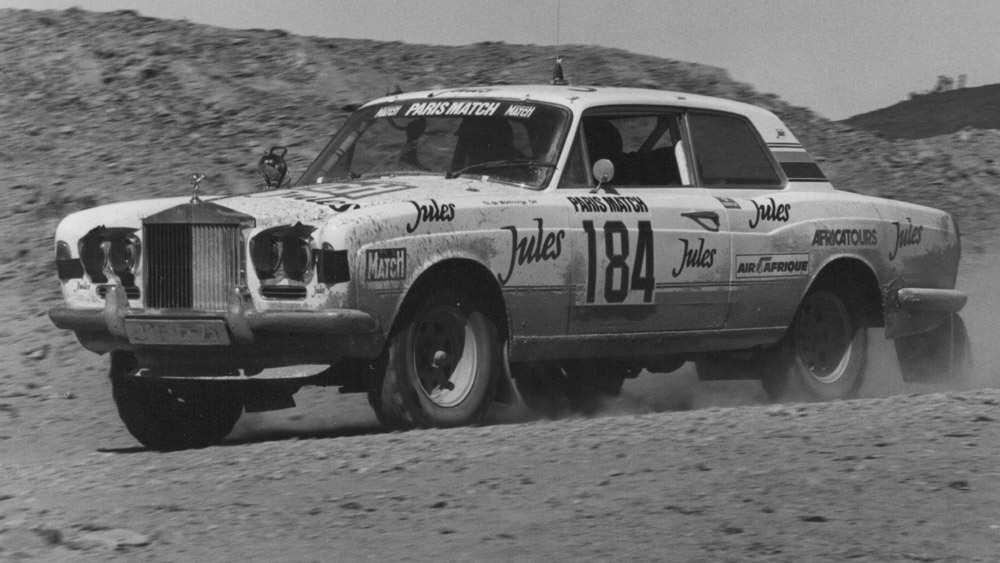
In 1977, a man named Thierry Sabine got lost while trying to cross the Ténéré desert in Chad on a motorcycle. Looking out at the vast, empty landscape with it’s open sky and rolling dunes, Sabine got an idea, the sort of idea that petrolheads the world over have had for centuries; “I wonder what would happen if I raced over that.” Drawing up a route that started in his home city of Paris, the sprawling inter-continental rally would cross the Med to Algiers, cover the Algerian desert into Mali, before jumping the border into Senegal and finishing in its capital city of Dakar. With the route set, Sabine made a few calls to race organisers and a few fellow rally enthusiasts, and in 1978, the inaugural Paris-Dakar Rally saw 182 vehicles set out on the gruelling 10,000km slog through sand and jungle. Open to cars, trucks and motorcycles, and with very little backing for factory race teams, the early days of the Dakar had a very “make do with what you have” privateer spirit, with all sorts of eclectic competitors like Formula One legend Jacky Ickx, actor Claude Brasseur, even French playboy Thierry de Montcorgé who took part in a heavily modified Rolls-Royce Corniche, tricked out with a Chevrolet small-block V8 and the chassis from a Toyota Land Cruiser.
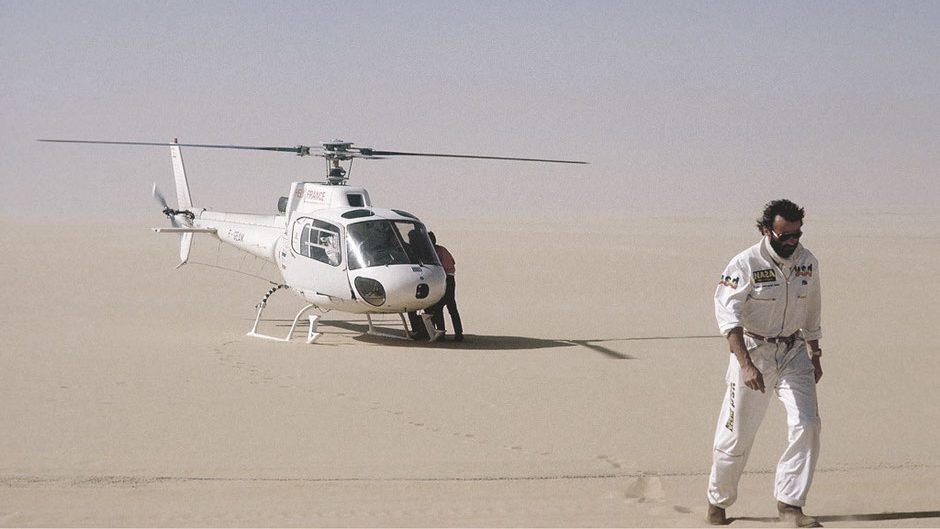
Even as the event became more and more popular, Sabine stayed involved. When not competing himself, he would jump into his helicopter and act as ariel support for the other competitors, spending four days airborne during the 1983 event when 40 competitors became lost in the Sahara. Thanks to his valiant effort, all 40 teams made it back to civilisation unscathed. Just 3 years later during the 1986 Paris-Dakar, Thierry Sabine’s helicopter would be struck by a sudden sandstorm and crashed into a sand dune in Mali, killing him and the four other passengers. He was just 36.
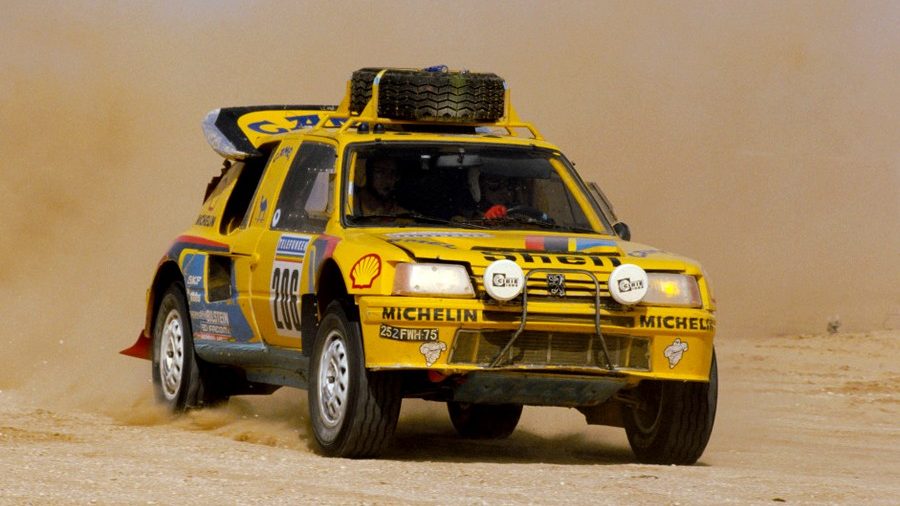
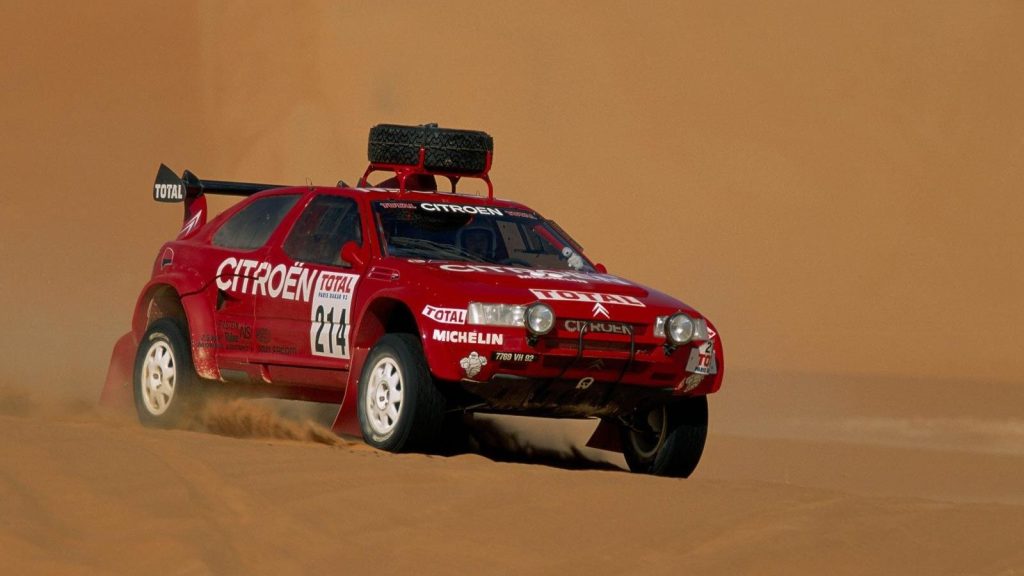
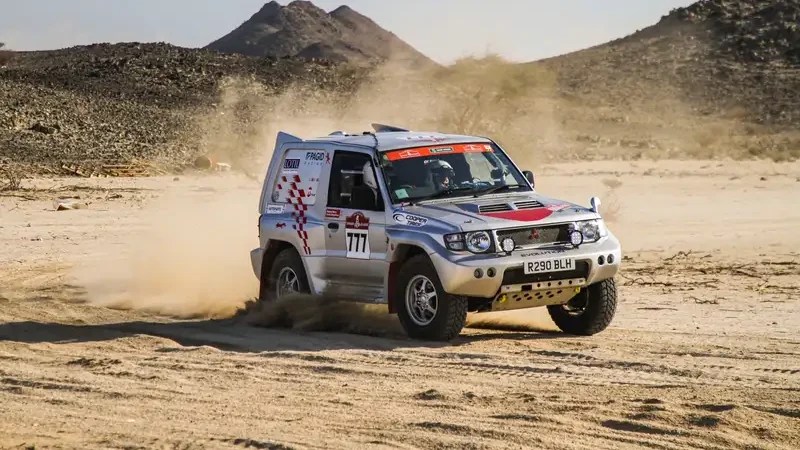
As the 1980s progressed, the increased attention on the Rally drew the eyes of more factory race teams, most notably Peugeot and Citroën, the former of which deployed their entire Word Rally team to the 1987 event, entering both of their legendary rally drivers; Ari Vatanen and Juha Kankkunen in a pair of Peugeot 205 T16 Group B cars, both modified for long-distance running. Although Vatanen would secure victory in 1987, he failed to do so in 1988, after his Peugeot was pinched from the service area. By the 1990s, Citroën had supplanted Peugeot for Dakar dominance, with the specially designed Citroën ZX Rallye Raid winning four times in ‘91, ’94, ’95 and ’96. In ’92 and ’93 however, an unlikely competitor took the crown. Mitsubishi showed up with a lightly modified version of their family SUV, kitted out with a raised ride height, independent rear suspension, beefed-up front and rear differentials and a breathed-on 3.5 litre V6 putting out a surprisingly punchy 280 horsepower. And the best part? Mitsubishi would sell you a road version – helpfully named the Mitsubishi Pajero Evolution – that you could drive day-to-day.
Over the 31 years after it’s inception, the Paris-Dakar stayed broadly the same with only minor, infrequent changes to the route (apart from 1992 when the endpoint was changed to South Africa, a change made to coincide with the ending of apartheid that wasn’t carried over for the next year), that was until 2007 when a Mauritanian terrorist cell murdered four French tourists. Fearing a similar attack on the 2008 running of the Rally, the event was cancelled, with a hastily cobbled together “Central European Rally” across Hungary and Romania serving as its replacement. For 2009, competitors saw an all-new Paris-Dakar Rally that, confusingly, featured neither Paris nor Dakar on its route map. This time, it was based in South America, and ran in a loop, starting in Buenos Aries, Argentina, before heading North-West to Copiapó, Chile and then heading back to Buenos Aries, retaining the 10,000km racing distance. This layout continued until 2020, when the Dakar moved once again, now spanning the distance from Jeddah to Riyadh, across the deserts of Saudi Arabia. During this later period, motorsport technology came on in leaps and bounds, with German rally team X-Raid become one of the most successful entrants in Dakar history, winning the Rally four times on the trot from 2012 to 2015, and then again with Carlos Sainz Sr at the wheel in 2020 and 2021.

It doesn’t look as though the Dakar is going anywhere any time soon, even making strides toward the future, with the first electric car – the Audi RSQ E-Tron – winning in 2024, once again helmed by Carlos Sainz. Perhaps then, the best way to beat the heat here in old blighty, is to jump in the car and drive very quickly across rough terrain. I suppose there’s only one way to find out.


Leave a Reply