British I may be, but spiritually, I’m Scandinavian. I’m built for cold weather, I’m a big fan of a pastry, and my wardrobe consists entirely of black polo shirts and various styles of jumpers. Surely then, I must have at some point, owned some sort of Scandi wheels? Well, despite both my Mum and Dad driving Volvos at various points throughout my childhood, and frequent PPH collaborator Rob filling his driveway with metal from the frozen North, it’s never quite happened for me… Until now.
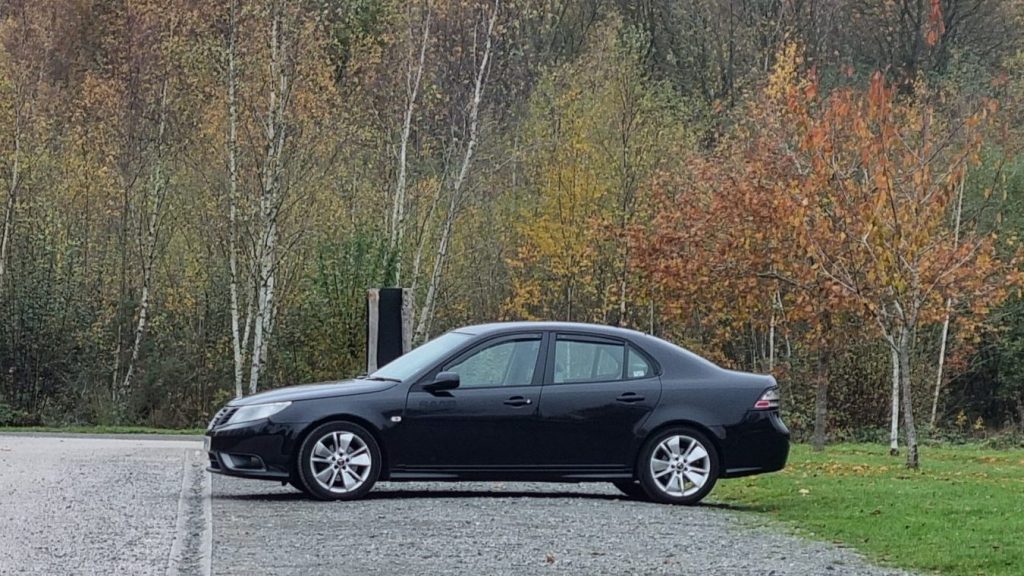
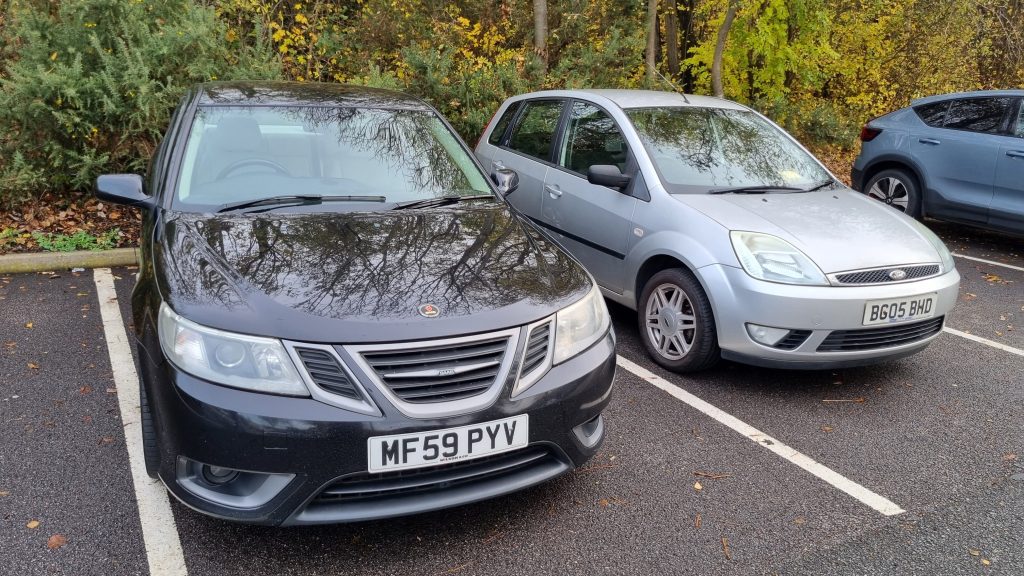
You may remember about a year ago when I recounted the tale of our road trip to pick up Rob’s new Saab 9-3, well, as it happens, basically immediately after that column was published, said Saab basically ended up off the road and stayed there for most of the following year. The front hubs needed replacing, there was a blow from the exhaust, the battery was a bit knackered, and to top it all off, Rob’s (incredibly understanding, given the amount of arthritic old chod he brings home) wife didn’t like it, so the Saab’s role as a dutiful family wagon was cut short, replaced instead by a wafty 5-cylinder Volvo XC70. Almost coincidentally, around the same sort of time, I was becoming increasingly fed up with having my fillings rattled loose by endlessly commuting up and down the motorway in a tin can Fiesta, so when I heard that the Saab needed re-homing, I sensed there was a deal to be done.
I’ll forgive you for not being overly familiar with Saab, given that they went bust over a decade ago and seem to be somewhat of an endangered species these days, so before I introduce the latest member of our little automotive harem, I think a quick whistlestop tour is in order. Saab began life in 1937 as a manufacturer of aeroplanes for the Swedish military, but in 1948 after the close of the second world war, planes weren’t in quite the same demand as before, so to keep the lights on, they decided to branch out into the automotive world, releasing the Saab 92 in 1949. If you’re wondering where the names come from, the two previous Saab aircraft were the 90 and 91, so naturally they chose to continue the numbering for the cars. You see, nobody at Saab had ever built a car before, and the factory wasn’t really suited to it, so instead, they treated every model with the same time, development cost and attention to detail as the aircraft on which they’d cut their teeth.
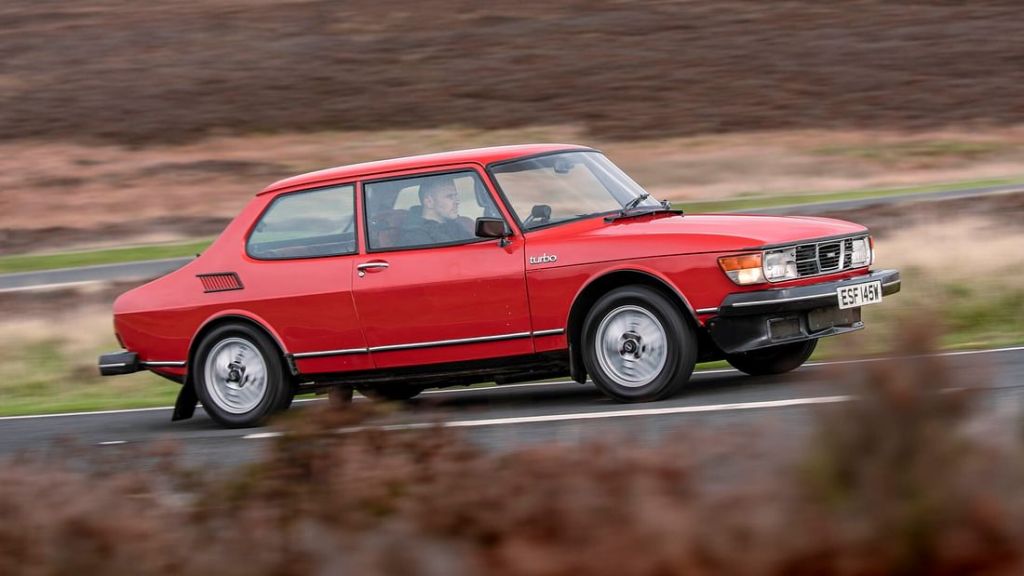
Because of this odd gestation, Saab engineers often approached automotive engineering from a different perspective to the other European manufacturers, often times thinking up equally random and ingenious solutions to issues that other car makers simply ignored. Back in the 70s for example, turbochargers were pretty much exclusive to very expensive, very complicated cars, but in 1978, Saab introduced the 99 Turbo, a small, affordable family car that had the performance to humble some serious sports cars, and as a result, kickstarted the turbo fascination of the 1980s. This overengineering wasn’t just limited to performance either, with extreme safety targets leading to the development of equally extreme crash structures, thicker body panels and interior modifications. Famously, the “Night Panel” button helps remove night-time interior distractions, and the ignition barrel on most later Saabs is between the front seats, so there’s nothing in the way of your legs in the event of a crash. There was one hidden upside too. Because the engine blocks and crankshafts of Saab’s turbo engines were reinforced and forged from factory to prevent engine failures at high boost pressure, they became a hotbed for the sort of enthusiasts who can’t help but open the bonnet and have a rummage, with some tuners able to turn the humble four-cylinder up to over 400 horsepower with relative ease.
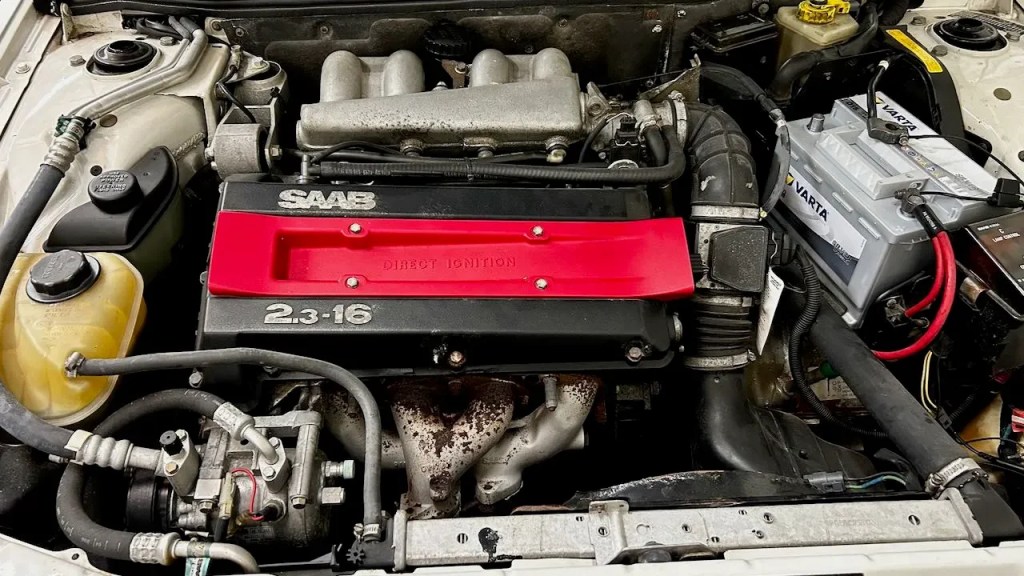
Enter my latest purchase; a Saab 9-3 TTiD Turbo Edition. In classic Saab fashion, the 1.9 litre diesel was already overbuilt to the point of hilarity, with twin-turbos (one small for better throttle response, one big for more torque), and a surprisingly high 5000rpm redline delivering over 400nm of torque, easily outgunning the equivalent BMW 3-Series. And that’s before any changes are made. For legal reasons, I’d like to state for the record that my Saab 9-3 is completely standard, and I wouldn’t dream of modifying a single thing, now or ever. Hypothetically speaking however, if somebody were to plug in a laptop, they might find themselves able to liberate something like 240 horsepower and 450nm of torque from the engine with no hardware modifications, and that perhaps, hypothetically of course, any potential catalyst thieves that pop round for a visit would be leaving empty-handed, but the less said about that the better.
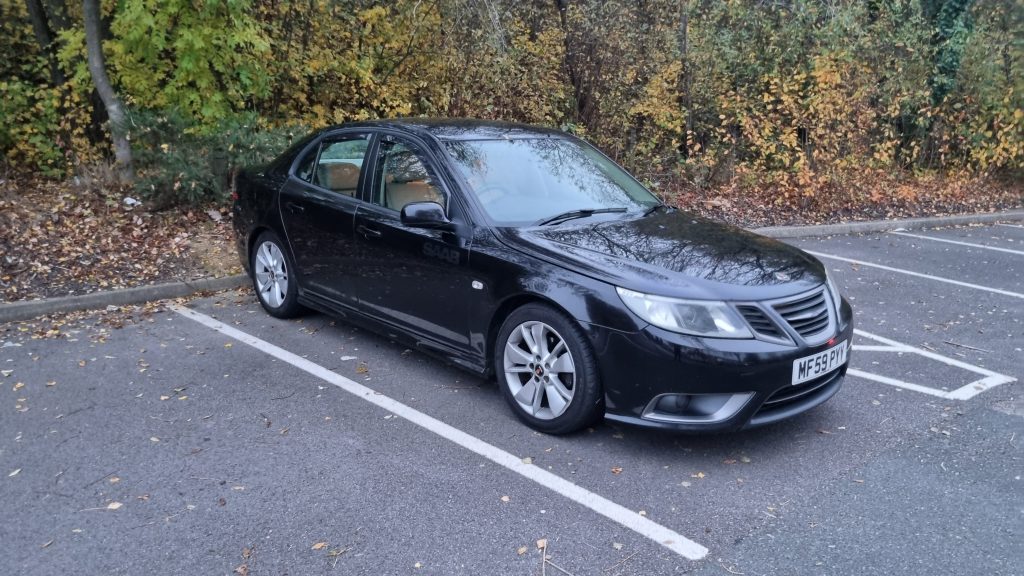
I’ve spent the last week bombing up and down the A38 to work and back, and I’ve fallen head-over-heels for that old 9-3. The boot is positively enormous, the seats are sublime, the ride is sporty but well damped, the engine is strong and smooth, able to provide sizable mid-range punch even in 6th gear at motorway speeds, and the 270-watt Bose Centerpoint stereo (the top-of-the-range option in period) is shockingly good to my ear. Of course, the Saab isn’t the only car around these parts, but as a long-distance, more economical, more practical alternative to the mighty Jag, I don’t think I could have done much better. In all honesty, I never really bonded with the Fiesta. It felt more like an experiment to see how well my first car held up a decade later (TLDR, good car, bloody exhausting to live with), but even though it’s early days for the Saab, I can feel my car hoarder sense tingling. I think it might just end up sticking around for a long time to come.
Plus, with the Saab parked up next to the Jag XK on my driveway, I do feel a bit like a circa-2007 middle-manager who’s done alright for himself.


Leave a Reply