These days, there’s a Mercedes for every segment of the market. If you’re doing the school run, a B-Class will accommodate your two-point-five children nicely, if you’re lapping the M25 in search of sales opportunities, then a diesel C-Class is perfect, and if you’re a Russian gangster, then a murdered-out G-Wagen is almost certainly on the cards. Back in the 80s and 90s however, the Mercedes name didn’t mean ubiquity, Mercedes meant quality, and the Mercedes S-Class was nothing less than the pinnacle of automotive engineering.
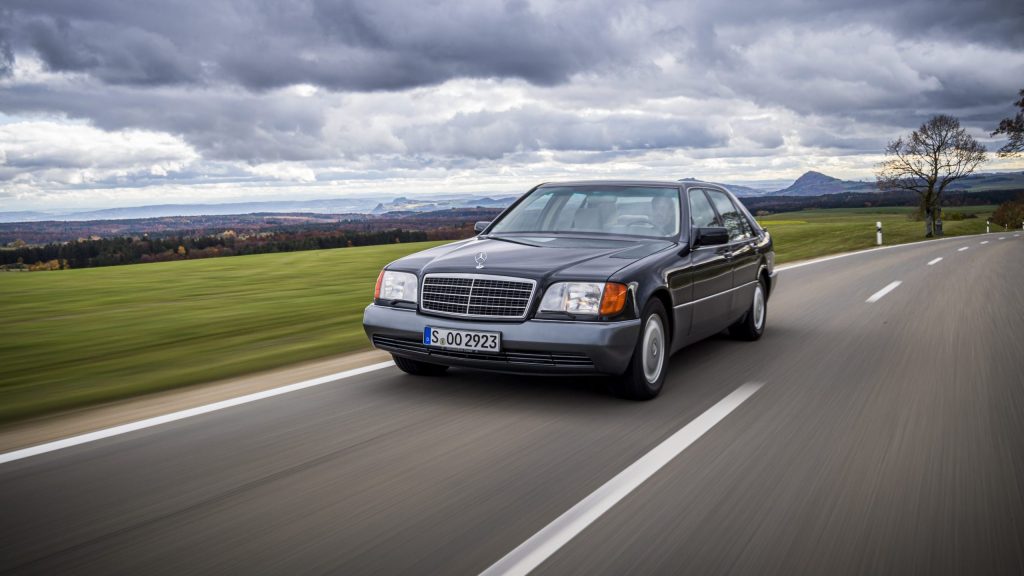
In 1988, Mercedes were facing a crisis. BMW had launched the beautiful E32 7-Series and Jaguar had just pulled the covers off the futuristic XJ40, making the old W126 seem like a veritable antique by comparison, and Merc’s high-ranking business clientele were jumping ship. This was unacceptable. Immediately, famed Mercedes designer Bruno Sacco was summoned to pen the new flagship. The design brief was simple: in order to win back their most valued (and valuable) customers, the new S-Class had to be the single greatest car on the planet. To do this, Mercedes seemingly threw everything and the kitchen sink into development, cramming the W140 S-Class to the gills with as much technology as possible. Automatic wipers, electrically folding door mirrors, xenon headlights, sat-nav, auto-dimming mirrors, parking sensors, soft-close doors, the W140 had all of them. And if you’re thinking “yeah, but so does my Nissan Juke”, well that’s as may be, but the S-Class invented them. Of course, being a luxury saloon, a good chunk of that technology was designed to block out as much of the outside world as possible, with double-glazed soundproof windows, adaptive self-levelling suspension, four-zone climate control, twelve-way adjustable heated seats, in-car telly and variable ratio steering to make the vast 2.2 tonne land yacht all the easier to park. And it wasn’t just the world’s millionaires that were benefitting from Merc’s endless innovations. A number of different safety technologies debuted on the W140 before becoming commonplace on cars up and down the socioeconomic ladder. Electronic Stability Program (or ESP for short), side-impact air bags and BAS (or Brake Assistance System for long) all eventually made their way onto lesser models.
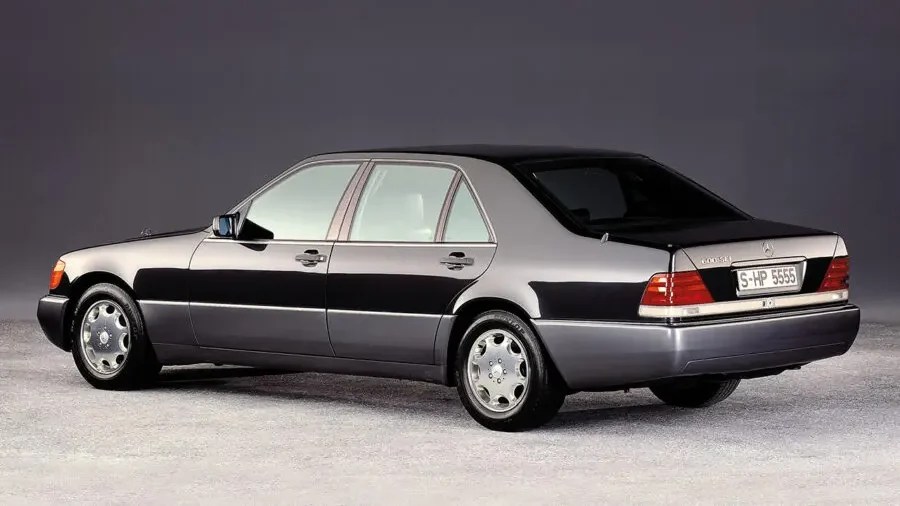
So, a technological tour de force then, but something had been neglected. Just prior to the W140’s reveal in 1989, someone on the Mercedes team poked their nose into a BMW showroom and noticed that the E32 7-Series could be specified with a creamy-smooth V12 engine. Oh bugger. The biggest engine in the W140 was a V8, and captains of industry being the fickle bunch they are, they were bound to opt for the car with the biggest engine, technology be damned. At the very last minute, the W140 was delayed by eighteen months while Mercedes turned their attention to building their first ever twelve-cylinder engine. Of course, being Mercedes in the 80s (apologies for the unintentional rhyme), they did it properly, creating a bespoke all-aluminium, dual-overhead-cam V12 with sequential fuel injection and cylinders lined with Alusil, an unbelievably strong alloy of Aluminium and Silicone. The finished engine thrashed the BMW V12 in every measurable way. While that had to make do with 5.0 litres, 300 horsepower and 450 newton-meters of torque, the Mercedes’ 6.0 litre engine made 408 horsepower and a whopping 580 newton-meters, meaning that the W140 could sit on an autobahn at its electronically limited 155mph top speed all day without interrupting the David Hasslehoff cassette playing through your bespoke Bose stereo. And to top it all off, the V12 wasn’t just at home in a smoothly driven limo, versions of the V12 (codenamed M120) found themselves in the CLK GTR Le Mans racer and latterly ended up bored out to 7.3 litres in the Pagani Zonda. Haven’t got Zonda money lying around? No matter. preeminent Mercedes tuners AMG will turn your 6.0 litre V12 into a 7.0 litre, 500 horsepower behemoth. Why? Why not!
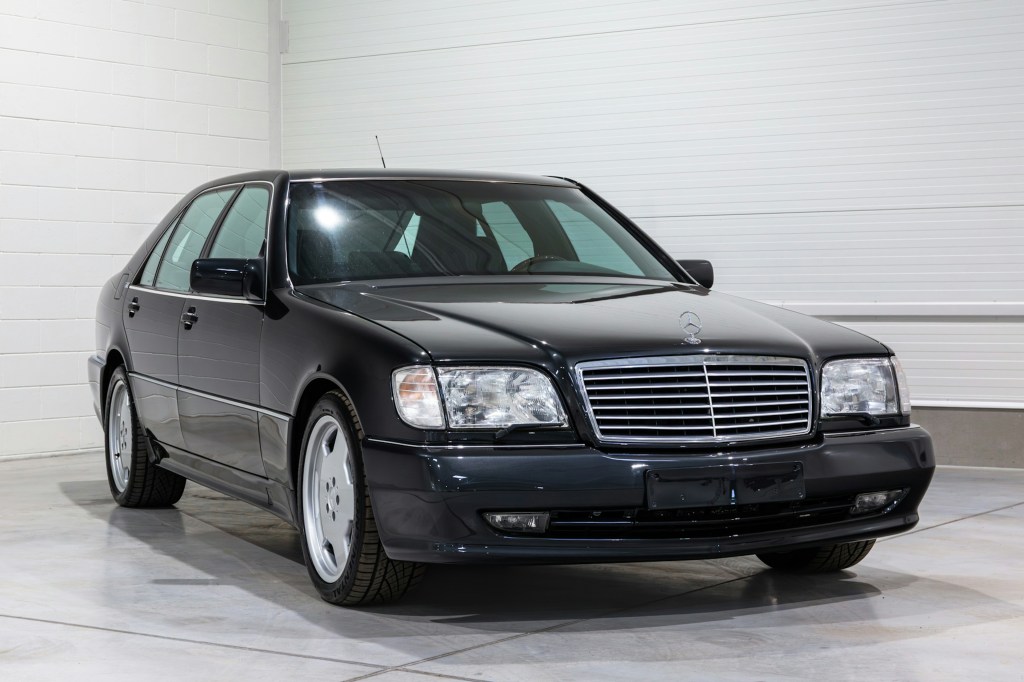
A decade of technological development, one bespoke V12 and a production budget totalling $1 Billion later, and the W140 S-Class debuted at the 1991 Geneva Motor Show, with a price tag to match its hefty kerb weight and, just like many of our stories that take place in the early 90s, that’s where it all went a bit Pete Tong. As I’m sure you know by now, the early 90s weren’t what you’d call “financially prosperous” and the sort of people who would have spent £120,000 on a family saloon suddenly… wouldn’t anymore. Instead, Mercedes saw their customers tempted away by the brand-new, much cheaper and no less wafty Lexus LS400 which, to add insult to injury, even looked like a Mercedes. To try and plug the wound, Mercedes went on a cost-cutting mission, streamlining S-Class production by cutting corners, meaning that later cars were noticeably worse built than their earlier predecessors, with rust issues prevalent and the buckets of technology plagued with electrical gremlins. The result was a death sentence. People didn’t want a £120,000 Mercedes, and the certainly didn’t want a £120,000 Mercedes that was guaranteed to break. In the end, the W140 sold less than half the units of the old W126, and in 1998, Mercedes was forced to merge with (ugh) Chrysler.
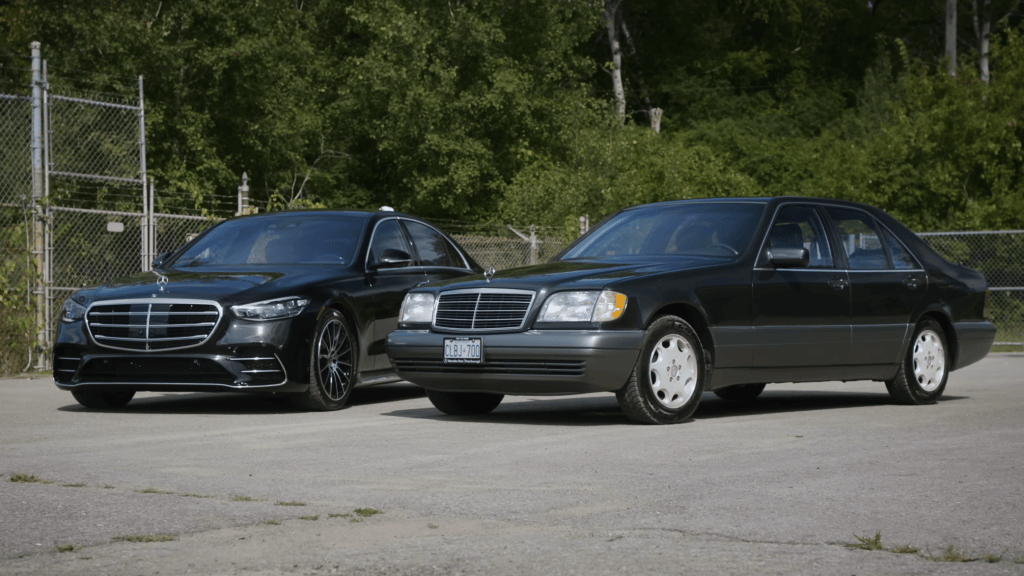
While the S-Class name badge has survived to today, for many the W140 is seen as the last true S-Class. The last time Mercedes was truly at the forefront of automotive design and engineering. Maybe that’s the curse of the W140 though; perhaps it was so ahead of it’s time that even Mercedes don’t know how to make it again.


Leave a Reply