There’s long been talk in motorsport circles that a Formula One car could – theoretically, of course – drive upside-down. Whenever this nonsense idea get’s brought up, it raises exactly three questions. Namely; How, Why, and What would happen? Well, luckily for you, dear reader, I have the answer to all three.
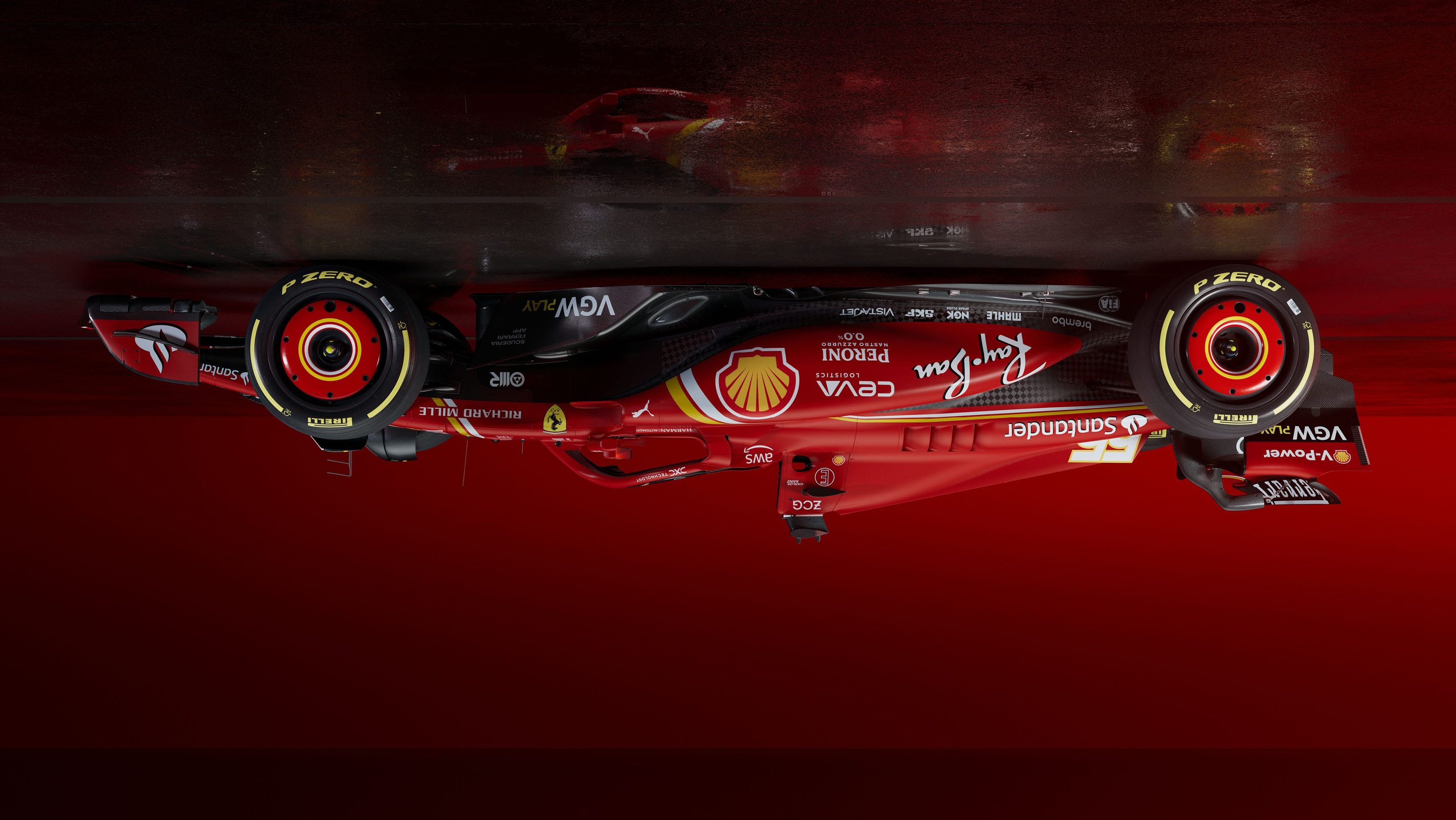
First off, the boring physics bit. The basic concept is simple; in order to drive upside-down, a car must first be able to produce downforce equal to or greater than its own weight. For example, if a Modern F1 car weighs around 800kgs, then it must make at least 800kgs of downforce, or the theoretical inverted tunnel drive will end in a very bad headache for Mr Verstappen. In that way, it’s important to know what downforce is. Essentially, it’s the opposite of lift, using the weight of the air flowing over the top of a car to press it down onto the tarmac. You can increase (or indeed decrease) downforce by manipulating that airflow using wings. If you remember when you were a kid, holding your hand out of the window as you drove along, changing the angle of your hand would push it up and down, well, the same theory applies to the big stuff. In the field of fluid dynamics, it’s called the Angle of Attack (AoA). A negative AoA (where the front of a wing sits lower than the back) pushes down, therefore creating downforce, whereas a positive AoA generates lift, which is why aeroplane wings have moveable flaps to increase and decrease the AoA, and therefore have the ability to gain or lose altitude.
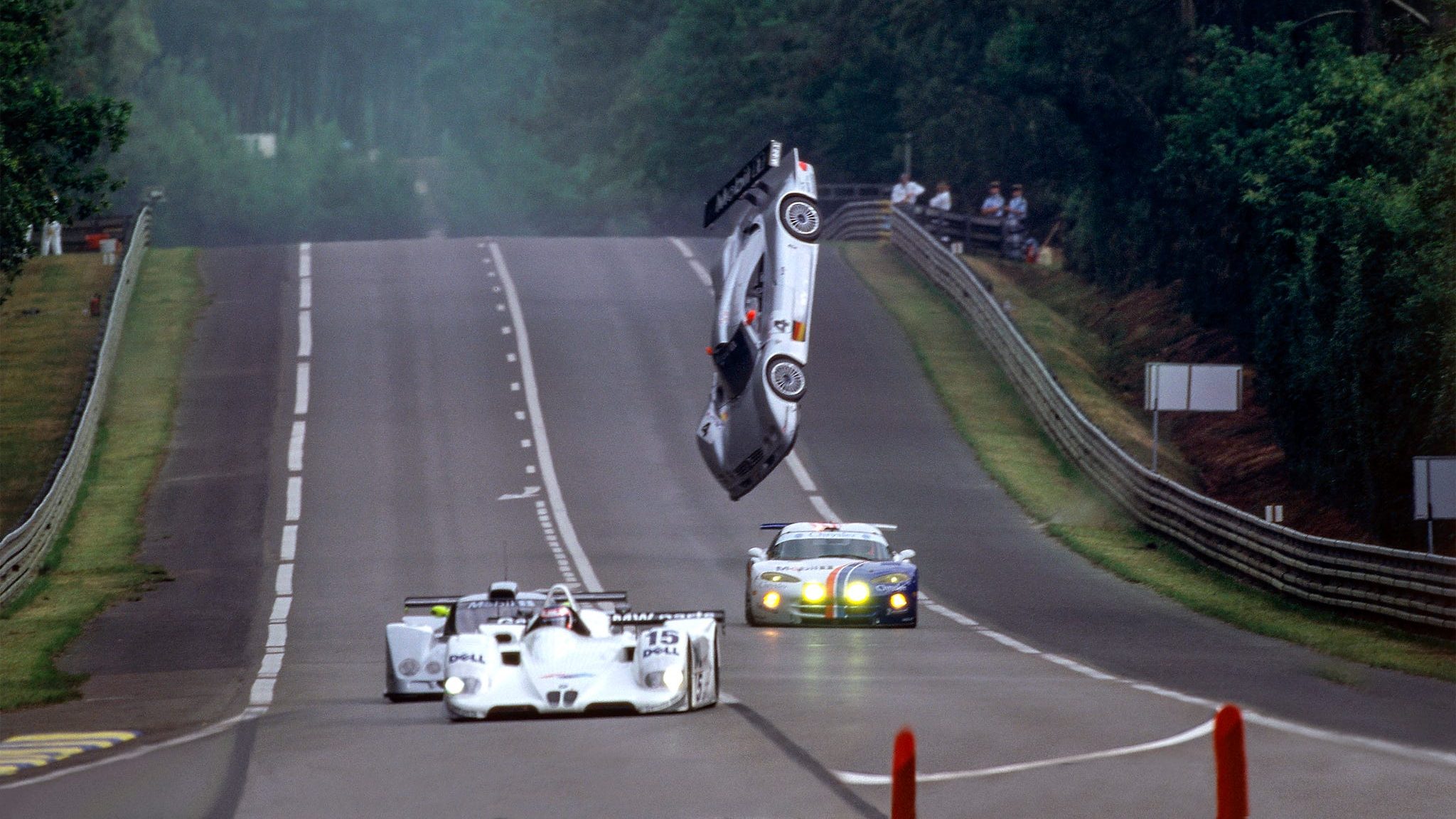
Right, Prof Brian Cox hat off, racing driver hat on. Why is downforce beneficial? Well, that’s because cars are fundamentally flawed, design-wise. It doesn’t matter how much power your engine is putting out, it can only ever be translated to movement via four small patches of rubber contacting the asphalt, and if at any point those contact patches change shape – either by the deformation of the tyre or one of the tyres leaving the surface entirely, then you’re going to be able to put less power down, and have less control over directional change. This is called “mechanical grip”. You can increase mechanical grip on it’s own using wider, stickier tyres or altering suspension geometry so that more of the tyre stays in contact with the ground for longer, but the easiest way to increase a car’s overall grip, is to employ aerodynamic grip – a.k.a “Downforce” – as well. That’s why GT3 racing cars have enormous kitchen-counter wings on the back. Being rear-wheel-drive, they need more grip at the rear than they do at the front, but it is important to try and keep it as balanced front-to-rear as possible, or you run the risk of the front axle raising up like a see-saw, and flipping the car, much like Mercedes saw with the CLR at Le Mans 1999, so most very fast cars these days utilise “ground effect”, generating downforce by manipulating the air flowing underneath the car to create a more even spread of grip at high speed.
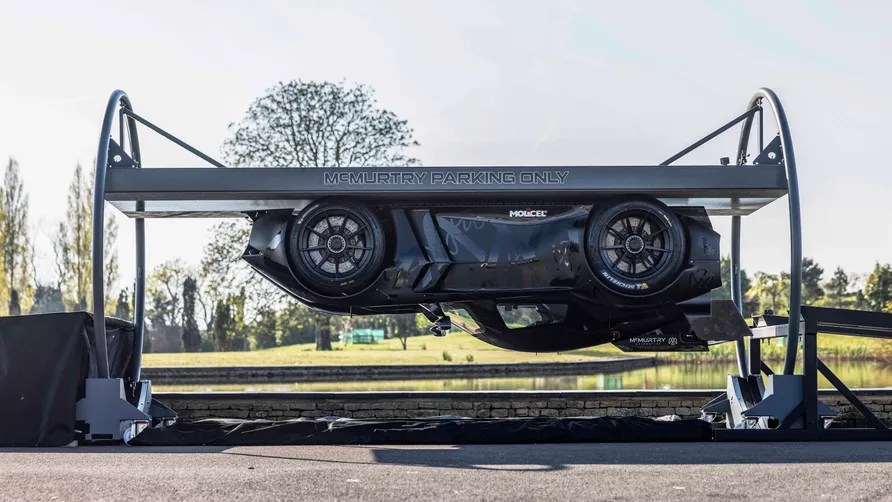
So, what would happen? Well, the chances are we’ll never know. Not because nobody wats to try it, but because it’s practically impossible. You’d need to build a mile-long runway, with adequate run-up and off-ramp, entirely upside-down. And then you’d have to ask some £10-million-salaried driver to risk life and limb to test the damn thing in a car worth more than the GDP of Tuvalu. Luckily then, not everyone is as defeatist as I am. In April 2025, McMurtry Automotive achieved the impossible, by driving their EV track weapon; the Spéirling, upside-down. So how on earth did they pull it off? Well, the Spéirling is not just any track-day motor, it’s a fan-car. That means that, onboard the tiny single-seater are two electric fans that wind up to 23,000rpm, evacuating all of the air out from under the car to create an enormous area of low pressure; essentially the same effect you get when you turn on the Henry Hoover and stick the tube to the palm of your hand. With those fans at full pelt, the Spéirling generates 2 tonnes of downforce – more than double its kerb weight – at a standstill, because the fans don’t rely on air passing over the top of the car, so unlike a normal racing car that loses it’s downforce as you slow down, in the Spéirling the downforce is available at any speed you want it. All that meant that a McMurtry Spéirling, with company co-founder Thomas Yates at the wheel, was able to drive onto a specially designed rig, fire up the fans, wait until the car became fully inverted, and then drive a few feet forward and backward, as documented in this genuinely jaw-dropping video.
With those three questions answered then, McMurtry’s achievement has raised one more. Is it still ground-breaking if you’re up in the air? I suppose it is.


Leave a Reply