How could one of the best-loved super saloons of all time also become one of the most controversial? Well, let me tell you a story of criminals, politicians, sports cars, and the mid-range Vauxhall saloon in the centre of it all.
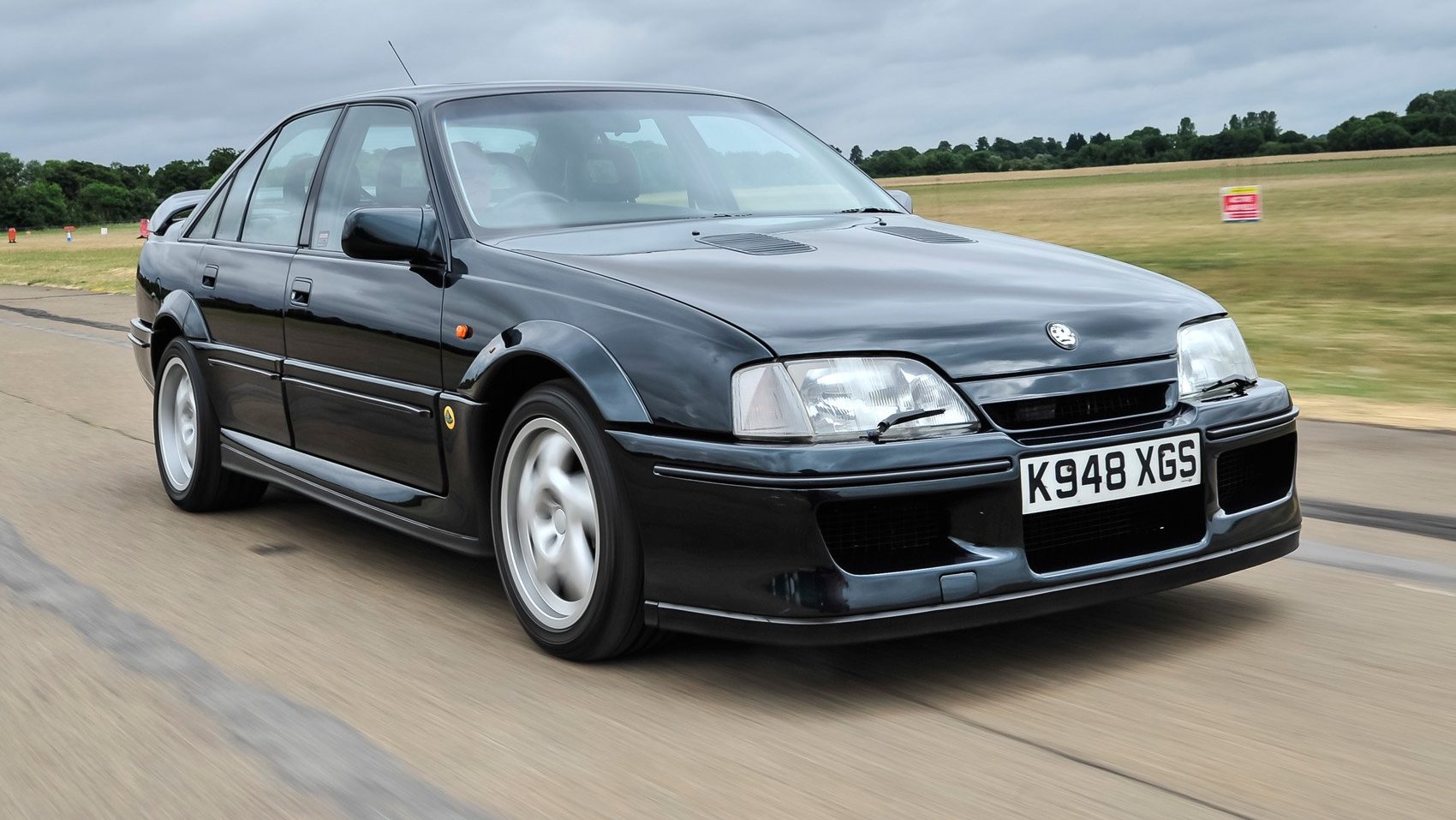
The year is 1987 and GM’s European division – Opel (operating in the UK as Vauxhall) – have just released a car called the Omega (or Carlton) to widespread acclaim. Journalists loved its comfy ride, decent level of kit and the aerodynamic efficiency of its smooth, sculpted bodywork that allowed it to achieve surprisingly spirited performance with relatively small engines. For all its plus points, there’s one thing that the Opel Omega (herein only referred to as the Vauxhall Carlton to avoid confusion) isn’t, and that’s sporty. Luckily, GM is a big old conglomerate with its podgy American fingers in all sorts of pies, including a little lightweight number based in Norfolk called Lotus, so GM’s CEO Bob Eaton picked up the phone and asked Lotus to design Vauxhall a flagship.
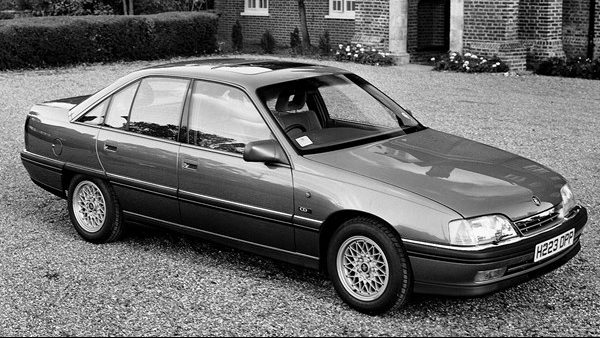
Lotus started, not with the Carlton, but with the larger Vauxhall Senator, removing its 201 horsepower 3.0 litre straight-six and using it as the basis for something altogether more monstrous. The engine was bored out to a massive 3.6 litres and fitted with twin turbochargers, so it now kicked out 377 horsepower – more than double that of the next fastest Carlton – and a tyre-shredding 568NM of torque – around 200NM more than the Carlton’s biggest super-saloon rival, the E34 generation BMW M5. Now all Lotus needed, was a car to put it in. Upon delivery to Lotus’ Hethel factory, factory-fresh Carltons would be stripped back to bare metal, the self-levelling rear suspension from the Vauxhall Senator was fitted, the wheelarches were cut out to accommodate larger wheels and tyres, the rear box-section of the chassis was altered to make way for the limited-slip differential borrowed from the V8 Holden Commodore from GM’s down-under division, and the transmission tunnel was widened to fit the six-speed gearbox from the Corvette ZR1 – the only gearbox that wouldn’t be mangled by the Carlton’s ridiculous torque. With everything bolted in place, each and every car was resprayed in Imperial Green, and inscribed with a Lotus VIN number. There was only one small issue with the Lotus Carlton. It wasn’t the performance, it wasn’t the handling, nor was it the £48,000 price tag. It was the socio-economic class structure of Great Britain.
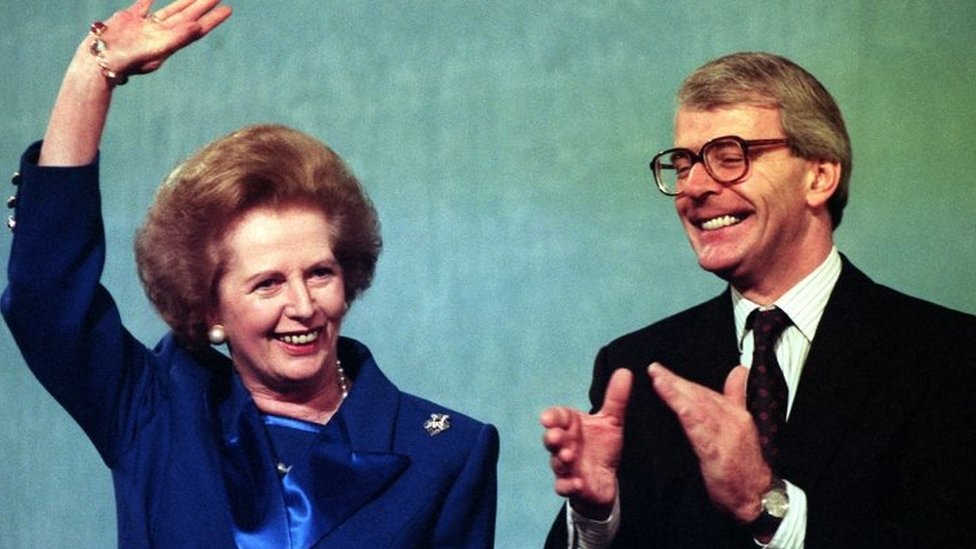
You see, towards the end of the 1980s, as Mrs Thatcher handed the reigns over to John Major, everyone in Britain knew their place. The working classes could aspire to be middle class, and the middle class could aspire to be a member of the upper-crust, but those aspirations would go no further than that. As such, the idea that an ordinary family saloon could achieve over 177mph – faster than the Ferrari 348 and Porsche 911 Turbo – was unthinkable, with some advocacy groups pushing for the car’s top speed to be electronically limited, or even for the Carlton to be banned entirely. As was so swiftly summarised by Sir Anthony Grant, Conservative MP for Southwest Cambridgeshire, in his address to the House of Commons on the 16th of November 1990:
“It is ludicrous that motor car manufacturers should be advertising cars that have maximum speeds of 140, 150, 170 miles per hour […] Some of those products are cheap cars who may be purchased by those who are incapable of driving them safely.”
Ouch. As we all know, the size of a driver’s wallet is directly proportional to the size of their driving talent. I should point out that, at exactly the same time as the Lotus Carlton was on sale, you could walk into a Ferrari dealership and purchase a 180mph Testarossa or a 201mph F40, but seemingly nobody had a problem with those. Besides, the Carlton was actually safer than the Italian Stallion, producing marginally less aerodynamic lift at 160mph than the Testarossa did. That’s what happens when you let Lotus design a super-saloon: They do it properly.
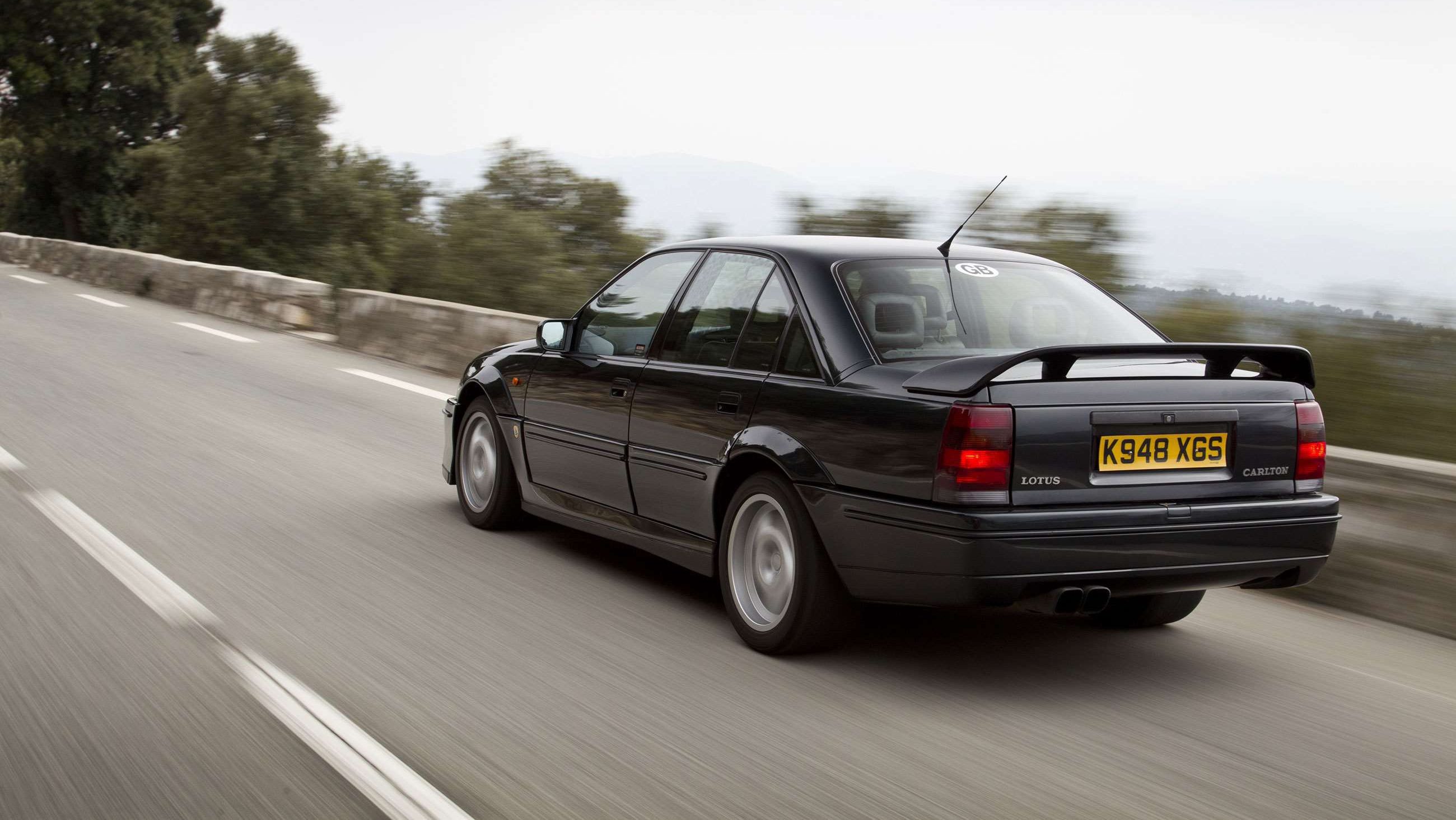
Tory MP fantasies of Carltons being used by ram-raiding criminals weren’t helped when in late-November 1993, a Carlton bearing the registration plate “40 RA” was stolen from a driveway in the West Midlands. Over the next year, a gang of armed thugs used 40 RA as a getaway car in numerous robberies around the region, stealing upwards of £20,000 in loot (or about £44,000 in 2026 money). So brazen were they that they even managed to raid a shop just 30 yards from the front door of Rubery Police Station in Birmingham and still got away scot-free. It’s not hard to see why they were so successful, given that the Police car of choice at the time was the puttering Rover Metro or the lesser 3.0 litre Vauxhall Senator, but legend has it that the barnstorming Lotus even managed to outrun a Police helicopter on the M6 motorway. When quizzed about the spate of robberies, PC David Oliver of West Midlands Police said bluntly: “We simply haven’t been able to get near the thing, and it looks unlikely that we ever will.”
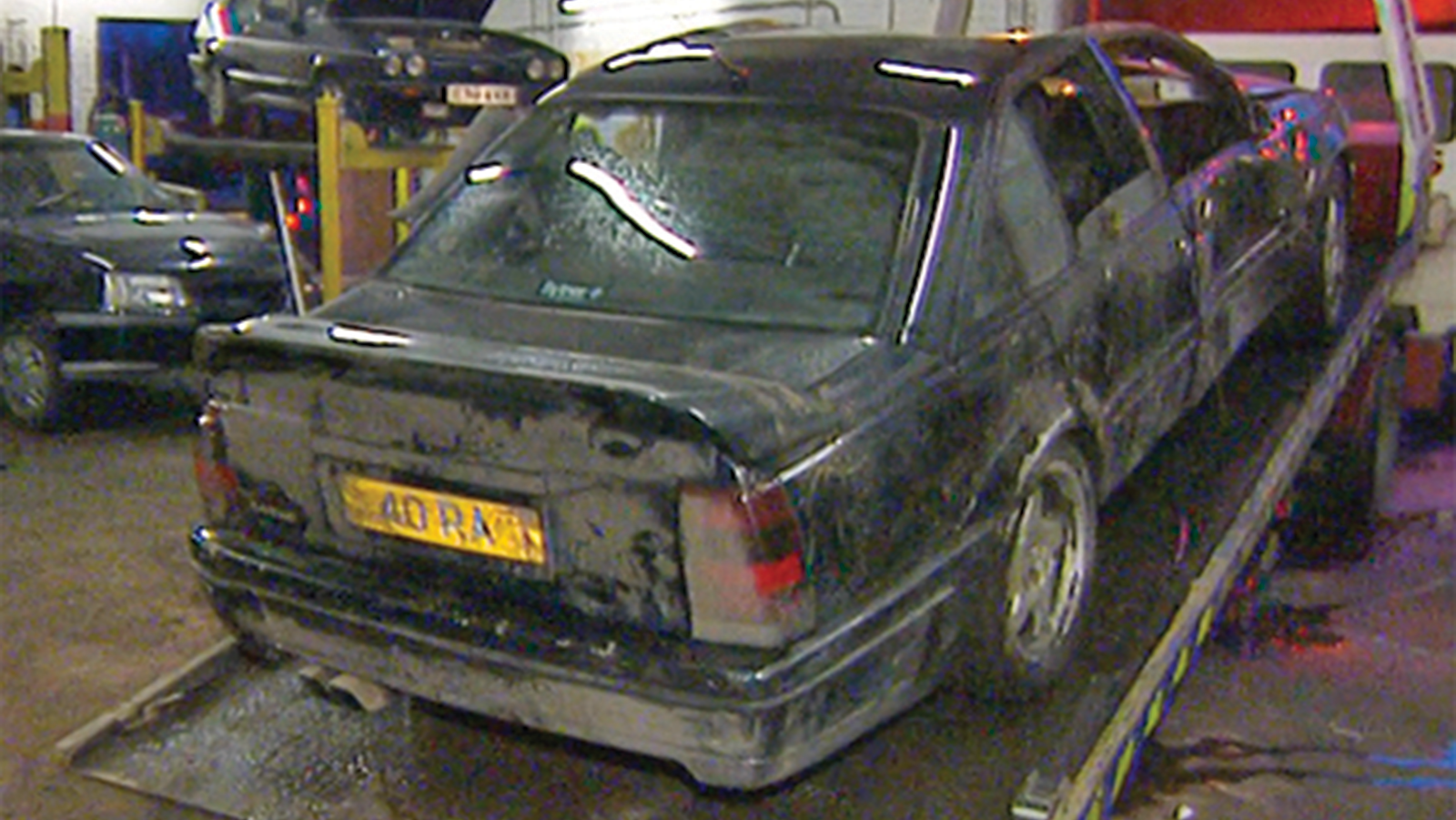
Nowadays, the Carlton’s place in history is much less troubled than its birth. Widely loved by the discerning petrolhead, it’s seen as one of the first cars to really bring supercar-humbling performance to the working man, opening the door for other manufacturers to bring power to the people, and cementing tuned-up Vauxhalls as staple wheels on council estates all over the country. You can, should you wish, purchase multiple electric saloons with over 1000 horsepower or a hatchback over 350 horsepower, and even with the rise of electronic speed-nannying, there has never been a successful attempt to stop everyday punters from buying their way into a powerful car. It just goes to show that (shock horror) the politicians were wrong on this one and you CAN trust the general public. Even today, looking at the car and reading the story, it can still bring joy to that little bit of chav in all of us.


 Project Petrolhead
Leave a reply to Simon Cancel reply