For a company who almost exclusively builds bright-red bedroom wall poster-fodder, you might expect Ferrari to be as far away from a four-door family saloon as humanly possible, but this is the beginning of a thousand-ish-word column, and – being familiar with basic narrative convention – you’re clever enough to know what that means. Luckily, I’m not talking about the monstrous carbuncle that Ferrari calls an SUV – the Mazda RX-8 doored Purosangue – but instead about something infinitely cooler; Family cars with secret muscles.
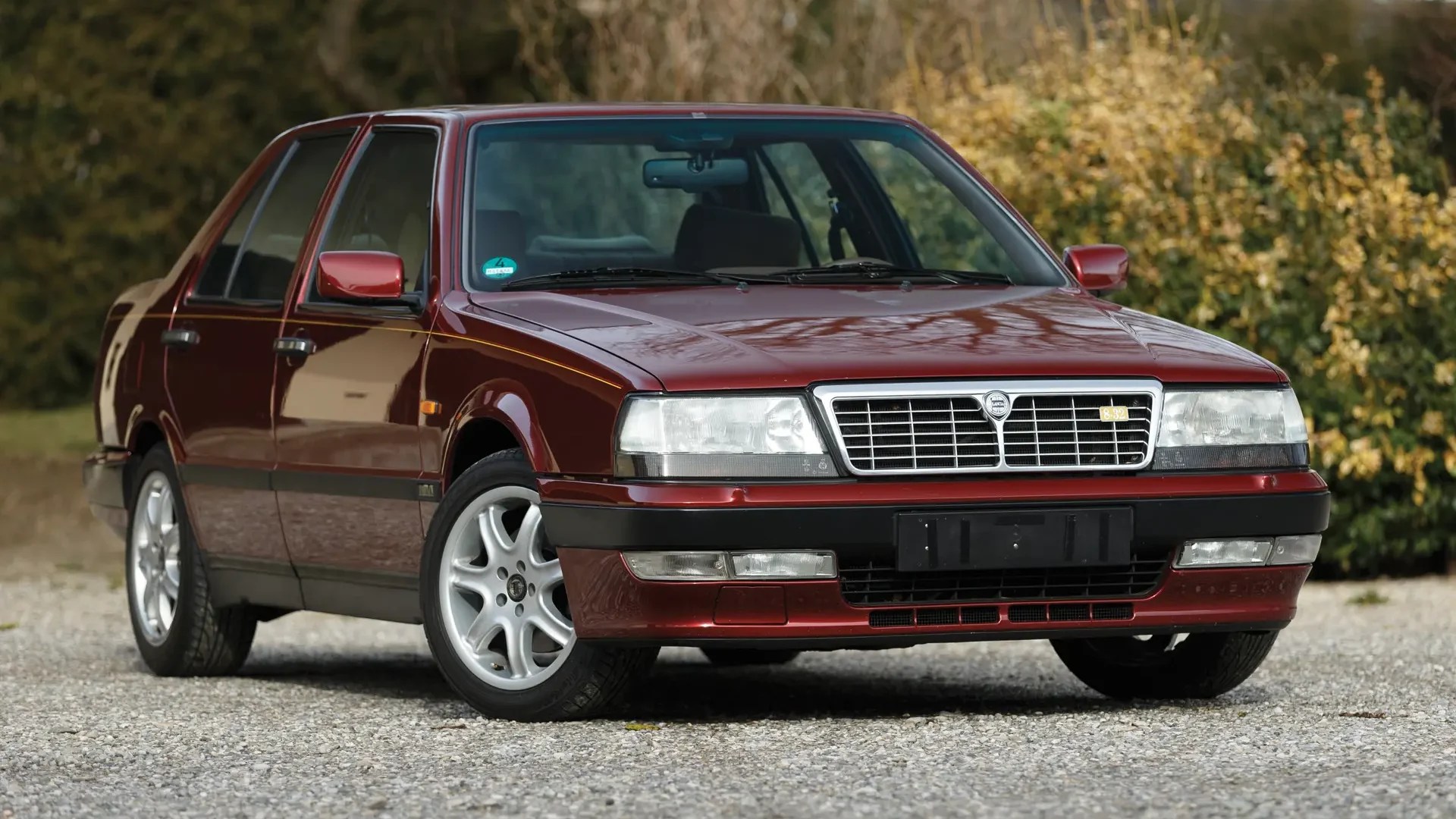
First released in 1984, the Lancia Thema was a Giugiaro-designed wrong-wheel-drive executive saloon and frankly, nothing to write home about. That was until 1986 anyway, when a new Thema broke cover. It looked much the same as all the other trim levels in its range, save for a small badge on the boot that read “8.32”. 8 Cylinders, 32-Valve. Certainly a step up from the Fiat four-pot in the lesser models, the engine was shared with the Ferrari 308, with Maranello sending the parts off to fellow Italian manufacturer Ducati, who converted the supercar’s powerplant from highly-strung flat-plane crank to cross-plane crank for extra torque, sending the finished 215 horsepower units to Lancia to slot into their saloon.
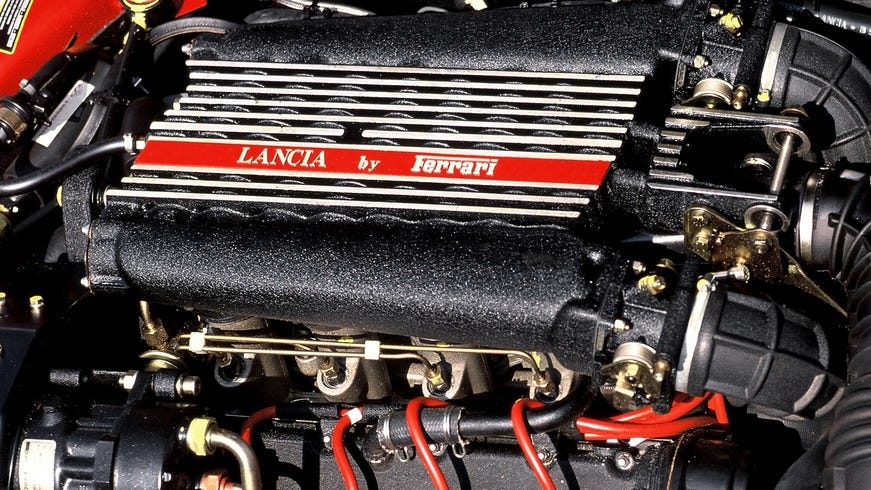
Complemented by bigger brakes and an electronically retractable spoiler (a world-first!), the Thema 8.32 was reflective of Lancia’s push for more driver-focussed machines, arriving at the same time as the Delta HF Turbo and going toe-to-toe with German offerings from BMW and Mercedes. Unfortunately for us, the Lancia had one fatal flaw: With all the changes Lancia had made, all of that Ferrari-derived power was still being sent exclusively to the front wheels, so while straight-line performance was suitably brisk, when it came to cornering, the Italian stallion couldn’t hold a candle to the BMW M535i or Mercedes 190E, and by the time the Lotus Carlton arrived in 1990 (a story for another day to be sure), the Lancia was well and truly blown out of the water. The Thema 8.32 did have one fan however, towards the end of his life, one became the personal wheels of Enzo Ferrari, and I’m told he knew a thing or two about building fast cars.
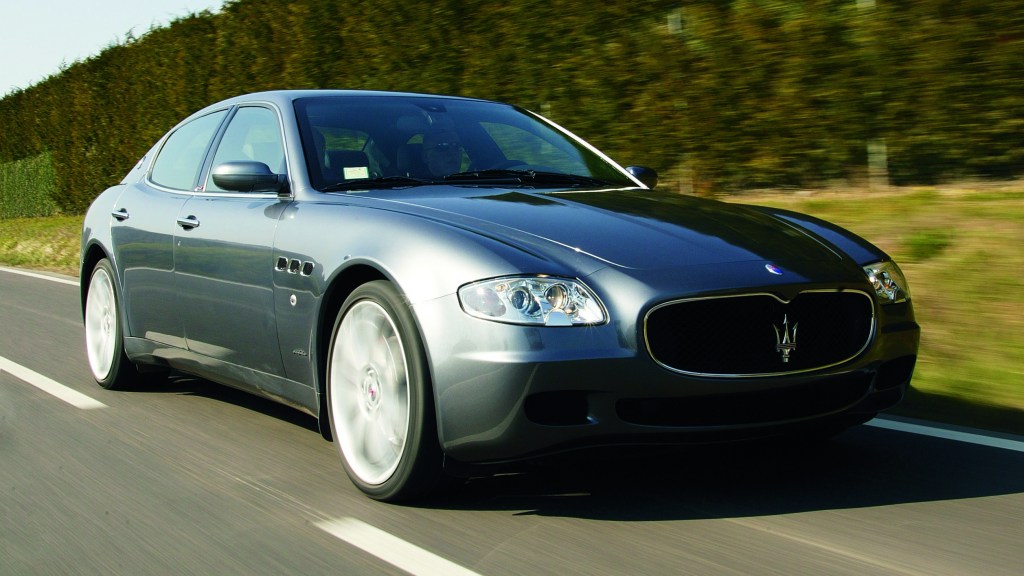
Fast forward to 2003, and another manufacturer was busy slotting a Ferrari V8 into a four-door saloon. Displeased by the fact that Italy’s politicians and executives didn’t have Italian cars to be chauffeured around in, legendary Maserati boss Luca di Montezemolo resurrected the Quattroporte name and set about building a competitor to the Mercedes S-Class, BMW 7-Series or Jaguar XJ. Starting from scratch, the fifth-generation Quattroporte was built from the ground up to be a true Maserati, with aluminium subframes front and rear, adaptive “Skyhook” suspension, a transaxle gearbox for better weight distribution and a truly world-class engine. You see, Luca di Montezemolo was a busy chap in the early 00s. Being as he was chairman of Fiat, Maserati and Ferrari (and by extension running Lancia and Alfa Romeo by proxy), it was very easy for him to get everyone singing from the same hymn sheet. This time, rather than having a Ferrari engine converted by a third party, Ferrari themselves were tasked with building Maserati the perfect engine, designing a 4.2 litre, 400 horsepower V8 that was deemed so impressive that Ferrari themselves used versions of it in the F430 and latterly the 458 Italia.
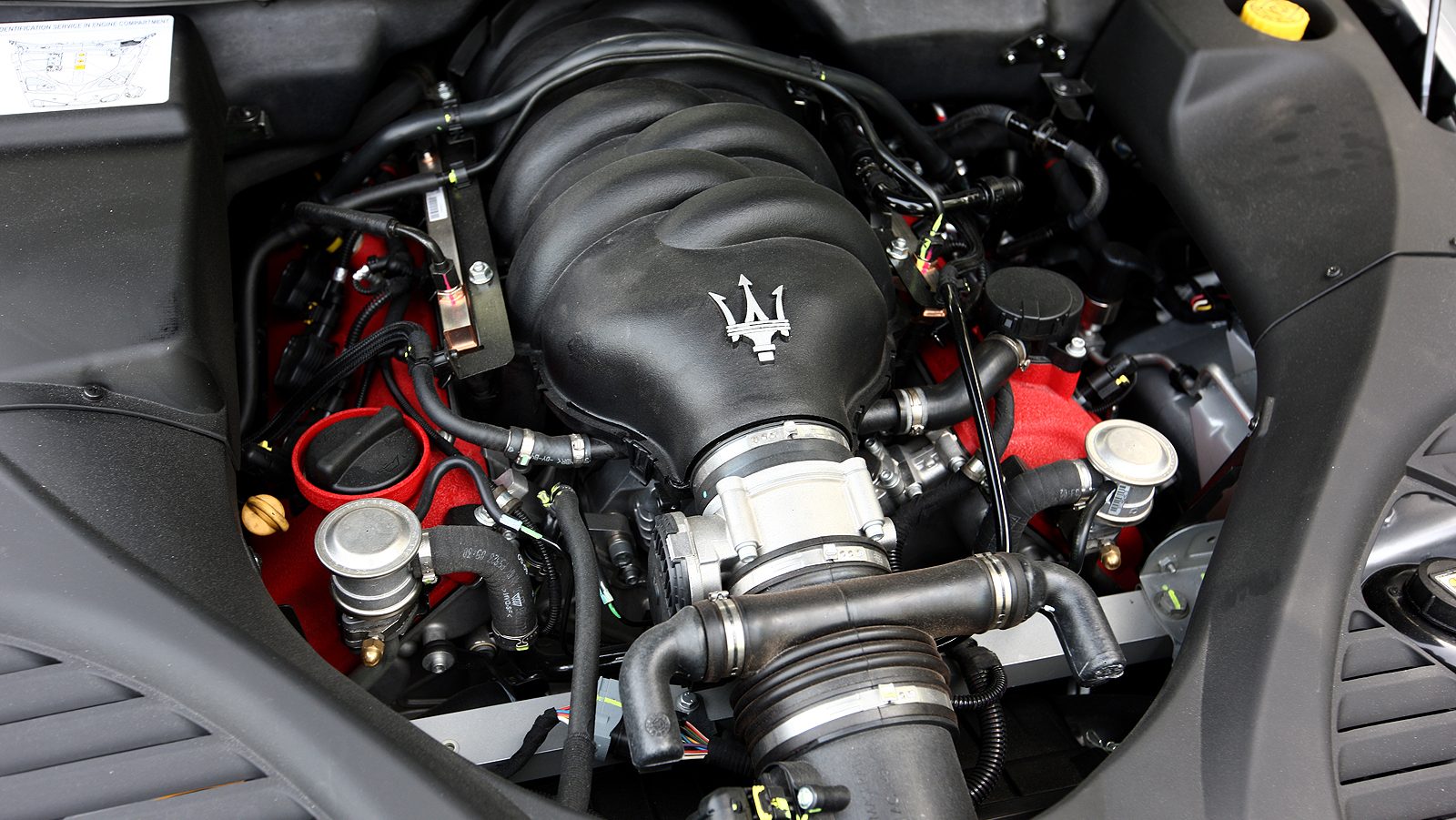
Towards the end of its production run, Maserati decided to give the fifth-gen Quattroporte a proper send-off, building a final version of their four-door flagship with a 4.7 litre, 450 horsepower version of Ferrari’s F136 V8 (the largest capacity that engine would ever reach), swapping the wafty air suspension for coilovers, and recalibrating the gearbox for faster shifts to create the Quattroporte Sport GTS. Now, I don’t often link to outside works here at PPH, but for today, I’m willing to make an exception. Please go and watch this video by Robbert Alblas. It’s of a Quattroporte GTS being hooned around Paris at night and it might just be the single greatest piece of automotive art in history.
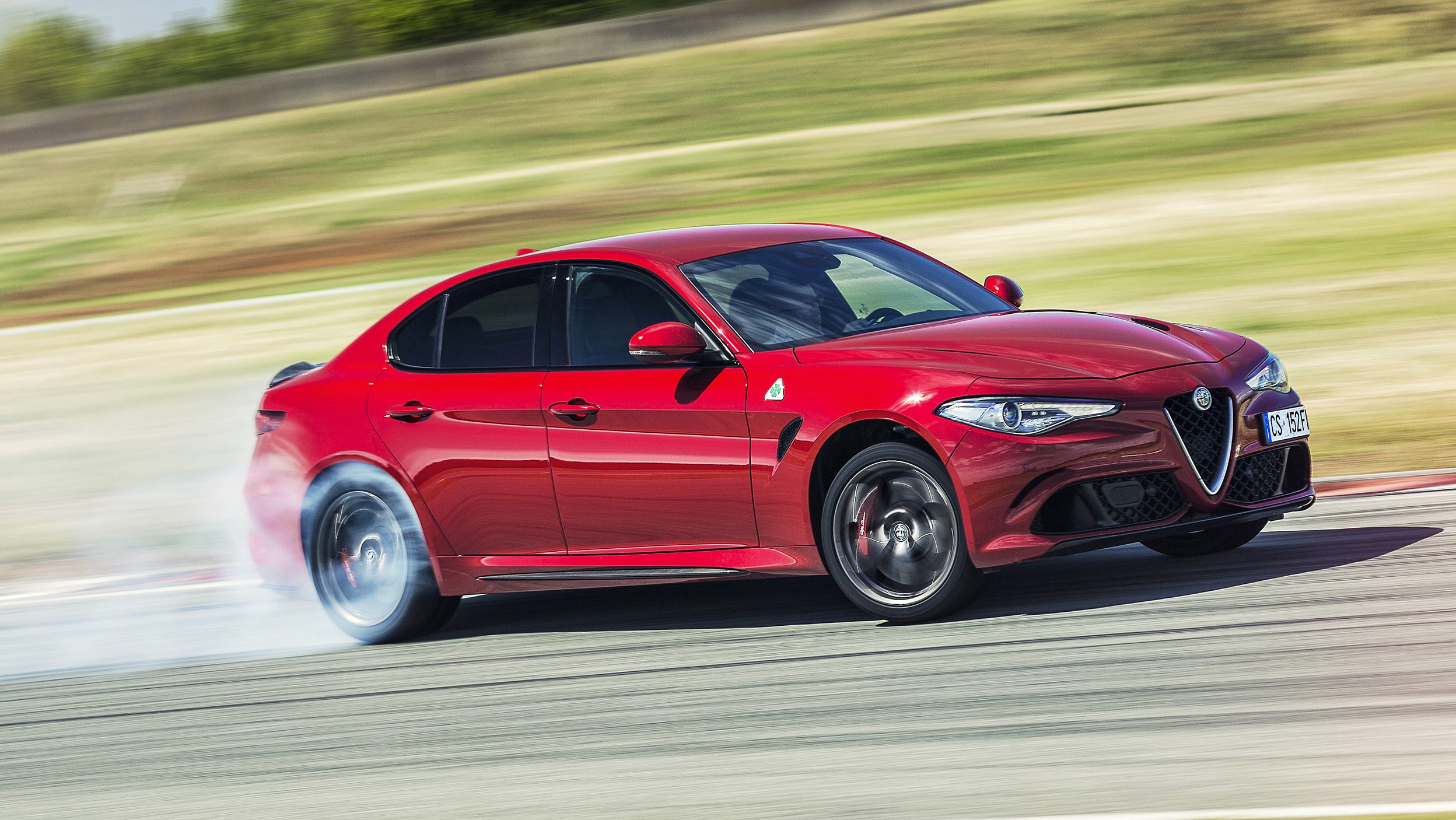
A few more years after the Quattroporte departed us, yet another Ferrari-engined four-door left a factory in Italy. This time it wasn’t a Lancia, it wasn’t a Maserati, it was an Alfa Romeo. Picking up where the pleasant but flawed Alfa 159 left off, the Alfa Romeo Giulia hit the streets in 2015 to much positive buzz from the world’s motoring press. Aiming to poach sales from the BMW 3-series, the Giulia went into battle with a taut rear-drive chassis, peppy petrol engines and looks to die for. But we’re not here for WhatCar?’s Best Cupholder Design (2015) are we? No. Let me tell you about the fast one. Since the 1920s, Alfa’s racing cars have all been bestowed with a symbol of good luck; a Four-leaf Clover, so when it came time to build their fastest road car to-date, naturally the name found its way to the Giulia. Quadrofoglio. Everything sounds better in Italian (Don’t believe me? Ask Maserati. “Quattroporte” translates to “Four Doors”). Fitted with carbon-ceramic brakes, a torque vectoring differential, active aerodynamics and multi-way adaptive dampers, it’s quite clear that the Giulia Quadrofoglio wasn’t just built for a beauty pageant.
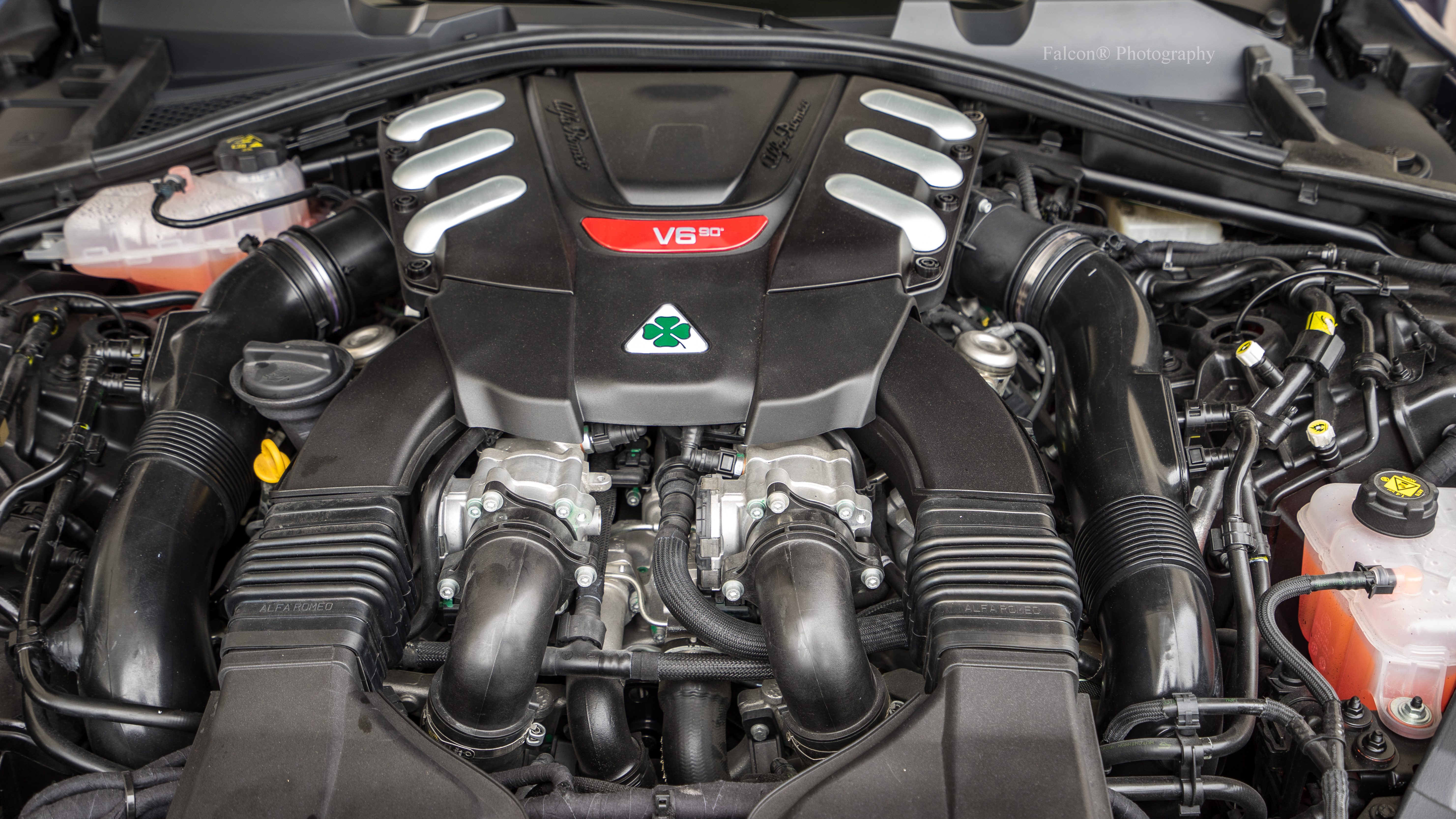
Guess where the engine comes from. If you guessed “Ferrari”, you’d be… wrong. Well, according to Alfa, anyway. They were very keen to let the world’s press know that the Quad Fog’s engine was Alfa’s own design! And the world’s press were very keen to point out that it shared the crank angle, compression ratio, turbochargers and geometry with the V8 in the Ferrari 488 GTB – albeit with two of the cylinders lopped off. In truth, they are technically correct. Both engines were developed by Ferrari’s legendary engine builder Gianluca Pivetti, with the similarities coming from the simple fact that he knows what works and how to replicate it. Still, with 503 horsepower snorting away under the bonnet, anyone behind the wheel wouldn’t really care about the pedigree, they’d be too busy having fun. No wonder the Carabinieri use them as squad cars.
With the world pivoting toward downsized engines with a greater emphasis on efficiency – and Ferrari off trying to put a 6.5 litre V12 in an SUV for some reason – it wouldn’t surprise me if the Quadrofoglio represents the last in a line of supercar-engined Italian saloons, but as they say, it’s better to have loved and lost etc, etc. Now, if you’ll excuse me, there’s a Maserati Quattroporte on AutoTrader for under £12,000 that’s demanding my undivided attention…

 Project Petrolhead
Leave a reply to Simon Cancel reply