I think perhaps I got a bit overly rose-tinted last week when discussing the Aston Martin V12 Vantage, especially when pining for the days when cars were less complicated and more “analogue”. Rather than drinking half a bottle of scotch and having a cry while listening to Enya and wishing it was still 2005, I instead decided to have a think about what being “analogue” actually means, and why it might be a nonsense term after all.
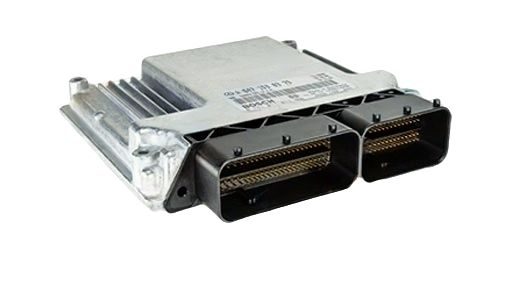
“I just want a car that is 0% computer” says some nameless, faceless random on social media, entirely unaware of how unfeasible that actually is. Like it or not, computers are intrinsic to how cars function and have been for decades. I’m not talking about sat-nav, cruise control or parking sensors, I mean the oily stuff, deep in the guts of your engine. The earliest application of an electronic ECU (Engine Control Unit) in a motor vehicle took place in the late 1960s when the encroachment of new stricter environmental regulations across Europe and the US led to manufacturers ditching carburettors in favour of cleaner, more efficient fuel injection, a system that utilises sensors troughout the car to deliver the exact correct amout of fuel to the cylinders at the exact right time, maximising engine efficiency. This quickly became the worldwide standard, with the last production car to sport carburettors rolling off the production line in 1991 (a Ford Crown Victoria with its agricultural 5.8 litre V8). So regardless of whether you drive a turbocharged-supercharged-hybrid (like the one in the Volvo V90 T8) or simple-as-you-like naturally aspirated V8 (like the one in my Jag for example), there’s still a small circuit board connected to several other tiny circuit boards that dictate exactly what’s happening at any given moment.
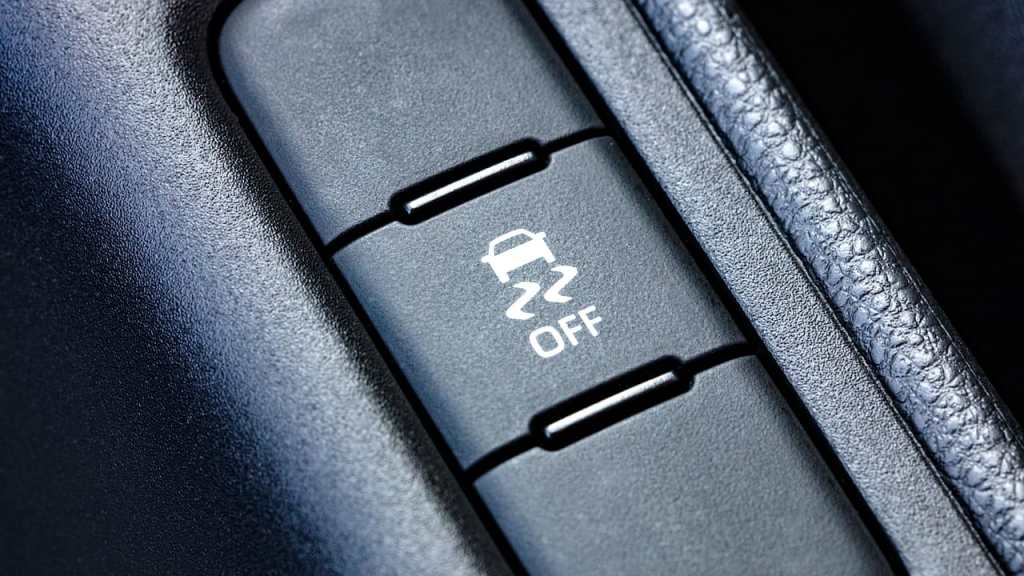
“Aha!” you may be saying. “But my car has a naturally aspirated engine and a manual gearbox! That means I’m completely in control at all times!” Oh really? Well then. If your manual car has a little readout on the dashboard to show you what gear you’re in, then it might be handy for you to know just how much work goes into that. First off, the ECU measures the engine RPM and the wheel speed (through sensors, of course), then it matches that to the gear ratios (i.e. If we’re doing 30mph at 2000rpm, then we have to be in 4th gear). Simple, right? Then there’s the traction control that measures the speed differential between each wheel of the car – if the rear wheels are spinning faster than the fronts, you’re probably sliding – and adjusts the engine’s throttle input to bring everything back under control. Also, not a new development, as Stability Control was pioneered by Bosch and Mercedes-Benz way back in 1995 for the W140-generation S-Class. Turned the traction off? That’s okay, the Anti-Lock Brakes (ABS) will kick in if you run out of talent, pulsing the brake callipers under hard braking to help you to bring the car to a safe halt much more efficiently than you could on your own.
All of these systems are working away in the background whenever you go out for a drive, so really, the only reason someone might consider a car to be “analogue” is because the systems are so good and so efficient, that you don’t even notice they’re there. In my mind, that means that so-called “analogue” cars might just be the most digitally impressive of them all. There’s no getting away from the fact that, unless you want to putter around in a car from the 1940s, manually adjusting the measurement of the points on the distributer, and replacing them every six-thousand miles, computers in cars aren’t some terrifying gremlin to try and get away from, in reality all they do is make our lives much, much easier.

 Project Petrolhead
Leave a reply to Simon Cancel reply