Occasionally, otherwise ordinary car manufacturers will have a moment of madness and build something incredible. In the early 00s, Volkswagen threw the entire weight of their engineering empire behind the Bugatti Veyron. For Toyota, it was their boss’ passion project; the Lexus LFA. Recently, I was reminded of another one of these cars, as I read about the fact that a pokey little upstart from Detroit just claimed the record for being the fastest internal combustion car around the Nürburgring…
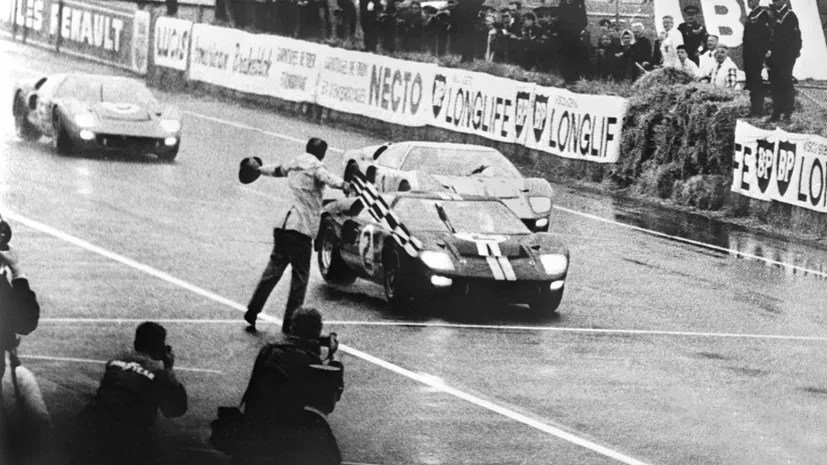
May 1963. Enzo Ferrari is on the verge of bankruptcy. Keen on expanding their repertoire, Henry Ford II dispatches a team to Maranello to begin negotiations. Ford will purchase Ferrari, with the Detroit giant set to build the road cars, trading off Ferrari’s reputation for exotica, leaving the Italians to head up the racing programme. Unhappy with the terms of the deal, Enzo backs out, sends the Americans packing and toddles off to Fiat instead, and at that moment, Ford decides to beat Ferrari, no expense spared.
Great story, right? Could make an excellent film.
Well, as good as Mr Bale and Mr Damon’s rendition was, there’s a few aspects of the Le Mans ’66 story that often get left out. For example, it does tend to spoil the “America’s First Supercar” story when you find out that most of the car – well, everything bar the engine – was developed on the other side of the Atlantic, in jolly old Eng-er-land. The chassis came from legendary racing team Lola, the aluminium body was fabricated by Coventry-based Abbey Panels, and the initial GT40 prototype was cobbled together on an industrial estate in Slough before being shipped over to New York. From there, the film stays mostly accurate – Carroll Shelby, Ken Miles, 7.0 litre V8, “Go like hell”, 3-car finish, Miles snubbed – but one thing that was dropped for dramatic effect was just how far ahead the GT40s finished. During the early stage of the Le Mans 24Hr that year, the track was still drying after rain the previous night, a factor that gave the heavy GT40s an advantage over the lightweight Ferrari 330 P3. So much of an advantage in fact, that by the Sunday morning, both of Ferrari’s entrants had retired and the team started asking the GT40 drivers to slow down, dropping their lap times from 3:30 to 4:00 just to save fuel and reduce tyre wear.
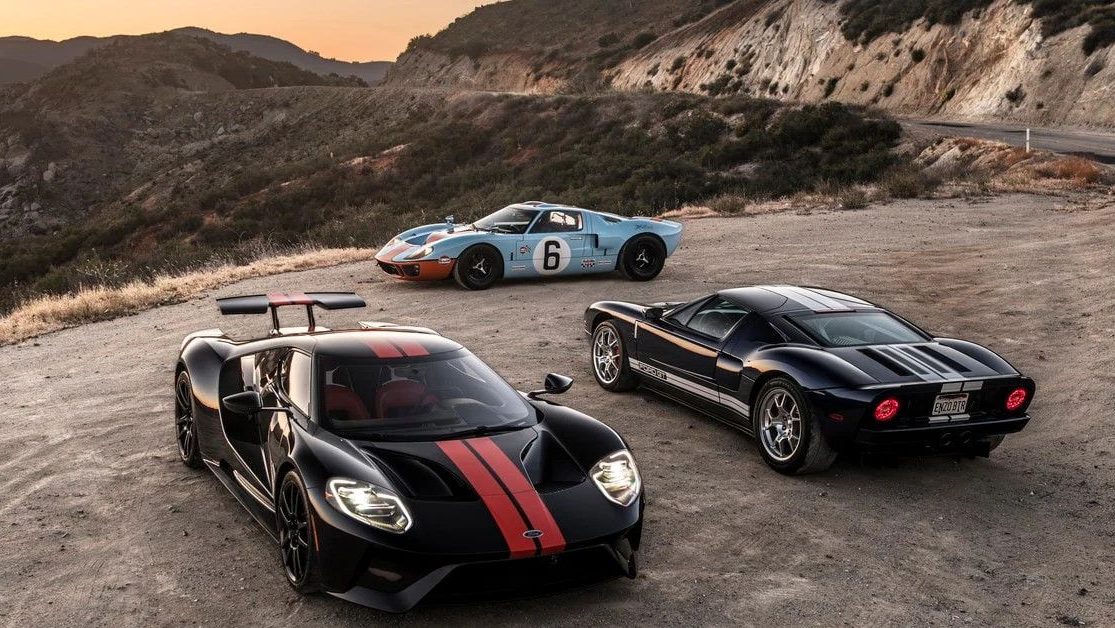
Nearly 40 years later, Ford found themselves on the cusp of celebrating their 100th anniversary and decided to revisit some of their greatest achievements. Enter J Mays (yes, his first name really is just the letter J), Vice President of Design, who decided to resurrect the GT40 for the modern day. Mays had Chief Designer Camilo Pardo draw up the new car, keeping as close to the 60s design as possible while still allowing for modern crash safety regulations, before recruiting Carroll Shelby himself to help develop the engine and chassis. Borrowing the 5.4 litre V8 from an F-150 Lightning pickup truck, the head was reworked from a single overhead cam to dual overhead high-lift cams and was fitted with a larger supercharger, boosting power from 380 horsepower to 550 horsepower, before the whole ensemble was nestled into a bonded aluminium (sorry, a-loo-minum for any Americans reading this) frame.
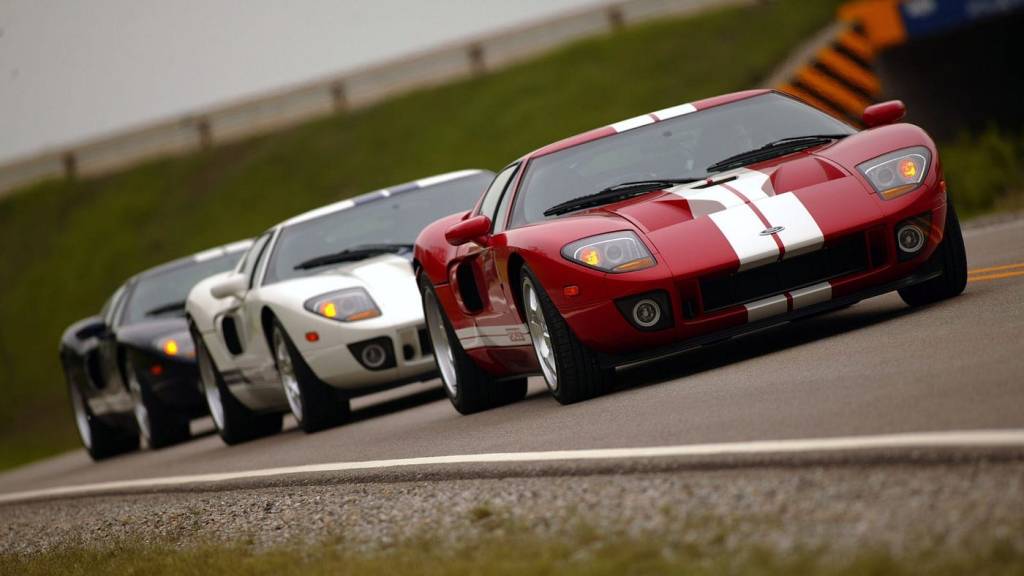
Now called the Ford GT (it turned out somebody else owned the name GT40), the new car could easily hold its own against 2005’s greatest supercars. With way more power than either Ferrari’s F430, Pagani’s Zonda or Lamborghini’s Gallardo on tap, the GT was a weapon in a straight line, but it could just as easily hold its own in the corners too, with delicate steering, a well-balanced chassis and plenty of grip from the 315-section rear tyres. No wonder then that the GT was able to handily secure EVO magazine’s 2005 Car Of The Year award, with Associate Editor Peter Tomalin noting: “Everything, it seems, has been honed to help maximise your enjoyment. […] You don’t fight the GT, you flow with it, powering calmly and precisely from straight to crest to bend, safe in the knowledge that each wheel and tyre is relaying faithful information to you through the steering wheel and seat cushion. Make no mistake, the Ford is vividly, explicitly, shockingly fast. It snacks on stretches of road that most cars would make a meal of, its rangy gearing and deceptive, devastating power delivery firing you through France at warp speed.”
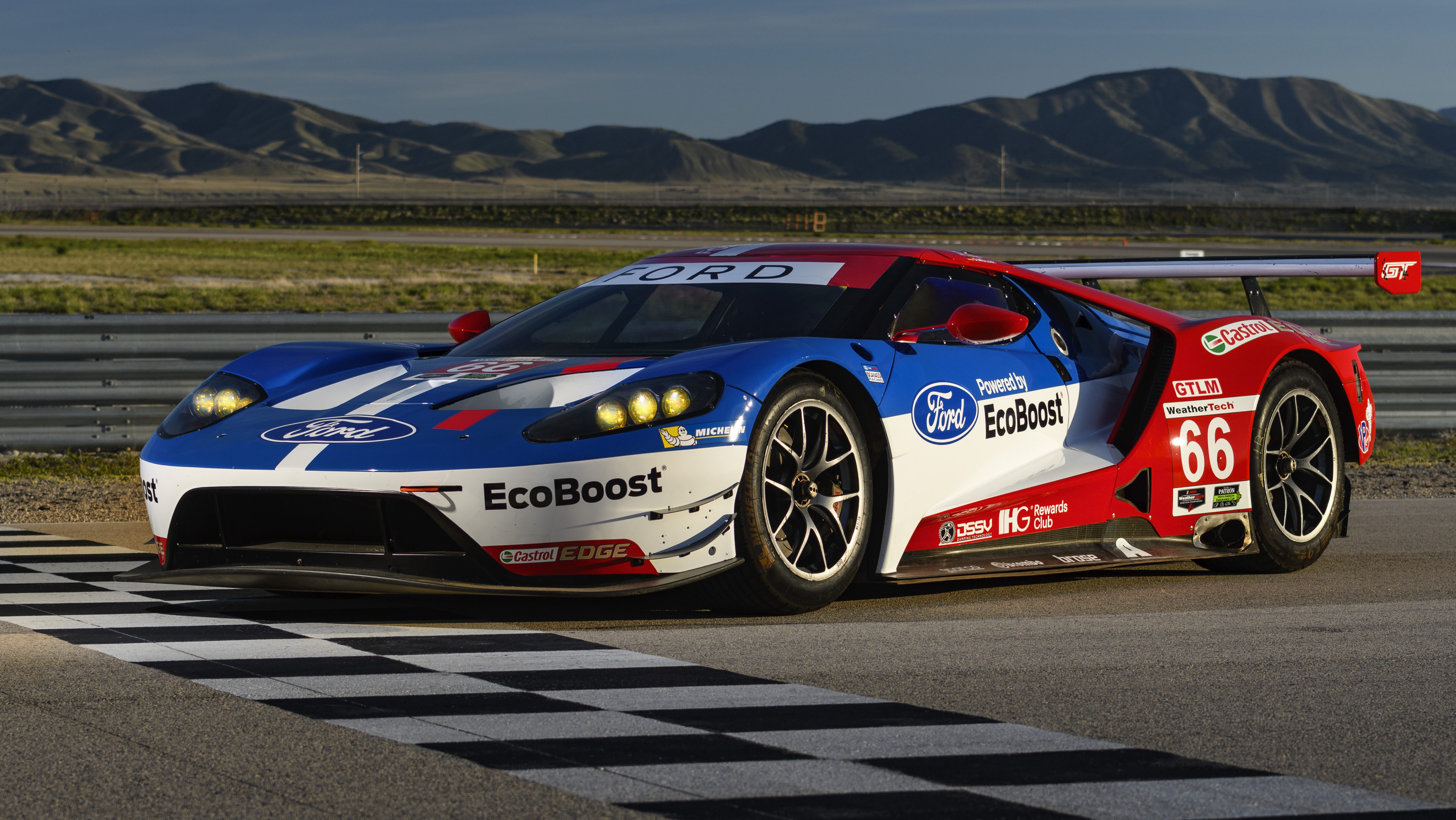
And so, in 2016 – 50 years after their first Le Mans win – Ford decided to do it all over again. Developed in secret and designed by Chris Svensson (fun fact: he’s also the bloke who designed the Ford KA), the new GT would be purpose-built to win races, with the road car efforts taking a back seat to outright pace. First came the aerodynamics, with the car’s famous “flying buttresses” channelling air between the cockpit and the rear wheels directly into the path of the electrically deployable rear wing. Then, there’s the hydraulically adjustable pushrod suspension that allows the car to drop its ride height by 50mm and lock off the helper springs for hard cornering. Finally, Ford went to town stripping weight out of the thing, ditching the heavy V8 for a lighter, more efficient 660 horsepower twin-turbo V6, and even using chemically strengthened super-thin glass, originally designed for smartphones, in place of the windscreen and side windows.
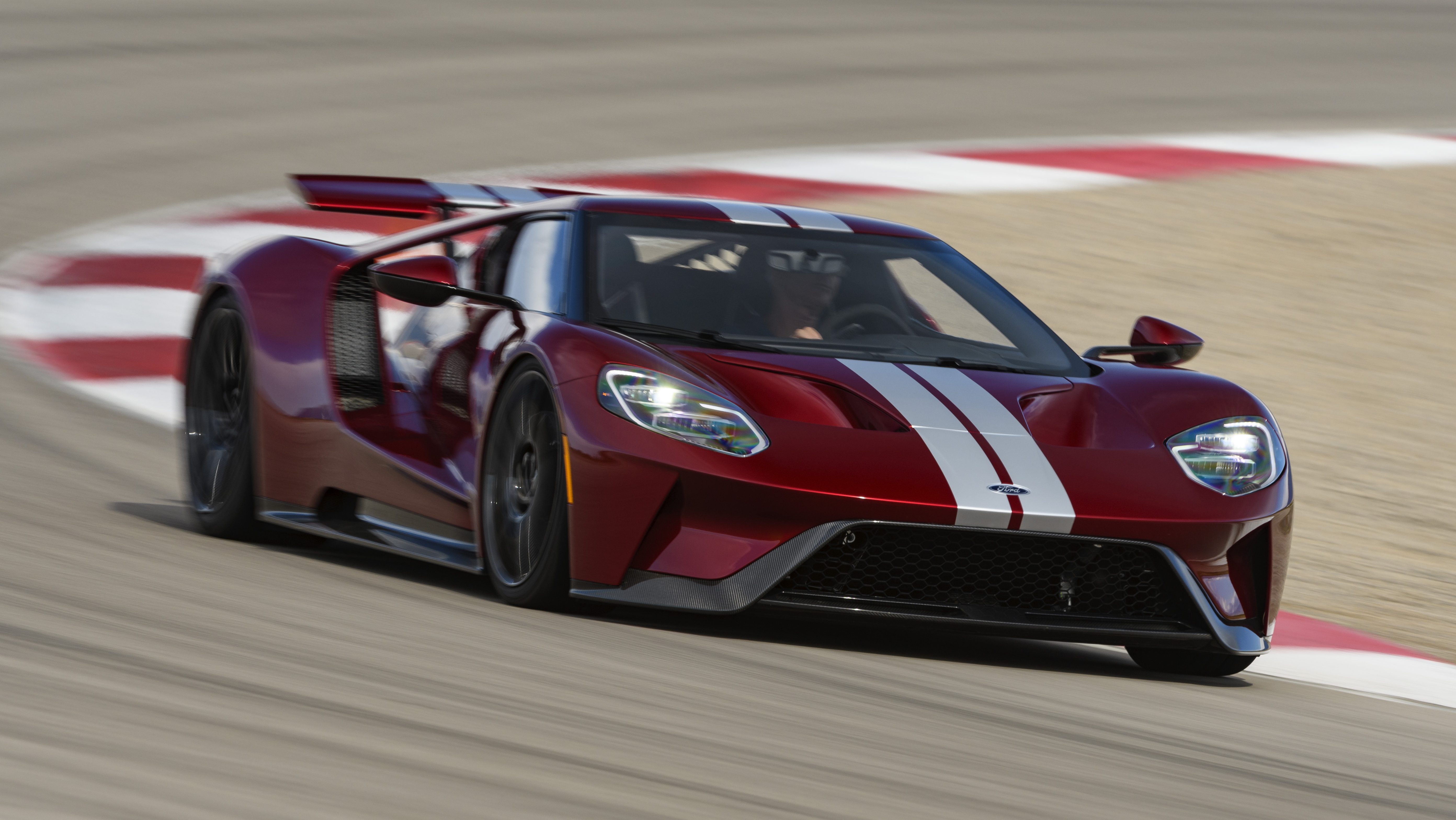
Not only did Ford achieve their goal – securing a class win at Le Mans 2016 – but they were somehow able to translate the racing car’s incredible pace to the road as well, making the second-generation Ford GT quite possibly the greatest supercar to come out of Ameri… Canada. That’s right, just like it’s Granddad, the best bits of the GT came from overseas, with final assembly taking place in Ontario, before the cars were hastily trucked south of the border.
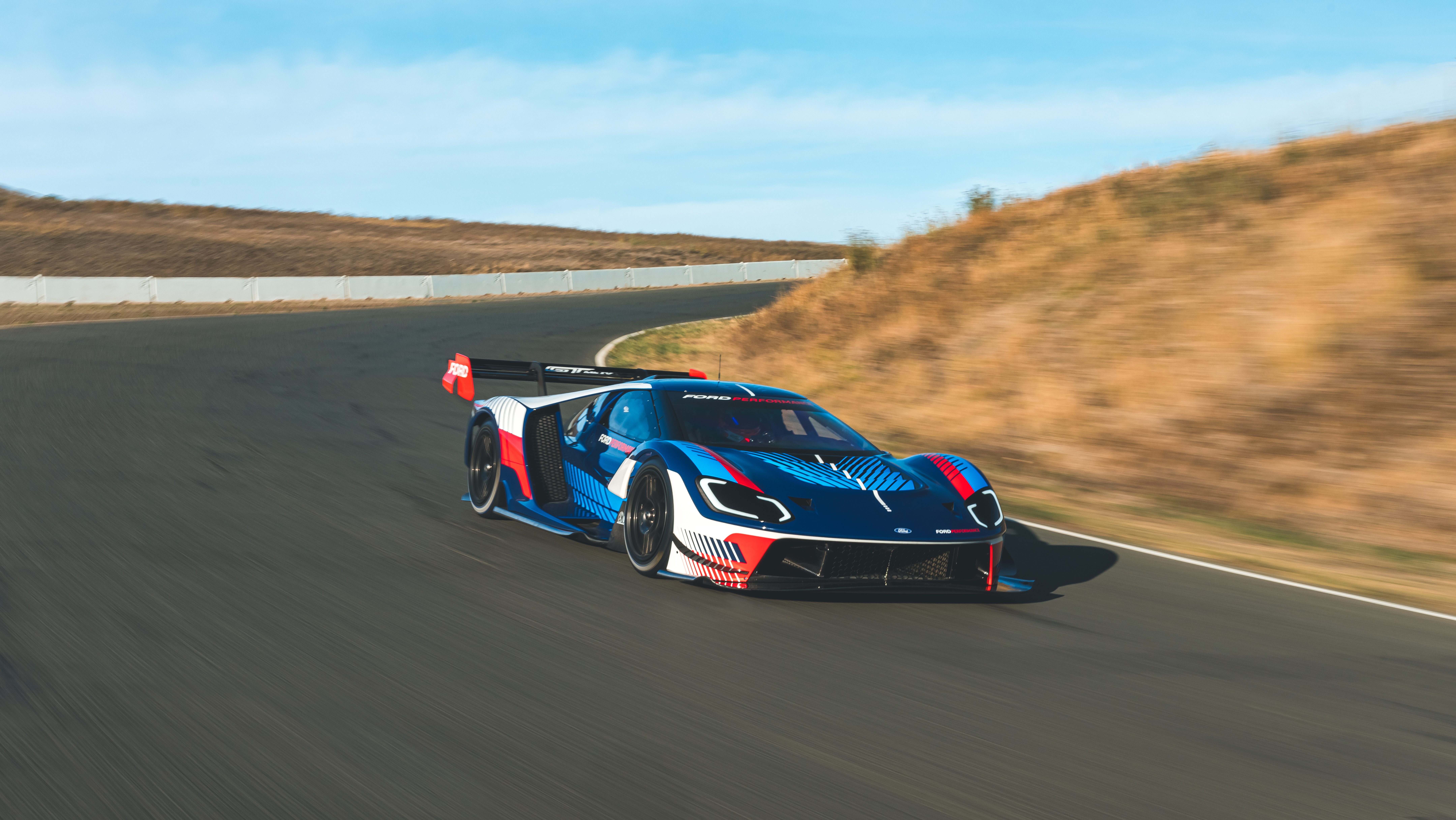
And Ford somehow wasn’t done yet. For the last ten years, they’ve kept developing the GT behind closed doors, emerging recently – Last Friday from when this column is published – to make history yet again as the fastest pure combustion engine car ever to lap the infamous Nürburgring Nordschleife, setting a frankly ridiculous lap of 6:15, some 14 seconds quicker that Mercedes’ AMG One, a car developed in part by their Formula One division, and a full minute faster than Lamborghini’s bonkers Aventador SV. Strangely, despite its half-million-dollar price tag and space-age construction, the blue oval badge on its nose means that people see the Ford GT as some sort of people’s champion in the supercar world. Like a blue-collar working-class American that’s gone to the racetrack to stick it to those poncy Europeans, it really has become a cultural icon. Normally, I’d revel in a chance to knock an American down a peg or two, but I’m happy to let them continue in this instance, just so long as they keep building cars like this.
 Project Petrolhead
Leave a comment