October 18th, 1988, Birmingham’s National Exhibition Centre. A young boy walks through the halls of the British International Motor Show, making his way through the manufacturer stands, past hordes of dull, mid-size family saloons and hatchbacks until… he sees it. Possibly the most beautiful car – no, the most beautiful thing – he’s ever seen. Sleek, low and wide, with curves that make it look supersonic even while it’s standing still. He runs toward it, desperately looking at the laminated information sheet to learn whatever he can about this mythical object, and he cannot believe what he reads. It’s a Jaguar! All his life, the boy has only know Jaguar to be the builders of big, plush saloons, the sort driven by football managers who sell them on to pub landlords, how could they have built this? The car isn’t running, but already the boy hears the reverberation of a V12 in the back of his mind, like the car itself is telepathically transmitting the noise. And the name of this beast? Two letters and a statement of intent. “Yeah, we’ve called it that because we’re going to be the fastest. That number? That’s our top speed.” X J 2 2 0. The boy has never seen anything like it before, and chances are he never will again.

And that boy was… not me. In fact, I wouldn’t even be born for another 10 years. But hey, the Jaguar XJ220 is certainly real, even though it very well might not have been.
Over Christmas 1984, presumably while bored of eating Quality Street and watching Morecombe and Wise, Jaguar’s chief boffin – Professor Jim Randle – started scratching together plans for a Group B rally car in the vein of the Ford RS200 or MG Metro 6R4 (don’t worry, he’ll come back later), designing a mid-engined tub chassis out of carboard and sticky tape. With a supercar-shaped vision in mind, the next year Randle roped in a few colleagues at Jaguar’s design studio to bring the vision to life, with South African-born Keith Helfet eventually drawing up the design we know today by taking design cues from the contemporary XJ41 concept and Jaguar’s legendary XJ-13 prototype of the 1960s to create the ultimate Jaguar for the 90s. With the designs put to paper, Randle approached the higher-ups in Jaguar’s boardroom to see if the car could be put into production. Naturally and whole-heartedly, the board said… “No.”
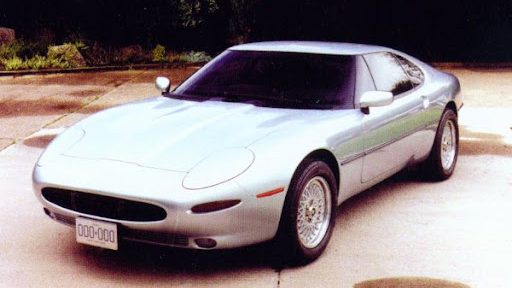
Undeterred, Randle and Helfet really thought that the XJ220 had enormous potential, so they kept the designs and hatched a secret plan. On the sly, Randle tapped the shoulders of a dozen or so of Jaguar’s engineering team and clued them in on the project – to build a prototype of the fastest car in the world – and each man in turn agreed to volunteer their services, turning up to the factory out-of-hours on a Saturday to help bring the project to life. The now-famous “Saturday Club” even had a ring-round of Jaguar’s normal parts suppliers who were happy to donate components here or there to get the metaphorical wheels in motion. With the crack team of volunteers working at full pelt, the XJ220 concept was completed well ahead of schedule for the 1988 motor show. And by “well ahead of schedule”, I mean that the finishing touches were completed at 3:00 in the morning on October 18th, 1988 – just three hours before the car was due to be on the motor show stand.

Even with the paint still wet, the concept car wowed audiences with it’s naturally-aspirated 500 horsepower V12, rally-bred suspension and four-wheel drive, all shrink-wrapped in that gorgeous silhouette that made very clever use of under-body aerodynamics. The public wanted a piece of the action and a few wealthy people decided to do what wealthy people do best; pestering people in positions of power, and Jaguar received so many calls expressing interest in the XJ220 that they finally relented and greenlit the project for limited production, with every potential customer being asked for an eye-watering £50,000 deposit on the XJ220’s £230,000 list price, around £140,000 and £650,000 in 2025 money. Oh well, I’m sure nothing would go wrong during development… Right?
Wrong. Even before the project began in earnest, there was a problem. Nowhere in Jaguar’s factories was suitable enough to build such specialised vehicles, with no ability to work with carbon-fibre at that scale. As such, the work was outsourced to racing driver, engineer and general jack-the-lad Tom Walkinshaw and his company TWR who, under the “Jaguar Sport” moniker, had already produced the first Jaguar saloon badged “XJR” and the barely road-legal XJR-15 using parts borrowed from Jaguar’s Le Mans cars. Then came the lightweight debate. The prototype car, complete with V12 and four-wheel drive, tipped the scales at over 1.5 tonnes. This displeased the development team who claimed that, in order to hit the car’s 220mph target, they’d need to shed a further 200kg from the design, so the decision was made to sacrifice the four-wheel drive system, leaving the car a 500 horsepower, rear-driven widowmaker. Then, even more bad news. The 6.2 litre V12 that Jaguar had ear-marked for production failed to pass new stringent emissions tests without severely limiting it’s power output, leaving the engineers with a decision to make. Go back to the drawing board and design an all-new V12 from the ground-up, probably tacking another year or two onto the development time, or dive into the parts bin and see if they could source a new engine that would be up to the task.

In a small stroke of luck, a few years prior Tom Walkinshaw had purchased the production licence and tooling for Austin-Rover’s Metro 6R4 rally car (told you he’d be back!), whose race-proven 3.0 litre V6 could be tuned up to 400 horsepower without any issues, but even that was 100 horsepower down on the concept, so power was increased by boring the block out to 3.5 litres, and then even further with the addition of two enormous Garrett TO3 turbochargers. Now boasting upwards of 540 horsepower, the XJ220 was surely capable of cracking the 220mph barrier.
And then the banks crashed.
In 1991, a quarter of the UK’s small banks failed, throwing the rest of the economy into a shaky position. Suddenly, people didn’t have a quarter-of-a-million quid to spend on a supercar anymore, and the revelation that their exotic V12 had been replaced by the V6 from a Metro didn’t help matters. People demanded their deposits back, even going so far as to bring legal action against the company for breach of contract, claiming that the production XJ220 strayed too far from the original that they had been sold. In a truly baffling move, Jaguar responded by suing their own customers for not fulfilling their deposits, in the end offering customers a “Kill Order” where, for a small fee of £75,000 on top of their £50,000 deposit, the customer wouldn’t have to take delivery of the completed car… so they’d be paying £125,000 for the square-root of sod all. And people wonder why Jaguar have a history of going bust.

Despite the numerous hurdles, the XJ220 project was completed and, by 1994, the company achieved it’s goal of becoming the fastest production car in the world, surpassing the Bugatti EB110, the Ferrari F40 and the Porsche 959. Even that was fraught with issues however, with several… err… modifications needing to be made to the car. The rev limiter was raised, the catalytic converters were removed, the interior was stripped, they even un-bolted the Citroën CX-sourced wing mirrors to reduce drag, and the result of all that? A top speed of 217mph on the Nardo bowl. Close enough, lads. A record it would hold for a grand total of five-and-a-bit years before being summarily blown out of the water by the 240mph McLaren F1.
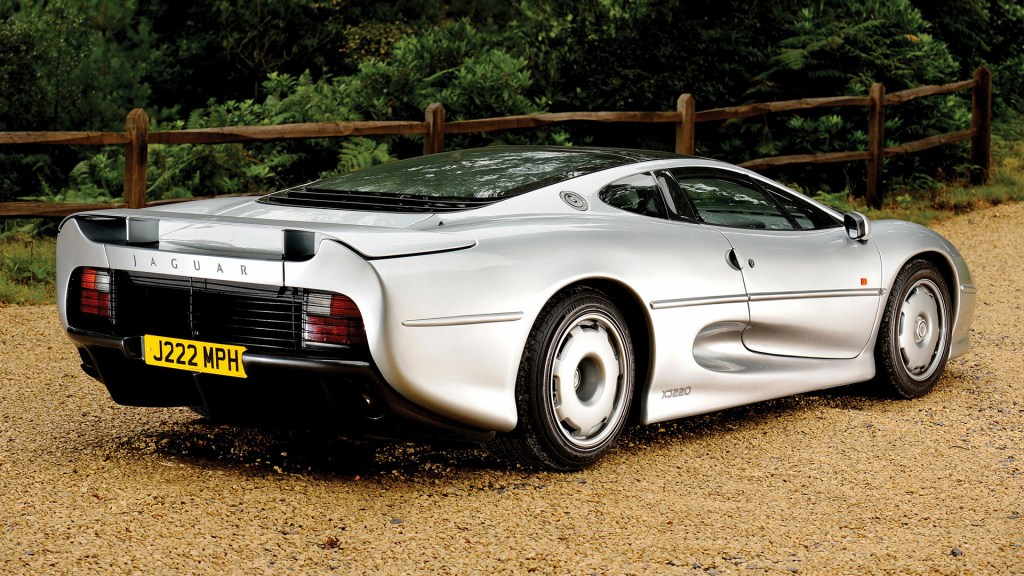
Love it or loathe it – and I think you know where I stand – the Jaguar XJ220 is an icon. It’s not timeless, in fact, it’s the exact opposite; a car that could only have come from that specific period of history, but it’s not just a time capsule, it’s a landmark in British car design, marking one of the very few times in recent memory where we, despite all the odds, could take on the world and win.
 Project Petrolhead
Leave a comment