“Your scientists were so preoccupied with whether or not they could that they didn’t stop to think if they should.” – Ian Malcolm, Jurassic Park (1993)
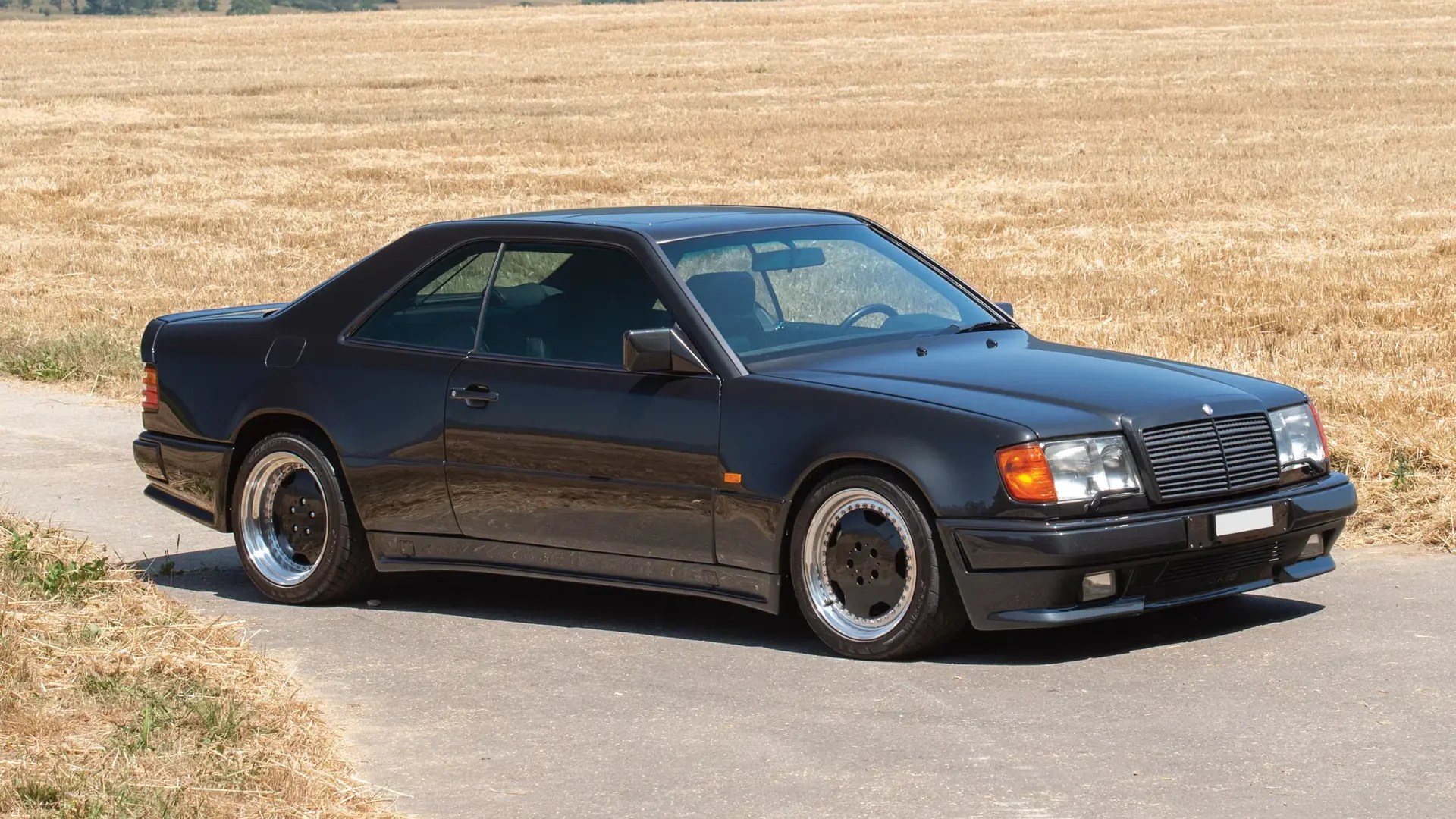
In-house performance divisions have always been an interesting subject. Whether it’s BMW M Division (or should that be ///M?) and their suite of M3s and M5s with the odd M2 or M8 thrown in for good measure, or Porsche’s Weissach-based GT department, who have been churning out GT3s passed on the contemporary 911 – and then RS versions of those GT3s – like clockwork since 1998. Elsewhere in Germany, in a sleepy little municipality called Affalterbach, famous for it’s orchard groves, a factory was set up to build cars designed by lunatics for lunatics. AMG have been responsible for some all-time performance icons, from the legendary 300CE “Hammer” coupe of the 1980s, through the Zonda-engined 7.3 litre SL73, they even saw fit to garnish a family minibus with a 6.2 litre 510 horsepower V8 in the R63. Perfect for when you have the school run at 8:30, and Santa Pod at 9:00. Believe it or not, inside AMG’s offices there’s a small padded room where Mercedes’ most straightjacketed designers can be allowed to roam free and design the stuff that nobody dare to comprehend. They call those cars the AMG Black Series.
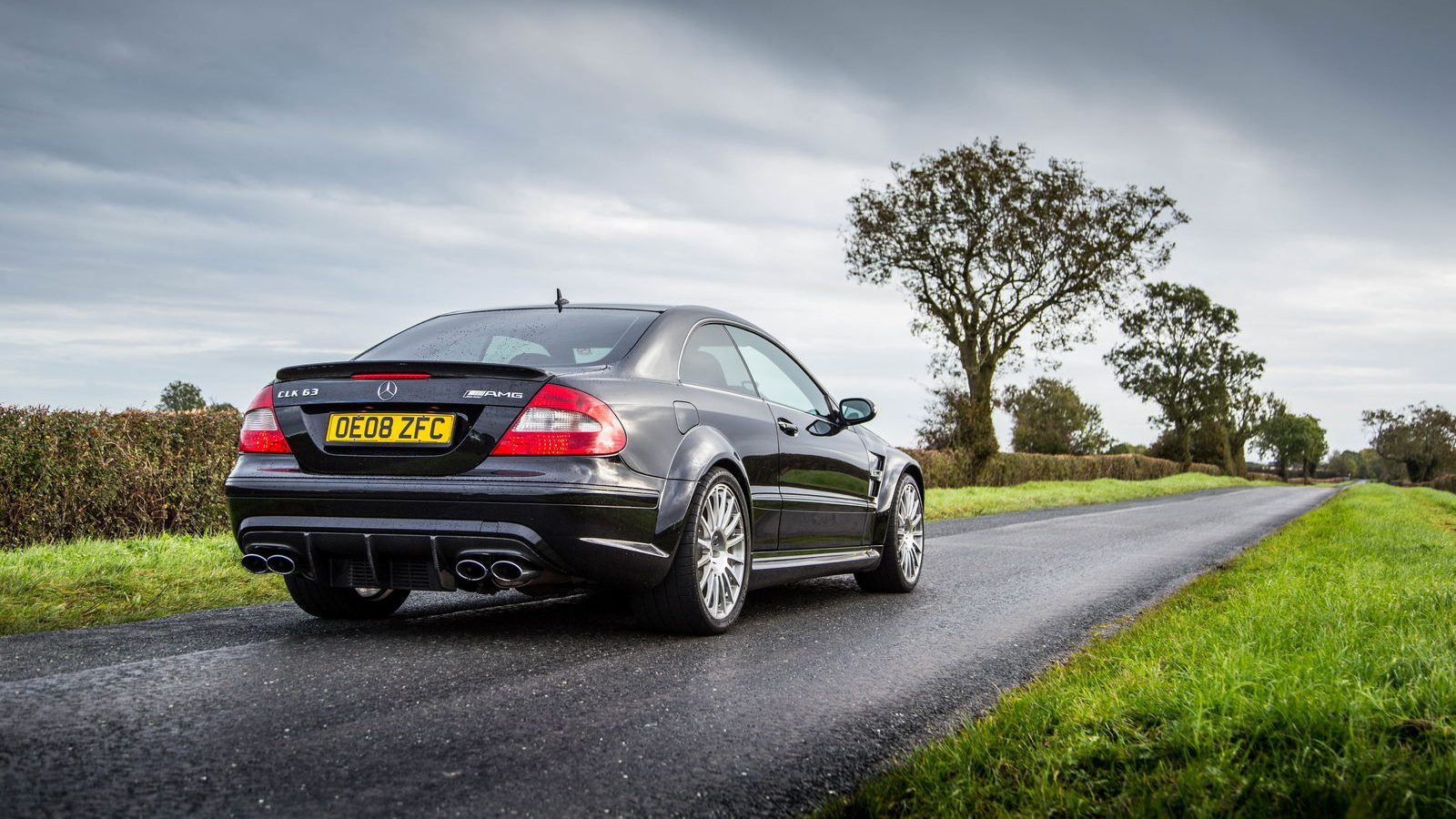
This family tree of doom started out reasonably enough, with 2006’s SLK55 Black Series; an odd little curio that took Merc’s entry-level convertible sports car, fitted a fixed hard-top, carbon-fibre bucket seats, lightweight body panels and a 400 horsepower V8 to create… well, it wasn’t really a track car – it was too stodgy and wayward for that – and it wasn’t a convertible anymore so the ordinary SLK buyer wouldn’t be interested so… Just a bit of a hot rod, I suppose? Things greatly improved with the second attempt. This time AMG set out with a plan, or more accurately, a rival. They wanted to build a car that could go toe-to-toe with Porsche’s flagship trackday sports car; the GT3 RS. Taking Merc’s own 911-sized coupe, AMG grafted on wider wheelarches to accommodate fatter, stickier tyres. The interior was stripped out, with the back seats, carpets and even the door cards being sacrificed in the name of lightness. Suspension and brakes were borrowed from Mercedes’ DTM touring car and the engine was nicked from the CL grand tourer. By the time they had finished in 2007, the CLK63 Black Series at the very least looked the part, and with that 500 horsepower V8, it went like a scalded proverbial but the real party piece was the handling. The rear end may have been happy to turn every corner into a 300-yard cloud of tyre smoke, but thanks to the razor-sharp front end, it was easy to hold the slides, helping you steer from the rear axle and keep the CLK on the absolute limits of adhesion. Put simply, AMG had transformed a humdrum mid-spec coupe into a rip-snorting, tyre-destroying supercar. Eat that, Porsche.
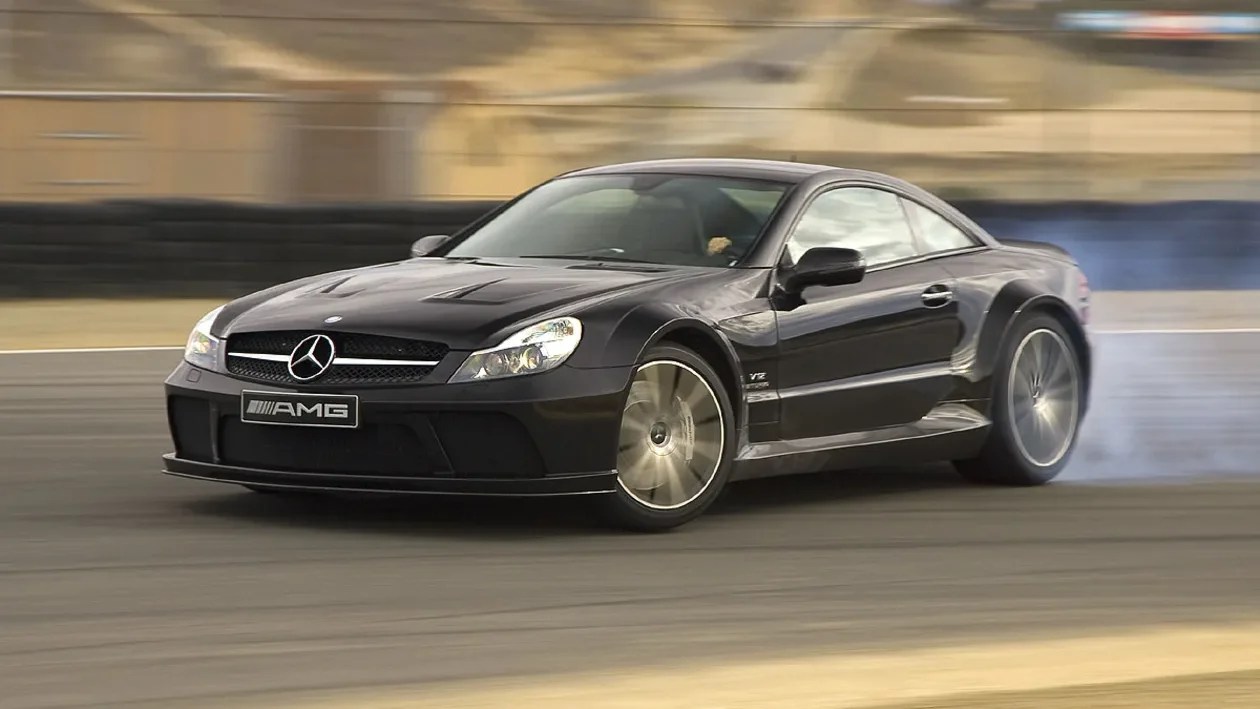
So, if that’s what they could do with an otherwise normal car, what would happen if you let them loose on something designed to be a sports car from the get-go? Well, 2009’s SL65 Black Series might have an answer for you there. It becomes damn-near undrivable. The normal SL600 is absolutely no slouch, with it’s 500 horsepower twin-turbo V12 taking it to 60mph in just 3.6 seconds, but what happens if you fit much bigger turbos? And bore the cylinders out? And fit forged pistons? And better cooling? And… actually, you get the idea. The now 6.0 litre V12 pushed out an astonishing 670 horsepower, 40 horsepower more than the SLR supercar that had been trading blows with the Ferrari Enzo just half a decade earlier. Once again, this wasn’t just a straight-line exercise, with efforts made to sharpen up the SL’s handling. All in all, nearly 250kg was chopped from the car’s kerb weight – including once again sacrificing a convertible roof in favour of a fixed hard-top – and much wider tyres were fitted, with the finishing touch coming in the form of new gearbox calibration that cut shift times by 20%. A complete track weapon then, surely? Well, not exactly. Even with the weight saving, the SL65 tipped the scales at 1870kg, nearly 200kg heavier than Ferrari’s similarly packaged – and £50,000 cheaper – 599 GTB, and in trying to make the car handle on track, the ride had been utterly ruined on the road, with the super-stiff suspension and meanly-padded seats absolutely guaranteed to ruin your pelvis after even a quick drive to the shops.
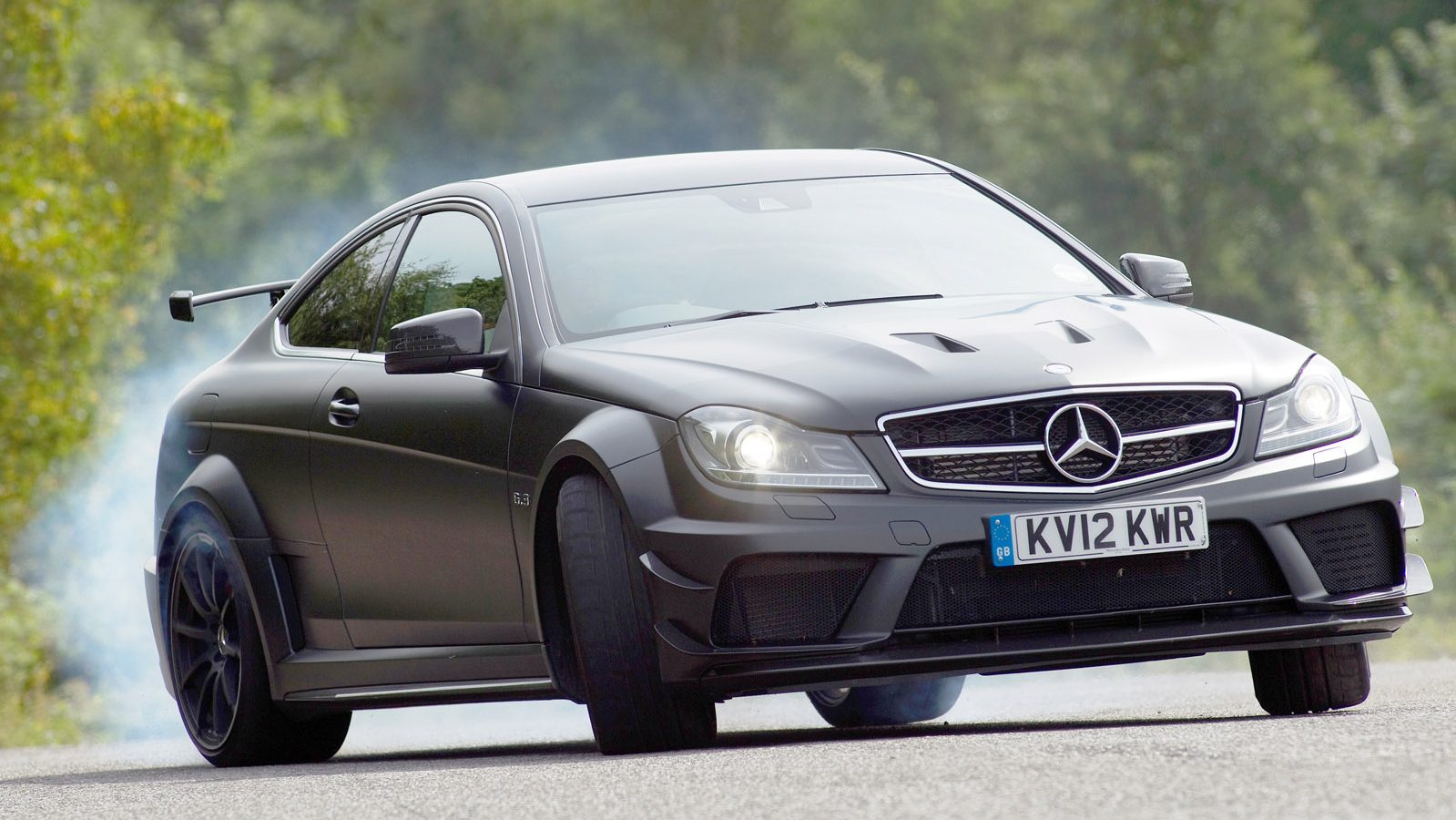
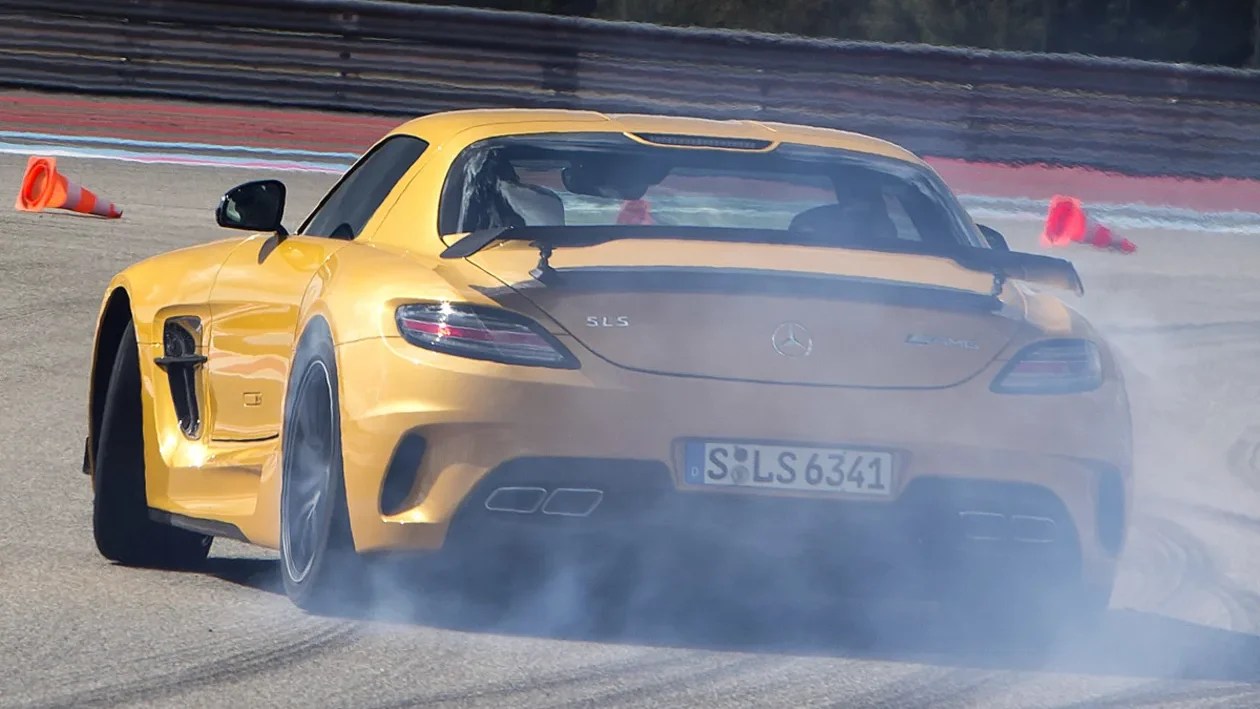
Learning their lessons from the SL65, the Black Series team pulled out all the stops for their next two cars, first refining the CLK formula with the C63 Black Series, with better dampers, a sharper, more accessible chassis and even more grunt from the 6.2 litre V8. Then came attempt number two at an out-and-out supercar. Starting with Merc’s latest flagship; the 1950s gullwing-homage SLS, AMG decided to try something they’d never tried before. Instead of taking everything to it’s extreme, they would focus on taming the famously wayward SLS, making the chassis the priority instead of headline figures. With a carbon-fibre crash diet, suspension and geometry from the SLS GT3 racing car, a new electronically-actuated rear differential (technology pioneered by Jaguar in the early 2010s, I’ll have you know), and more pronounced aerodynamics to help balance out front and rear grip levels, the SLS Black Series became a real tour de force on the racetrack, with The Intercooler’s Andrew Frankel gleefully reporting that “I never quite trusted the standard car… I find [the Black Series] much more reassuring. It doesn’t scare me.” Of course, this being AMG, power was not exactly in short supply, with 630 horsepower torturing the rear tyres, but interestingly, even though the Black Series was up by around 60 horsepower over the standard SLS, torque was dropped by 15 newton-metres, allowing the redline of the engine to extend from 6800rpm to 7400rpm, helping even further to tame the mighty Mercedes by making the power delivery easier to modulate.
History shows that AMG’s reputation for putting massive power into everyday cars is well founded, but the Black Series lineage shows us that – as Pirelli so perfectly put it – power is nothing without control. When AMG focus on engines, we all know that they can work wonders, but when they take the time to refine the cars, with a clear goal and an emphasis on making that stonking power more accessible, then that’s when they really strike gold.
 Project Petrolhead
Leave a comment