I’ve spoken at length in the past about how I think the golden age of performance cars was the decade between 2003 and 2013, and I still stand by that claim. I did fail to mention, however, the trifecta of machines that kicked off the decade on the correct foot, and set us on the path to supercar greatness all the way back at the turn of the millennium. These are their stories.
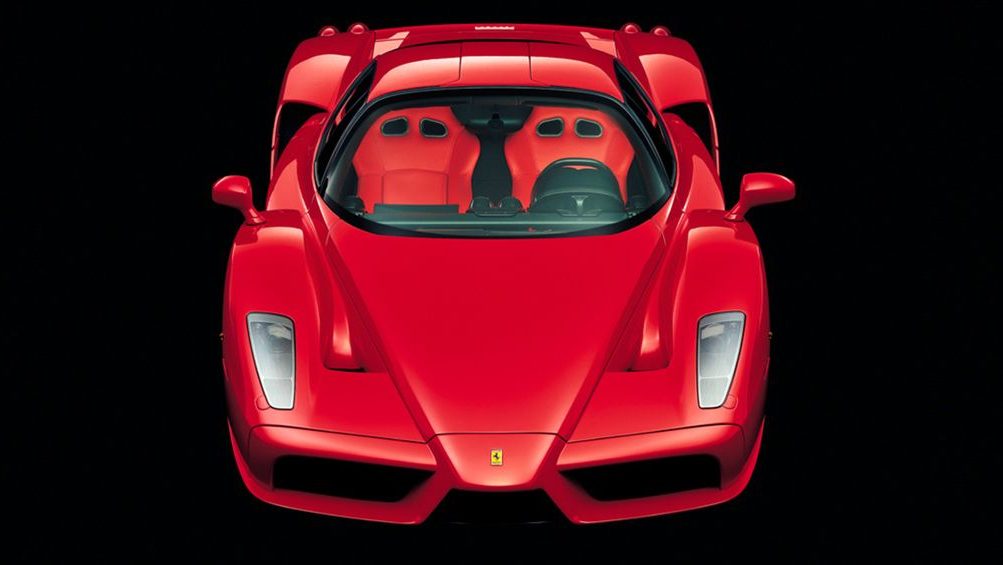
It’s the year 2000 and, as the last of the streamers, party hats and novelty glasses where the zeroes are the eye-holes are tidied away in Maranello, Ferrari president Luca Di Montezemolo is hatching plans for the company’s upcoming sixtieth anniversary. Rather than ringing up the local bakers and placing a bulk order for birthday cake candles, Luca decides that the momentous occasion should be marked with a brand new flagship supercar, in the same way Ferrari had done for it’s fortieth and fiftieth anniversaries (Ferrari F40 and F50, in case that wasn’t obvious). This new car – codenamed F60, naturally – would blend together Ferrari’s long history of exotic road cars with technology born on the circuits of Formula One, the same technology that would take their newest golden boy – one Michael Shumacher – to a world championship win that very same year.
By the time the car was completed in 2002, plans had changed. This couldn’t just be any other Ferrari, this was special. Really special. Everything worked so well together – the naturally aspirated 660 horsepower 6.0 litre V12, the F1 style paddleshift gearbox, the active aerodynamics – that the car took on a new name. They named it after the Boss. The Ferrari Enzo could leap from a standstill to 100mph in just 6.6 seconds, and given enough tarmac, would crack 220mph, easily making it one of the fastest road cars in the world at the time, and cementing it as the go-to bedroom wall poster car for children around the globe. Not only that, but it’s regarded by many as one of the greatest Ferraris of all time, and looking at their back catalogue, that’s certainly saying something.
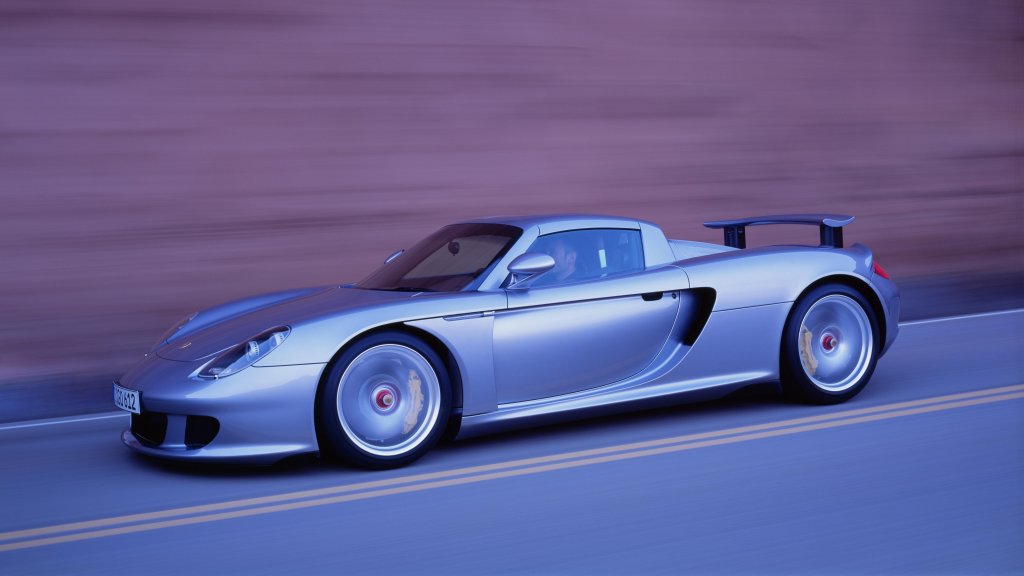
Porsche begged to differ. They saw the F1-come-road-car Ezno and thought “Hey! Ve have ze race car technology as vell! Let’s show zose silly Italians how it’s done!” The trouble was, Porsche do not, did not and never have had a Formula One team… or so we thought… As it turned out, the Footwork F1 team (latterly Arrows F1, then Super Aguri F1, then Brabham, then defunct) had approached Porsche on the sly and commissioned the development of a new 3.5 litre V10 engine to slot into their F1 car, before the money dried up and Porsche were left with a fully primed race engine and nothing to put it in. With the V10 burning a hole in their metaphorical pockets, Porsche set about adapting it for Le Mans, raising it’s capacity to 5.5 litre and designing a bespoke chassis to slot it into – the open-top Porsche LMP 2000 – before the money dried up yet again. That tended to happen a lot for Porsche in the 90s.
With a bit of extra disposable income generated from their new entry-level sports car – the Boxster – and the blight on humanity that was the first-gen Cayenne SUV, Porsche were finally able to afford to develop their Enzo-beater, hiring rally legend Walter Röhrl as test driver, the team mated the now 5.7 litre V10 to an old-school manual gearbox, with a focus placed on the rigidity of the carbon-fibre tub chassis and the agility of it’s handling, the car – now dubbed Porsche Carrera GT – was famed for being a bit of a widowmaker, with its snappy knife-edge handling claiming more than a few egos in it’s lifetime, it was deemed worth it when people saw the lap times, with EVO magazine clocking one a full 1.1 seconds faster than an Enzo around Bedford Autodrome. From the outside, however, onlookers weren’t interested in the limits of grip, they were too busy being treated to one of the most symphonic engine notes ever to grace tarmac. Lovely.
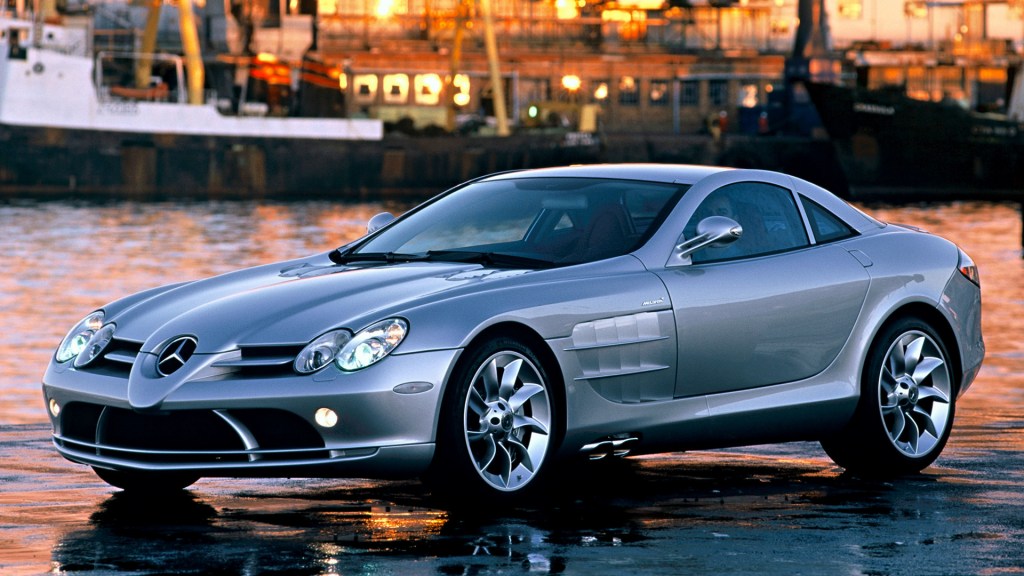
Fed up of watching all the road-car willy-waving from their other F1 competitors, McLaren picked up the phone and gave their engine supplier – a small German cottage industry called Mercedes-Benz – a call, and hatched a plan of their own. McLaren’s chief designer Gordon Murray, himself a proven winner after designing the legendary McLaren F1 (the first road car to crack 240mph), would sit down with a team from Mercedes and brainstorm a road car to blow those other two out of the water. I assume the meeting went something like this:
Gordon Murray: Welco- Err… Wilkommen guys.
Mercedes-Benz: Let us get straight to business. The SLR.
GM: Oh, SLR is it?
MB: Yes, as a nod to our racing car of the 1950s.
GM: Right-o. It’ll need to be mid-engined to beat the Enzo and Carrera GT.
MB: Nein. It is an SLR, it must be front-engined.
GM: Oh… Okay then… Well, I suppose with a bonded aluminium structure we could-
MB: Nein again, Herr Murray. We will use a riveted steel tub.
GM: Ah… Well, I suppose with a lightweight engine, maybe a V12?
MB: …
GM: It’s going to be a big V8, isn’t it?
MB: Pleasure doing business with you, Herr Murray.
Gordon Murray managed to shave as much weight as possible from the SLR before it launched, and the remaining weight was moved as far toward the centre of gravity as possible. The engine was pushed so close to the firewall it was basically sat in the passenger seat with you, meaning that the actual cabin was surprisingly cramped and the motorsport-spec carbon-ceramic brakes – which worked fine on a featherweight track monster – were massively over-servo’d and grabby, leaving road testers with the odd sensation of a Jekyll and Hyde car, always split between Merc luxury and McLaren aggression but just as uncomfortable on the track as it was on a cross-continental tour. Let the SLR’s 5.4 litre supercharged V8 sing however, and it’s 630 horsepower would take you to 100mph in an Enzo-troubling 7.5 seconds and on to 208mph flat-out, most shocking of all though, was the fact that the SLR was able to lap the Top Gear test track just 0.3 of a second off the time set by the manic Carrera GT, so Gordon must have done something right. Even the noise of the brute spilt opinions, with the German half of the development team commenting that the SLR sounded like a Messerschmitt fighter plane, whereas the Brits disagreed. They thought it sounded like a Spitfire.
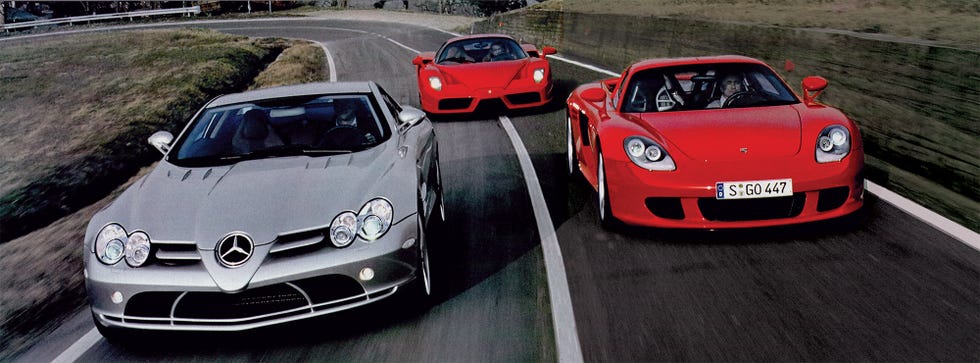
With each of these three cars, one thing becomes clear. The early 00s were a time of optimism and excess. The 2008 financial crash was little more than a glint in Mr Lehman’s eye, and car designers were being freed from the shackles of accountancy and given free reign to create some extraordinary machines. The world is not what it once was. With ever-tightening regulations, an ever-growing wealth disparity and ever-present focus on healing our damaged environment, it’s safe to say; they really don’t make ‘em like they used to. And they probably never will again.
 Project Petrolhead
Leave a comment