If I asked you to name all the makers of interesting sporty cars, I imagine it’d probably be a while before Volvo came up, but I reckon that would be an oversight, because Volvo has a history of secretly building the coolest sleepers on the planet.
In 1993, perennial motorsport rule-bender Tom Walkinshaw noticed something strange. Of all the cars taking part in that year’s British Touring Car Championship (BTCC), there wasn’t a single estate car. That sounds pretty obvious to any normal human, given that wagons tend to be heavier than saloons, but Walkinshaw saw an opportunity. He surmised that the aerodynamics of a long-roofed wagon would be better than a normal three-box saloon, and that a longer, flatter, more slab-sided roof would only increase the effect. Enter the Volvo 850.
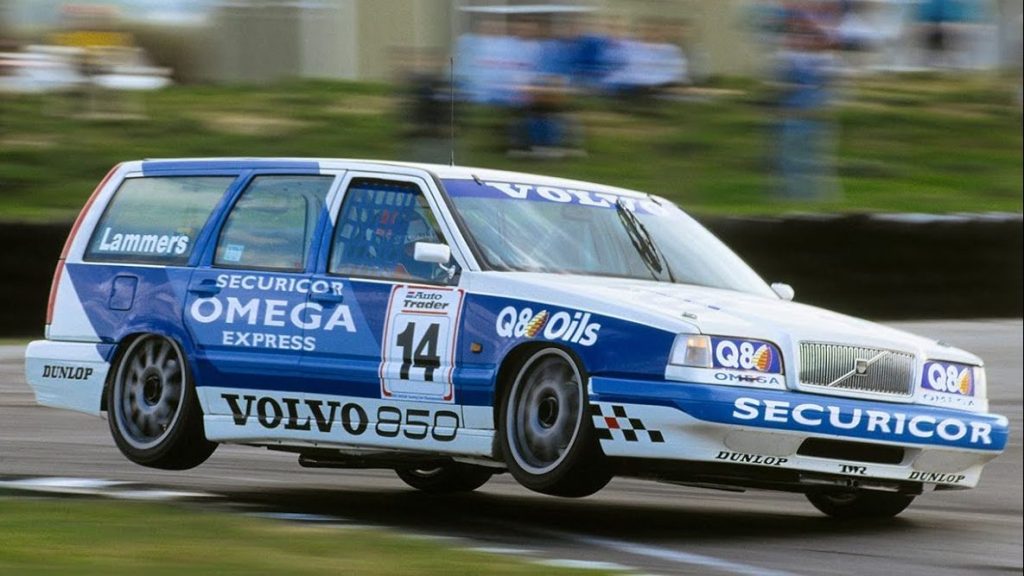
Sharing all the aerodynamic properties of a house brick, the 850 might not have sounded like the perfect basis for a racing car, but with massively beefed-up brakes and suspension, the dowdy family estate became surprisingly effective. There was only one slight issue: The engine. The most powerful motor Volvo had was their 2.3 litre 5-cylinder Turbo, pushing out around 220bhp, nowhere near enough to be competitive at the BTCC, so Walkinshaw took another look at the rule book. The FIA stated that engines had to come from factory and that no parts were to be welded onto the block… but they didn’t say anything about taking parts away. Walkinshaw’s team took one of the 2.3 litre blocks, cut the head off to fit their own and then sliced a chunk out of the block just below the valves so that the top-half of the engine now sat at a slight angle. That meant that the engines had a shallower exhaust port, which meant that they could be pushed much harder, kicking out around 320bhp, or to put it another way, about 50bhp more than every other car on the grid. With their long-tail aero and barely legal engines, the 850 T5-R was an extremely competitive touring car for the 1994 season, causing havoc with the Ford Mondeos and Alfa 155s that made up the rest of the grid and even storming to an outright win in 1998 with legendary racing driver Rickard Rydell at the wheel. Not bad for a geography teacher’s car.
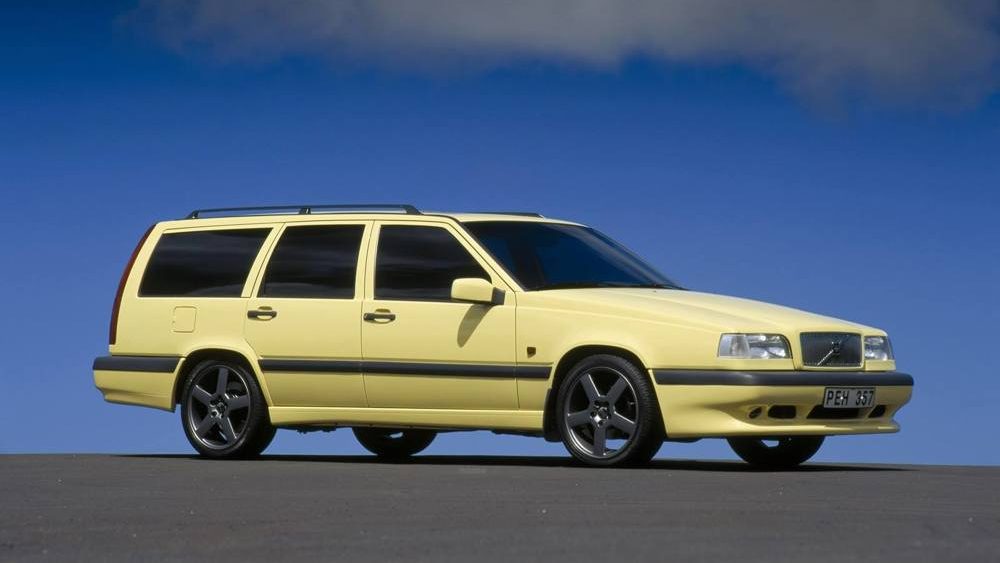
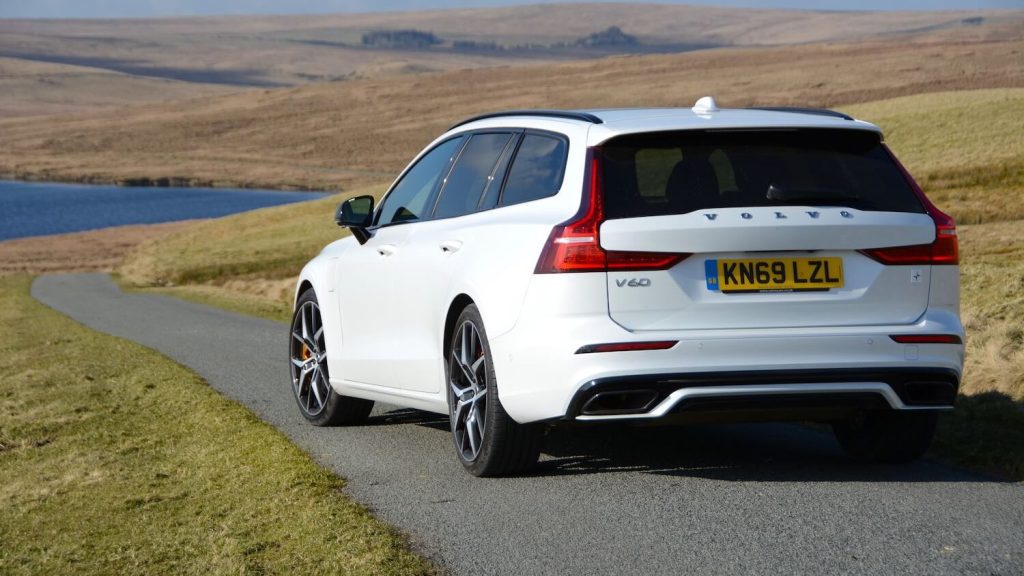
Fast-forward to 2023, and the 850’s descendant, the V60, is trying on its own sportswear. Long gone are the days of hooky tuning and touring cars, nowadays the V60 is a portly 2 tonne hybrid, with more focus on safety than speed. That’s where Polestar comes in. Starting off in 2005 as Volvo’s motorsport arm, Polestar have been responsible for their own fleet of automotive nutcases, from a 500bhp S60 concept, to the Ford Focus RS worrying C30 T5, they know how to make an ordinary Volvo into a very cool car indeed. Firstly, they fitted the V60 with bespoke fully adjustable suspension from Öhlins, with the same Akebono brakes that the McLaren P1 hypercar uses, ironing out all of the imperfections in the handling, without losing any of the Volvo’s sensible comfort. Then they went to town on the engine. Starting life as a 2.0 litre 4-cylinder, the V60 Polestar is then fitted with a massive turbocharger. Trouble is, big turbos mean big lag when you put your foot down, so Polestar fits a small supercharger to fill in the gap until the big boy comes on song. All done? Not quite. This is Volvo we’re talking about, so a family estate that does 3 miles to the gallon is a no-go, plus, the V60 is front-wheel drive, and trying to get that much power to the road is going to be one hell of a challenge. The solution then, was to fit a 143bhp electric motor to the rear-axle, making the car a 455bhp, all-wheel drive, supercharged, turbocharged hybrid. Good grief, so they still like to keep things complicated then!
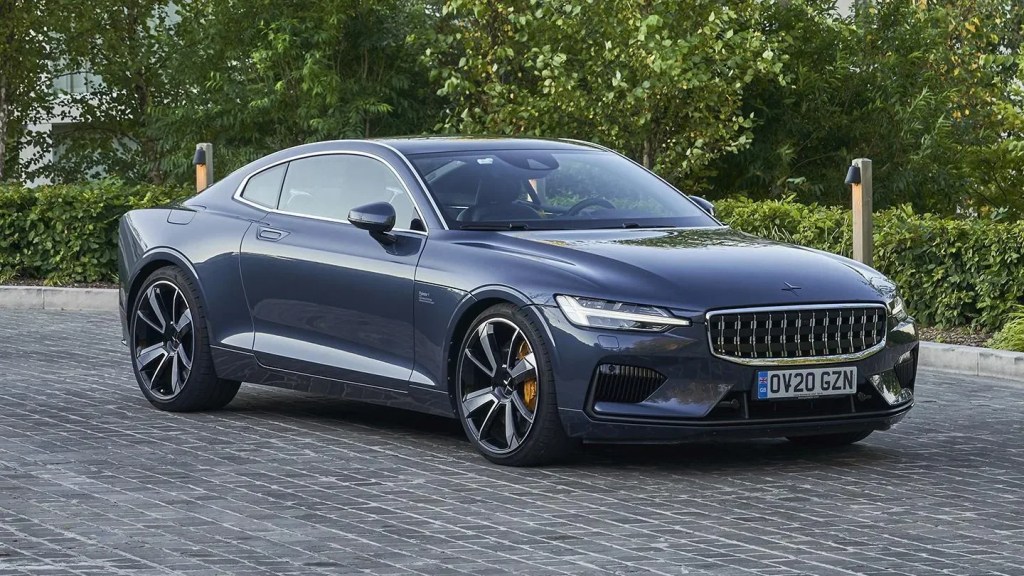
Oh, and if estates aren’t your thing, then you’ll be pleased to hear that Polestar took the V60’s engine, tuned it up even more to around 600bhp, and fitted it into one of the best-looking coupes your humble author has ever seen, the Polestar One. Now THAT is a lottery win car if I’ve ever seen one.
 Project Petrolhead
Leave a comment