Italian supercar makers seem to have a knack for creating two things: gorgeous, soulful supercars, and rival supercar makers.
Ferruccio Lamborghini makes tractors – quite good tractors as it happens – and has decided to reward himself by purchasing his dream car: a Ferrari 250 GT. After a few hundred miles of pleasant running, the 250 makes a very unpleasant, un-Ferrari-like noise, and Ferrucio has no choice but to send it back to the factory for repair. Surprisingly, the issue occurs two more times, and Ferruccio begins to smell a prancing rat. This time, instead of driving to Ferrari’s workshop, he drives back to his own and asks his engineering team to disassemble the gearbox and locate the source of the trouble, only to find that the 250’s clutch is identical to the ones he and his team have been fitting to tractors for years. Ferruccio is not pleased. Demanding an audience with Ferrari’s enigmatic figurehead, Ferruccio expresses his displeasure at the shoddy build quality of the so-called “greatest car in the world”. Enzo Ferrari responds simply with: “Let me make cars. You stick to making tractors.”
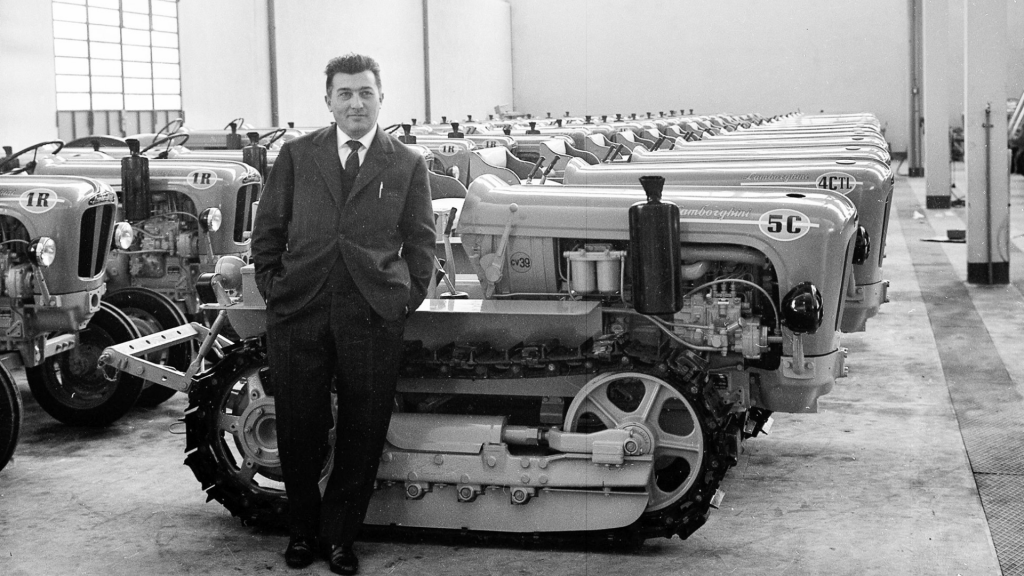
Ferruccio does not stick to tractors.
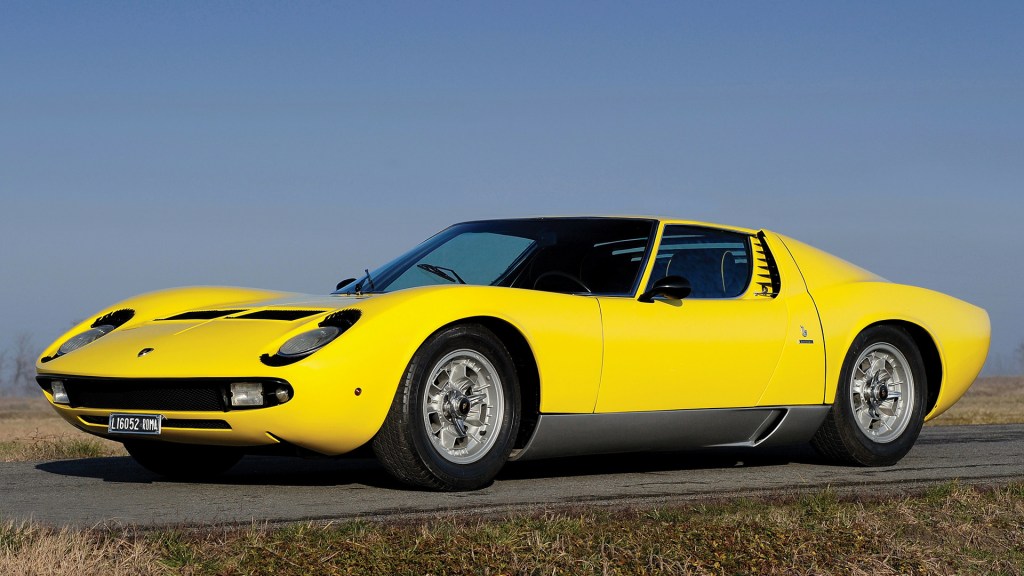
Deciding to beat old man Enzo at his own game, Ferruccio instructs his engineering team to begin work on a road car. The greatest road car in the world. The result… Well, the result was the 350GT, which wasn’t actually that well received or remembered but stick with me. With some money in the bank and some Italian kudos from the 350GT, Ferruccio gave his development team a blank cheque for their next car – codenamed P400 – and told them to build the ultimate sports car. That would probably be a bit of an overwhelming proposition for any normal Tom, Dick or Harry, but when your development team consists of Giampaolo Dallara (designer of Williams’ Formula One cars into the 1970s), Marcello Gandini (designer of… well, every exotic dream car of the 1980s) and Giotto Bizzarrini (Racing car builder and Lamborghini’s engine man right up until 2011), then the project took on a new life. Next to the relatively pedestrian Ferrari Daytona, the Lamborghini Miura P400 was a rocket ship. Not only did it look better and drive faster, but as the first high-performance mid-engined road car, it set the template for nearly every supercar to follow it.
In 1982, Lamborghini took on a new apprentice, an Argentinian immigrant called Horacio – I’m sure he won’t be important later – and was elbow deep in the production of the Miura’s successor: the Countach. Working his way up the company, Horacio mentioned to the development team that he could improve the Countach design significantly. Interested to see what he would do, the team watched Horacio construct a one-off concept car called the Countach Evoluzione, a lightweight car with most of the body panels replaced by carbon fibre composites, dropping the kerb weight by almost 400kg, allowing for better handling and healthier performance. The feedback from the higher-ups? “Ferrari don’t use carbon fibre, why should we?”

“Alright, sod you then.” – Horacio Pagani… probably… and also in Italian.
Seeing a gap in the market, Horacio went off and started his own car company, first building carbon fibre composite panels for other car manufacturers, before designing and building his own vision. The first car was, to put it bluntly, a monumental IOU job, with Horacio scrimping and scrounging to get everything together. His friend, and fellow Argentine, Juan Manuel Fangio put him in contact with Mercedes-Benz, who agreed to lend him a V12 engine or two, and his old mates at Dallara lent him the use of their wind tunnel to refine the car’s aerodynamics. When it was finally completed, Horacio named the car after himself, so it was a good job his name was so damn cool. The Pagani Zonda (named after some Argentinian wind, kid you not), was an instant hit when it debuted in 1999 at the Geneva Motor Show, and all five of the scraped-together cars sold to lucky owners, giving Pagani the capital to continue development, which they did by releasing a million different version of the Zonda. Don’t believe me? Well there’s:
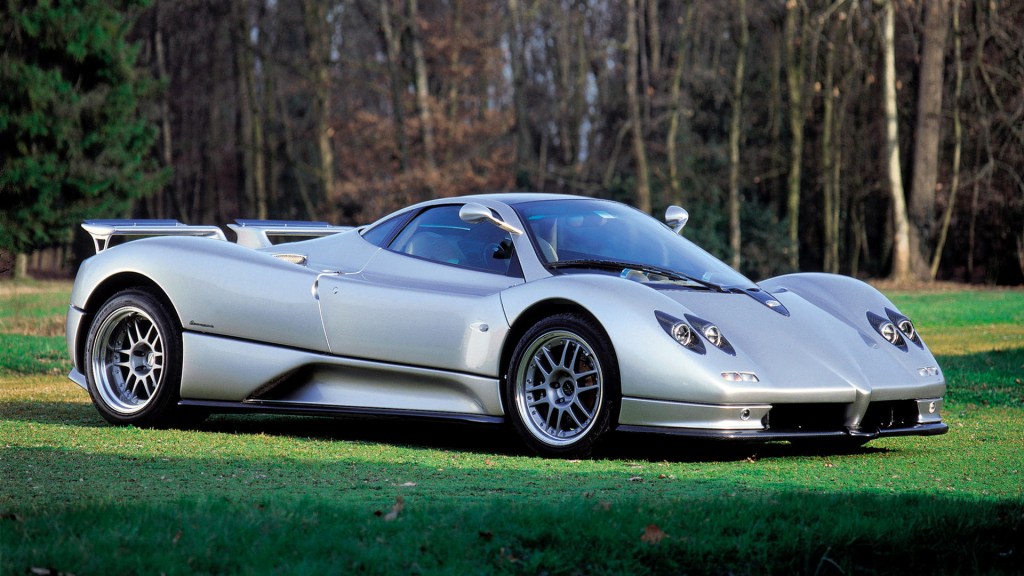
Zonda C12, Zonda C12 S, Zonda S 7.3, Zonda F, Zonda F Clubsport, Zonda R, Zonda Tricolore, Zonda Cinque, Zonda HH, Zonda 760RS, Zonda HP Barchetta, Zonda Revolución… You get the idea… And no, that isn’t all of them. So, fast-forwarding to today, One of the fastest, most exotic cars on planet earth, Pagani’s current flagship: the Utopia, can trace it’s roots all the way back to a dodgy clutch on a tractor.
Only in Italy.
 Project Petrolhead
Leave a comment