“All I’ve done in my life is do what I think I’d do well and have a lot of fun along the way.” – Gordon Murray
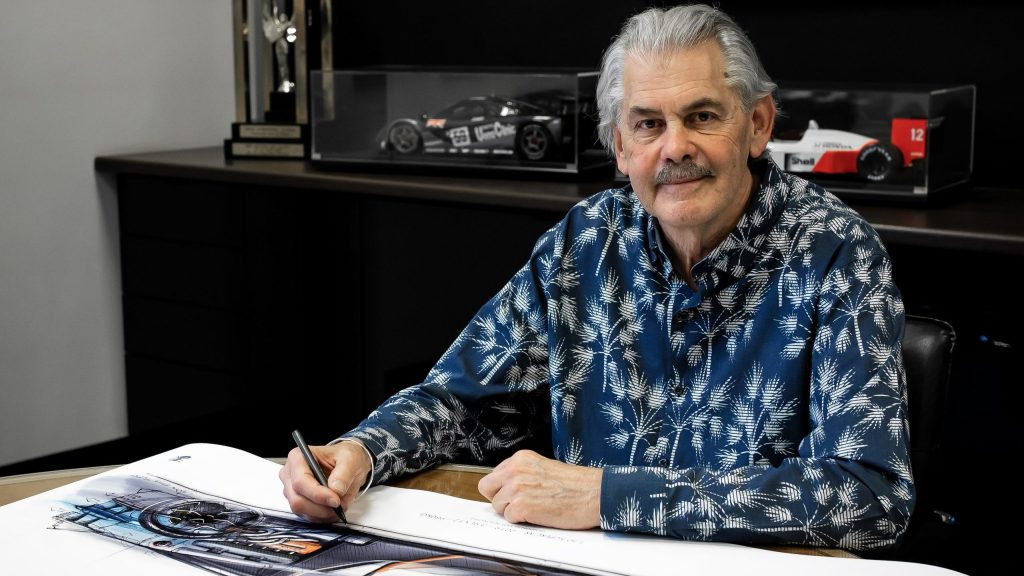
Obsession. That’s the only way I can describe Gordon Murray’s pursuit of perfection. From building his first racing car at 19 years old, to selling everything he owned to move from South Africa to the UK in the hopes of landing a job at Lotus, it’s fair to say that Murray is a dyed-in-the-wool petrolhead with a passion for engineering. After arriving in the UK in 1969, Murray managed to secure a design job at Brabham, being promoted to chief designer by the team’s then-owner Bernie Ecclestone. Murray’s cars were highly successful, helping Nelson Piquet secure drivers’ championships in ‘81 and ‘83.

In 1986, Ron Dennis offered Murray a job as the Technical Director of McLaren and in 1988 Murray’s first ground-up effort, the McLaren MP4/4, won 15 out of the 16 grand prix, holding the record for the highest win rate of any Formula 1 car until 2023. With his feet now firmly planted at McLaren, Murray wanted to branch out and agreed with Ron Dennis to design a road car. It was decided that the road car in question would be designed to a strict set of parameters, needing space for three occupants, their luggage, and a V12 engine producing no less than 550 bhp while still weighing less than 250kg. The result was beyond expectations. The McLaren F1 featured a 3-seat layout (with the driver positioned in the middle, giving the feeling of driving an open-wheel racer), two usable luggage compartments, a bespoke Kenwood stereo (that only featured a CD player, as Murray didn’t like listening to the radio), active aerodynamics and vertically-opening “Butterfly” doors, all within a shrink-wrapped carbon fibre body. The engine also managed to surpass the design brief, with BMW engineering a bespoke 6.1 litre V12 with a 627bhp output, nestled in an engine bay lined with gold foil to aid heat extraction. Murray has claimed in the past that he did not set out to build the fastest car in the world, that was simply a by-product of his aim to build the ultimate road car. It was that stubborn refusal to allow compromise that put the McLaren F1 in a class of one for the next four decades.

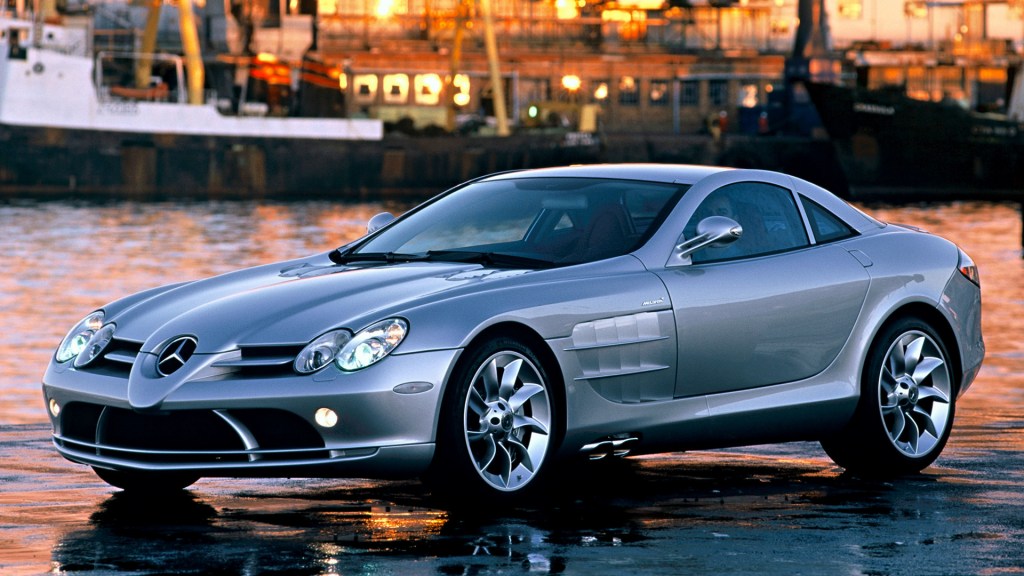
Unfortunately, that is not a sentiment that can be shared by his second McLaren road car. In 1995, McLaren decided to partner with Mercedes-Benz, with the Germans providing engines for the Brit’s Formula One efforts. As part of the promotion of the deal, it was decided that the two companies would co-develop a new car that would combine McLaren’s handling sharpness and Mercedes’ penchant for colossal power. The result, dubbed Mercedes-Benz SLR McLaren, was an odd duck of a car. Murray wanted a rear-engine supercar, Mercedes wanted a front-engine grand tourer. Murray wanted bonded aluminium, Mercedes wanted bolts and rivets. Murray wanted to design the car himself, Mercedes wanted to design the car by committee. What we ended up with was a large luxury Super GT car, with the 5.4 litre supercharged V8 and 5-speed gearbox from a Mercedes S-Class mounted behind the front axle and a bespoke chassis engineered by McLaren. Despite Murray’s best efforts, including adorning the car with carbon-ceramic brakes, active aerodynamics and 50:50 weight distribution, road testers at the time couldn’t shake the feeling that the car was somehow less than the sum of it’s parts. The SLR could have been a world-beater but all it served to highlight was just how different the two countries were.
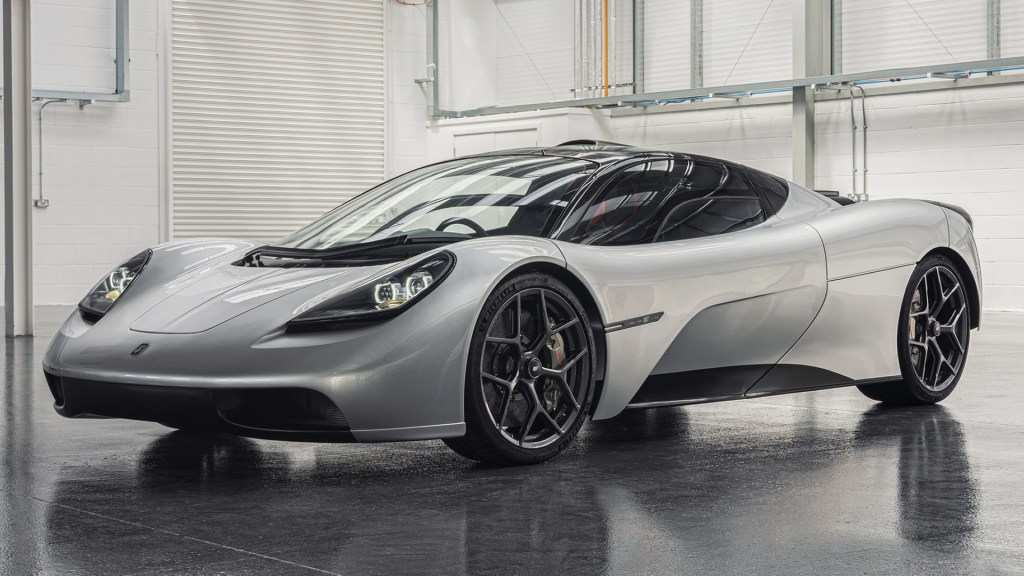
It’s no surprise then that Murray decided to leave McLaren and start his own engineering company, somewhere where his fastidious attention to detail could be put to good use. Since the release of the McLaren F1 in 1992, Murray has been working to refine his design. Minutely shrinking the car’s footprint, reducing the kerb weight and working with engine builders to devise an even more spectacular power unit. In 2023, Gordon Murray unveiled the GMA T.50, with a familiar 3-seat layout, mid-mounted V12 and usable practicality. New for this design, however, are the inclusion of a 4.0 litre, 663bhp, Cosworth designed V12 (howling away to a 12,100 RPM redline) and an aerodynamic fan. The fan idea came from the Brabham BT46B, one of Murray’s early Formula 1 designs, and provides a sizable increase to downforce by using “ground effect”. By sucking the air out from underneath a car, you create an area of low-pressure, effectively using air to glue a car to the road surface without the need for a stuck-on rear wing. And the weight? Well, the entire car, complete with V12, comes in at less than 990kg. The only way you could make it any lighter would be to fill the petrol tank with Helium.
The automotive world needs people like Gordon Murray; Never content with following trends. Not throwing out everything and starting over with new technology but instead using technological developments to improve designs that are known to work. There’s a reason he’s never built a 2-tonne hybrid SUV.
 Project Petrolhead
Leave a comment